


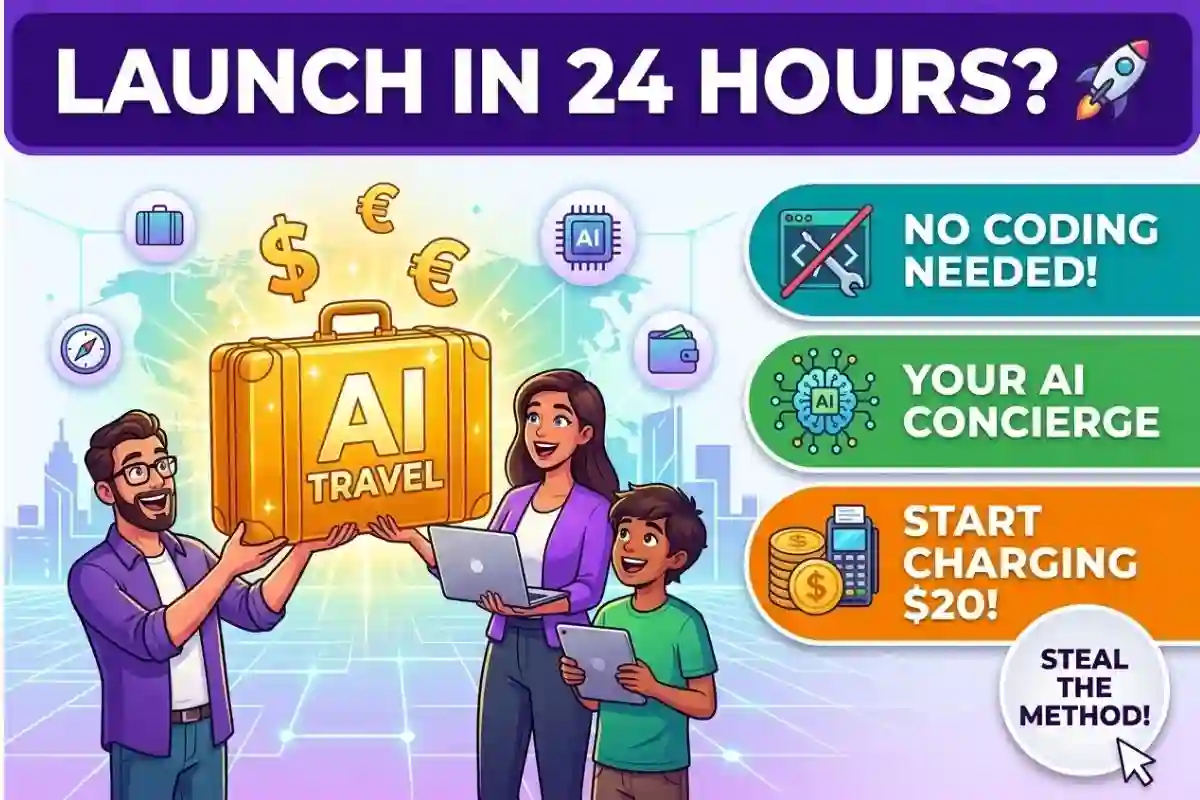
Have you ever spent hours scrolling through travel blogs, trying to piece together the perfect vacation itinerary, only to end up more confused than when you started? You are not alone. Millions of tourists face this exact frustration every single day. In the rapidly evolving digital landscape, the demand for personalized, instant, and affordable travel planning has never been higher. This gap in the market presents a golden opportunity for enterprising individuals looking to start a lucrative weekend side hustle. Imagine spending your Saturday and Sunday building a simple, intuitive platform that curates bespoke travel experiences, and by Monday morning, you are ready to charge travelers $20 for a custom, minute-by-minute trip plan. Welcome to the era of the modern AI Travel Startup, where artificial intelligence meets wanderlust. By leveraging accessible technology, you can create a highly profitable business model that requires minimal upfront investment but offers maximum value to your customers.
The concept of an AI Travel Startup is revolutionizing the way we explore the globe. Traditionally, if you wanted a custom vacation plan, you had to hire a human travel agent, which could cost hundreds of dollars, or spend countless evenings researching on your own. Today, artificial intelligence acts as a tireless, incredibly knowledgeable concierge that has read every review, understands local geography, and knows the hidden gems of any city. For an entrepreneur, this means you can offer agency-level personalization at a fraction of the cost. When a user inputs their destination, travel dates, budget, and personal preferences—such as “vegan food,” “historical sites,” or “kid-friendly activities”—your AI system processes these parameters in seconds. It then generates a comprehensive, logical itinerary that maximizes their time and enjoyment. This isn’t just about listing places to go; it is about crafting a narrative for their journey. By providing this tailored service for a flat fee of $20, you instantly position yourself as an irresistible alternative to the overwhelming noise of generic internet searches and expensive professional planners.
You might be thinking that building an application like this requires a team of software engineers and months of coding, but the landscape of software creation has changed drastically. Enter the concept of Micro-SaaS 2026. This refers to small, highly focused software-as-a-service businesses built by solo founders or tiny teams, designed to solve one specific problem exceptionally well. Thanks to the proliferation of powerful no-code and low-code platforms, you can construct the entire front-end user interface of your AI Travel Planner over a single weekend. By utilizing tools like Bubble, Glide, or Softr, you can create a sleek, mobile-friendly website where users can submit their travel details and pay securely via Stripe. The real magic happens behind the scenes, where you connect your interface to a sophisticated large language model through an API. For more foundational knowledge on how these software delivery models operate, you can read about Software as a service on Wikipedia. The AI takes the user’s input, structures a perfect daily plan, and automatically emails a beautifully formatted PDF itinerary directly to the customer.
Pricing your service correctly is absolutely crucial for turning this weekend side hustle into a sustainable stream of income. Charging $20 per trip is a psychological sweet spot. It is low enough to be an impulse buy for someone already spending thousands on flights and hotels, yet high enough to validate the quality of the itinerary and generate meaningful revenue for you. If you manage to sell just five itineraries a day, you are making an extra $3,000 a month with incredibly low overhead costs. Marketing your new AI Travel Startup effectively will be the key to reaching those numbers. You can start by leveraging visual platforms like TikTok, Instagram Reels, and Pinterest. Create short, engaging videos showcasing a “before” and “after”—the stress of having twenty browser tabs open versus the relief of receiving a perfectly organized, AI-generated itinerary. You can also target specific niches, such as “weekend itineraries for foodies in Rome” or “budget family trips to Orlando.” By demonstrating the tangible value and time saved, tourists will gladly hand over a $20 bill for peace of mind.
Beyond just mapping out restaurants and museums, your AI Travel Planner can be programmed to prioritize safety and logistical efficiency, adding a layer of professional care that users will deeply appreciate. A great itinerary considers transit times between locations, the ideal times to visit popular attractions to avoid crowds, and even seasonal weather patterns. Furthermore, you can prompt your AI to cross-reference travel constraints and official safety guidelines. By grounding your startup’s output in reliable data, you build immense trust with your user base. It is always best practice to remind travelers to verify specific visa requirements or safety alerts through authoritative channels, such as checking the U.S. Department of State Travel Advisories before embarking on international journeys. By seamlessly blending the creative, experiential side of travel with necessary logistical and safety parameters, your $20 service transcends a simple list of activities. It becomes a comprehensive travel companion that empowers tourists to explore new destinations with confidence, ultimately leading to glowing reviews and valuable word-of-mouth referrals for your business.
The Shift in Vacation Planning
To clearly illustrate why travelers are rapidly shifting toward automated solutions, consider this simple comparison between traditional travel planning and utilizing an AI platform.
| Feature | Traditional Travel Agent | DIY Internet Search | AI Travel Startup |
| Cost | High ($100+) | Free (but time-consuming) | Highly Affordable ($20) |
| Delivery Speed | Days to Weeks | Hours to Days | Instantaneous |
| Personalization | Excellent | Variable | Excellent |
| Accessibility | Business Hours | 24/7 | 24/7 |
Frequently Asked Questions (FAQ)
How much technical experience do I need to start this Micro-SaaS? The current generation of no-code website builders allows anyone with basic computer skills to construct the necessary web interfaces. You are essentially visually connecting pre-built building blocks—a beautifully designed form for user input, a secure payment gateway, and an automated data integration—without writing a single line of traditional computer code. There are countless free tutorials available online that can walk you through this exact setup process step-by-step.
Is $20 too cheap for a custom travel itinerary? It is actually the perfect entry point. The goal of a weekend side hustle in the digital space is volume and automation. Because the artificial intelligence generates the itinerary in mere seconds, your cost of goods sold is virtually zero. Charging $20 makes it an absolute no-brainer for the customer, reducing friction at the checkout page while still providing you with a high profit margin on every single transaction.
What if the AI recommends a restaurant or attraction that is permanently closed? This is a vital consideration. To prevent outdated recommendations, you must ensure that your AI tool is connected to real-time data sources or live search capabilities, rather than relying solely on its static training data. Additionally, adding a brief disclaimer advising clients to double-check operating hours before finalizing their plans is a standard and highly recommended business practice.
Curiosity: The Future of “Human-in-the-Loop” Travel
While it is incredibly exciting to launch an AI Travel Startup, one fascinating curiosity of the current digital era is the enduring value of the “human-in-the-loop” model. Even as artificial intelligence becomes exponentially smarter, travelers still crave a subtle human touch. The most successful founders in the Micro-SaaS 2026 landscape don’t just blindly forward raw, unedited machine output to their paying customers. Instead, they act as meticulous curators. They use the AI to do 95% of the heavy lifting—gathering data, structuring the days, and formatting the document—and then spend two minutes reviewing the final product to ensure the tone is warm, inviting, and logically sound. This minor human intervention prevents bizarre geographical routing errors and adds a layer of quality assurance that elevates a simple computer generation into a premium, $20 product. Ultimately, launching this weekend side hustle isn’t about replacing the human element; it is about using cutting-edge technology to scale your own capabilities, allowing you to help thousands of people experience the joy of seamless, unforgettable travel.

