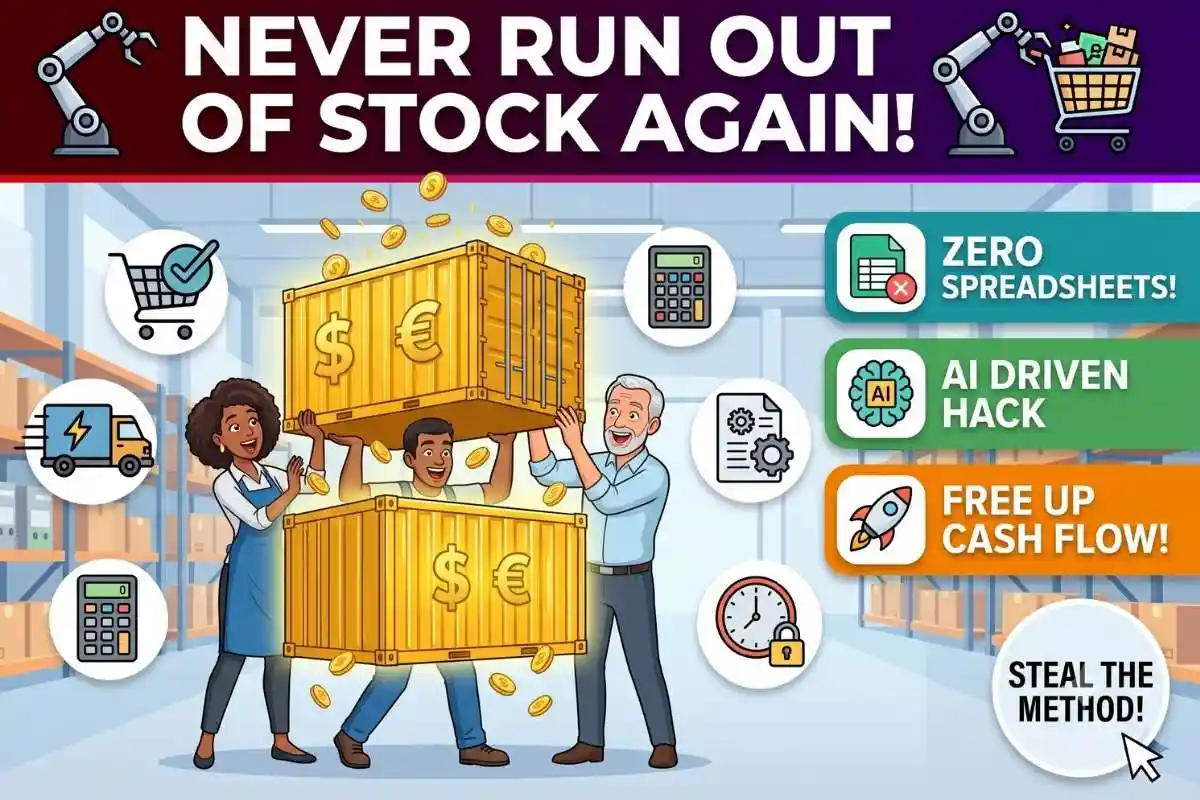
Imagine walking into your small business on a bustling Tuesday morning, only to realize that your top-selling merchandise is completely sold out right at the start of your busiest seasonal rush. For decades, independent entrepreneurs, local retailers, and boutique manufacturers have been forced to rely on cumbersome spreadsheets, late-night physical counts, and pure guesswork to determine when and how much to reorder from suppliers. This traditional manual approach not only drains countless hours of valuable administrative time but also leaves your growing enterprise highly vulnerable to human error, unexpected supplier delays, and sudden shifts in consumer demand that can severely damage your hard-earned reputation and bottom line.
Fortunately, a technological revolution is reshaping the landscape of small business logistics, making advanced automation accessible to companies that do not have enterprise-sized IT budgets or dedicated procurement departments. Enter artificial intelligence procurement bots: intelligent, always-on software agents designed to autonomously manage your inventory, analyze market variables, and place reorders without requiring you to lift a finger. By acting as a tireless digital supply chain manager, these smart algorithms ensure that your shelves remain stocked, your carrying costs stay low, and your attention remains focused on strategic growth and customer relationship building rather than tracking down delayed shipments.
The End of Stockouts and Spreadsheet Chaos
At its core, traditional Supply chain management in a small business relies heavily on backward-looking data and static reorder formulas that cannot keep pace with today’s volatile global marketplace. When you manually manage inventory, you are essentially looking in the rearview mirror, ordering stock based on what sold last month or last year without factoring in dynamic real-time variables. This reactive methodology frequently forces business owners into two equally damaging extremes: overordering products that tie up vital working capital in gathering dust on warehouse shelves, or underordering popular items and suffering catastrophic stockouts that drive loyal customers directly into the arms of competitors.
How AI Procurement Bots Work Behind the Scenes
Understanding how these autonomous procurement systems operate behind the scenes reveals why they represent such a monumental leap forward for small business operational efficiency. These bots seamlessly integrate into your existing digital ecosystem, connecting directly with your point-of-sale software, e-commerce platforms, accounting tools, and enterprise resource planning systems. Once connected, machine learning algorithms begin digesting historical purchasing patterns and live transaction feeds to build an extraordinarily accurate demand forecasting model. While traditional human forecasting typically achieves between sixty and seventy percent accuracy, machine learning models consistently hit accuracy rates of eighty-five to ninety-five percent, identifying subtle sales correlations that a human eye would easily miss.
Beyond simple demand forecasting, advanced AI procurement agents are equipped with sophisticated capabilities that allow them to handle end-to-end vendor management tasks with remarkable precision. These intelligent systems can compare pricing across multiple suppliers in real time, evaluate vendor delivery performance, and automatically route purchase orders to alternative distributors if a primary supplier experiences a sudden shortage or price spike. In many deployments, bots even engage in automated communications via chatbots to confirm shipping schedules, track delivery milestones, and reconcile invoices, escalating issues to human managers only when complex strategic trade-offs or unusual anomalies require executive approval.
Slashing Operational Costs and Freeing Up Cash Flow
The financial benefits of implementing autonomous procurement technology extend far beyond simply saving time on routine administrative paperwork. In any retail, wholesale, or manufacturing business, inventory represents one of the largest expenditures and a significant source of operational risk. Holding excess inventory incurs heavy carrying costs—including warehouse storage fees, insurance premiums, depreciation, and the opportunity cost of tied-up cash—while running too lean risks lost revenue and operational downtime. By optimizing stock levels with mathematical precision, AI bots allow small businesses to maintain leaner inventories without ever sacrificing product availability or customer satisfaction.
Empirical data and industry studies consistently demonstrate the transformative economic impact that artificial intelligence brings to supply chain operations. Research indicates that businesses deploying AI-driven inventory optimization typically experience a twenty to thirty percent reduction in overall inventory carrying costs within their first year of implementation. Furthermore, automated reordering systems have been shown to reduce stockout incidents by thirty-five to fifty percent while cutting the administrative labor costs associated with manual inventory processing by up to sixty percent. Organizations like the U.S. Small Business Administration (SBA) emphasize that adopting modern digital tools and building resilient domestic supplier networks are essential strategies for small enterprises seeking to thrive in competitive modern markets.
A 4-Step Roadmap for Small Business Automation
Adopting artificial intelligence for supply chain automation does not require hiring a dedicated team of data scientists or undertaking a massive, disruptive IT overhaul. Small business owners can follow a straightforward, phased roadmap that begins with auditing and cleaning their existing inventory data. Because AI algorithms rely entirely on the quality of the data they consume, ensuring that supplier names, product SKU numbers, lead times, and historical sales records are consistent and standardized across your digital systems is the critical first step toward successful automation. Clean, structured data ensures that your bot generates reliable insights from day one without stumbling over duplicate records or missing vendor information.
Once your data foundation is secure, the most effective implementation strategy is to start small by automating routine replenishment for your most predictable, high-volume products. By allowing the AI agent to manage straightforward, repetitive reordering tasks first, you give your team time to build confidence in the system’s accuracy while immediately relieving them of tedious manual data entry. As the system proves its reliability and learns your unique business cycles, you can gradually expand its authority to handle complex seasonal demand forecasting, multi-supplier price optimization, and automated vendor communications across your entire product catalog.
Comparing Inventory Management Methods
To see how automation stacks up against conventional spreadsheet workflows, examine how each approach handles core supply chain tasks:
| Operational Metric | Manual Inventory Tracking | AI Procurement Bots |
| Demand Forecasting | Relies on historical averages and intuition with 60% to 70% accuracy | Analyzes real-time sales and trends with 85% to 95% accuracy |
| Reordering Process | Requires hours of physical counting and spreadsheet data entry each week | Triggers automatic purchase orders instantly when stock hits safety thresholds |
| Carrying Costs | Higher storage fees and tied-up cash due to overstocking safety buffers | Reduces carrying costs by 20% to 30% through lean inventory optimization |
| Stockout Risk | High vulnerability to stockouts during sudden demand spikes or supplier delays | Reduces stockout incidents by up to 50% through predictive alerts |
| Scalability | Becomes increasingly labor-intensive and error-prone as product catalogs grow | Scales effortlessly across thousands of SKUs and multiple warehouse locations |
Frequently Asked Questions About AI Procurement
What exactly is an AI procurement bot, and how much does it cost for a small business to implement?
An AI procurement bot is an intelligent software application that uses machine learning algorithms to automate inventory tracking, demand forecasting, and purchasing operations for a business. Unlike static software that simply records when an item is sold, an AI bot actively predicts when you will run out of stock by analyzing sales velocity, supplier lead times, and seasonal trends, automatically placing orders to replenish supplies. In terms of cost, modern software-as-a-service platforms have made these tools highly affordable for small businesses, often charging accessible monthly subscription fees based on order volume or catalog size rather than requiring massive upfront software licensing investments.
Will an autonomous procurement bot accidentally order too much inventory if consumer demand suddenly changes?
No, modern AI procurement bots are specifically designed to prevent overordering by continuously learning from real-time data and adapting instantly to changes in consumer behavior. If an unexpected drop in sales velocity occurs, the algorithm immediately recalculates demand projections and dynamically adjusts reorder quantities downward, preventing excess stock from accumulating in your warehouse or backroom. Furthermore, small business owners maintain total supervisory control over the software by establishing mandatory spending caps, purchase order approval thresholds, and maximum inventory limits that the bot is strictly forbidden from exceeding without human authorization.
Do I need to completely replace my existing point-of-sale or accounting software to use AI procurement tools?
You rarely need to replace your current software infrastructure to take full advantage of AI procurement automation. The vast majority of today’s AI inventory tools are built with flexible integration capabilities and pre-configured application programming interfaces that connect directly with popular point-of-sale systems, e-commerce platforms, and accounting programs. This seamless interoperability allows the AI agent to quietly extract historical sales data and current stock levels from your existing systems, perform its advanced analytical calculations in the cloud, and push optimized purchase orders back into your standard workflow without disrupting everyday operations.
Curiosity Corner: The Autonomous Supply Chain of Tomorrow
As artificial intelligence technology continues to advance at an unprecedented pace, the future of small business supply chain management promises even more fascinating innovations that sound like science fiction today. In the very near future, AI procurement bots will not merely place reorders; they will actively negotiate contract terms with supplier AI agents using smart contracts powered by blockchain technology, locking in optimal pricing and delivery schedules in milliseconds without human intervention. We are moving toward a world of hyper-connected digital ecosystems where predictive algorithms coordinate directly with autonomous warehouses and drone delivery networks to route raw materials and finished goods precisely where they are needed before a human manager even realizes a demand spike is occurring.
For today’s small business owners and independent entrepreneurs, taking the first step toward this automated future is no longer a luxury reserved for multinational corporations; it is a fundamental competitive necessity. By embracing AI procurement bots now, you liberate yourself from the tyranny of spreadsheets and midnight inventory counts, transforming your supply chain from a constant source of anxiety into a streamlined, autonomous engine for sustainable growth. When you automate your routine logistics and allow intelligent algorithms to safeguard your stock levels, you reclaim the time, clarity, and creative energy needed to focus on what truly matters: innovating your product line and delighting your customers.