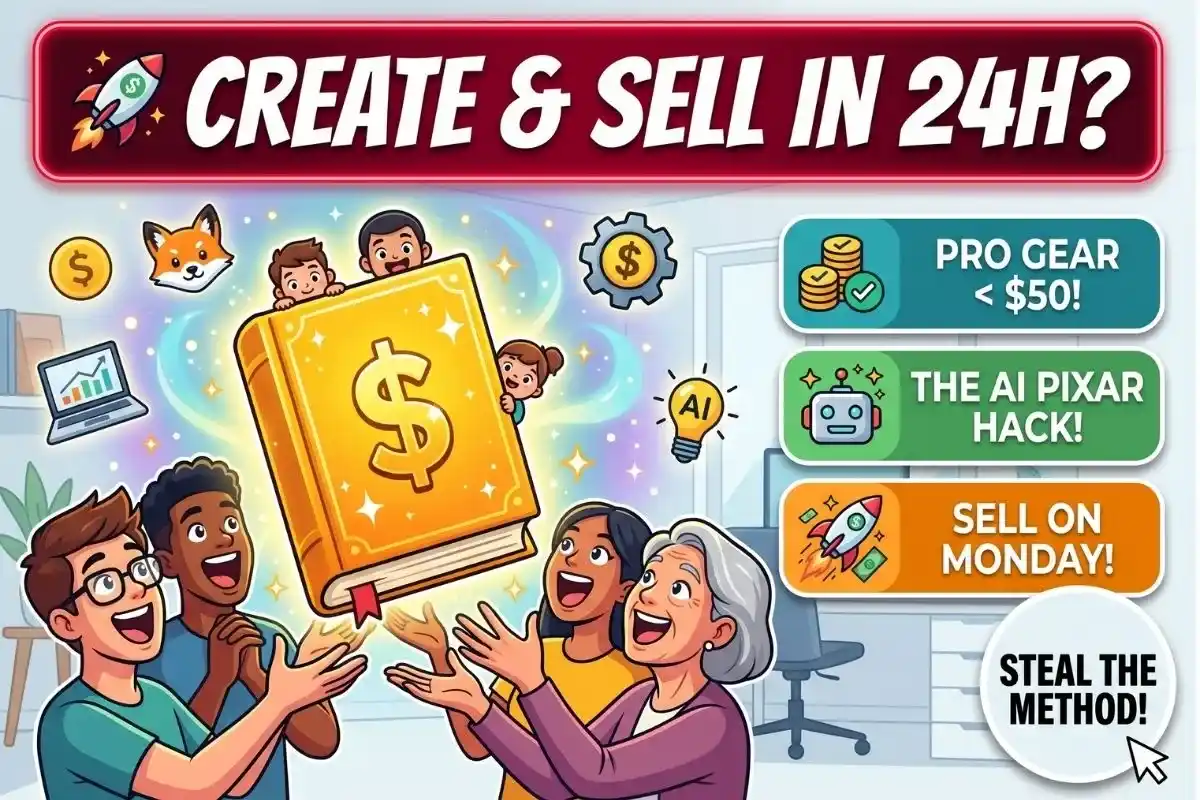
Imagine waking up on a quiet Sunday morning with a whimsical story idea bubbling in your mind. Years ago, transforming that fleeting thought into a beautifully illustrated, fully realized book would have taken months, if not years, of painstaking effort, endless revisions, and costly collaborations with artists. Today, the landscape of creativity has dramatically shifted. Thanks to incredible advancements in technology, that Sunday morning spark can become a published reality by the time you pour your Monday morning coffee. We are living in an era where the barriers to entry for aspiring authors have vanished entirely. By leveraging modern tools, you can weave enchanting tales, generate breathtaking visuals, and share your unique voice with children all around the globe in record time.
The Magic of 3D Kids Books AI
The journey begins with harnessing the extraordinary power of 3D Kids Books AI. Not so long ago, creating an appealing children’s book meant either possessing exceptional artistic skills or having the substantial budget required to hire a professional illustrator. Now, artificial intelligence acts as your incredibly fast, infinitely patient creative partner. You start by feeding a simple prompt or a rough storyline into an AI text generator, guiding it to craft age-appropriate dialogue, engaging pacing, and memorable characters. Once the manuscript is polished and ready, the true visual magic happens. Specialized image generation models have been trained to understand the specific nuances of three-dimensional rendering. By typing detailed descriptions into these platforms—such as “a brave little fox in a magical glowing forest, rendered in a 3D Pixar style, vibrant lighting, highly detailed”—you can produce stunning, cohesive illustrations that look like they were pulled straight from a blockbuster animated movie. This technology bridges the gap between imagination and execution, allowing absolute beginners to produce professional-grade visuals without ever picking up a digital paintbrush.
Transforming Children’s Publishing
This seamless integration of artificial intelligence is fundamentally transforming the traditional landscape of Children’s publishing. Historically, major publishing houses acted as strict gatekeepers, determining which stories reached the public based on market trends, physical printing costs, and internal budgets. Today, independent creators are bypassing these traditional hurdles entirely. When you create 3D illustrations for your story, you are essentially utilizing advanced Computer-generated imagery techniques that have been wonderfully simplified for everyday use. These AI tools calculate complex lighting, depth of field, and rich textures in a matter of seconds, giving your characters a tactile, lifelike quality that deeply engages young readers. The vibrant colors and dynamic compositions keep children hooked on every single page. Because the AI can maintain a consistent character design across different scenes, your book feels like a unified, high-budget production rather than a disjointed collection of images. This democratization means that diverse voices and highly niche stories, which might have been overlooked by major publishers, can now find their perfect audience directly.
The Mechanics of Rapid Self-Publishing
Once you have generated your magnificent 3D illustrations and refined your heartwarming text, the next exciting phase is bringing them all together through the process of Rapid self-publishing. Your Sunday afternoon will be dedicated to layout and formatting. Using intuitive, drag-and-drop design software, you can seamlessly lay your text over your AI-generated images, ensuring the typography is legible, playful, and perfectly aligned with the visual flow of the story. You do not need to be a professional graphic designer to master this; many platforms offer pre-made, perfectly sized templates specifically tailored for children’s literature. Once your final PDF is compiled, you simply upload it to a global distribution platform like Amazon Kindle Direct Publishing (KDP). Within a matter of hours, your book is processed, reviewed, and made available to millions of potential buyers worldwide. Before hitting publish, however, it is incredibly important to understand the basics of intellectual property to protect your newly minted creation. You can learn more about securing your rights and understanding the legal landscape by visiting the United States Copyright Office, which provides comprehensive, easy-to-understand guidelines on registering digital and physical works.
From Creation to Monday Morning Sales
When Monday morning rolls around, your weekend project has evolved from a simple experiment into a live product sitting on virtual bookshelves. But rapid creation does not automatically guarantee rapid sales; this is where the business side of your Sunday sprint kicks into gear. Sunday evening should be spent meticulously crafting a compelling book description, selecting the precise marketplace categories, and researching the most effective keywords that parents and educators are actively searching for. Think about the core message of your story—is it about overcoming fear, learning to share with siblings, or exploring the cosmos? Use those specific themes to position your book accurately in the market. Once the book is officially live on Monday, you can immediately start promoting it on your social media platforms, sharing fun behind-the-scenes glimpses of your AI prompts, or running small, targeted digital ad campaigns. The incredible speed of this process means you can afford to test different concepts, see what truly resonates with readers, and quickly iterate. If your first book is a modest success, you can easily launch a sequel by the following weekend, building a scalable publishing empire right from your living room sofa.
Comparing the Publishing Journeys
To truly understand how revolutionary this weekend process is, it helps to look at the numbers. Here is a quick breakdown of how traditional publishing compares to the modern, AI-assisted self-publishing route.
| Feature | Traditional Publishing | AI-Assisted Rapid Publishing |
| Average Timeline | 1 to 3 years | 24 to 48 hours |
| Illustration Cost | $2,000 – $10,000+ | $10 – $50 (Software Subscriptions) |
| Creative Control | Shared with editors/publishers | 100% Retained by the author |
| Royalties | 5% to 15% | Up to 70% (depending on platform) |
| Barrier to Entry | Extremely High (Agent required) | Extremely Low (Internet connection) |
Frequently Asked Questions (FAQ)
Can I legally sell a book that uses AI-generated images? Yes, you can sell books with AI-generated images on major platforms like Amazon KDP. However, the rules require transparency. When you upload your book, platforms will typically ask you to declare if the content is AI-generated or AI-assisted. As long as you follow the platform’s content guidelines and do not infringe on existing copyrighted characters (like Mickey Mouse or Batman), you are free to monetize your creations.
How much money do I need to start this process? The financial barrier is incredibly low. You might need to spend between $10 and $30 for a one-month subscription to a premium AI image generator and perhaps another $15 for graphic design software to format your pages. Publishing on platforms like Amazon KDP is entirely free. Therefore, you can comfortably create and launch your first book for under $50.
How many pages should a standard children’s book be? For standard picture books aimed at children aged 3 to 7, the industry standard is typically 32 pages. This includes the title page, copyright page, and the actual story content. When formatting for rapid self-publishing, sticking to a 24 to 32-page structure keeps printing costs low (if you offer a paperback version) and provides a satisfying reading experience for parents and children before bedtime.
Do I need a professional editor for a 32-page book? While you do not strictly need a professional editor, it is highly recommended that you thoroughly proofread your work. Because children’s books have very low word counts (often under 500 words), every single word matters. AI text generators are great, but human oversight ensures the rhythm, rhyme, and emotional tone perfectly match your original Sunday morning vision.
A Final Curiosity: The Evolution of 3D Books
As you embark on creating stunning digital 3D illustrations, it is fascinating to look back at how the desire for “3D” in children’s literature began. Long before pixels and AI algorithms, authors and paper engineers created magic through physical pop-up books. The very first movable books, known as volvelles, date back to the 13th century and were actually used by adults for tracking astronomical data! It wasn’t until the 19th century that intricate paper mechanics were applied to children’s entertainment, giving kids the thrill of three-dimensional depth jumping off the page.
Today, you are continuing that rich legacy, just in a modern medium. By utilizing brilliant lighting, shadow, and depth through AI, you are giving modern children that exact same sense of wonder and immersion without the need for glue or folding paper. You have the tools, you have the inspiration, and the weekend is just beginning. Your audience is waiting for a story only you can tell—so why not write it this Sunday?