


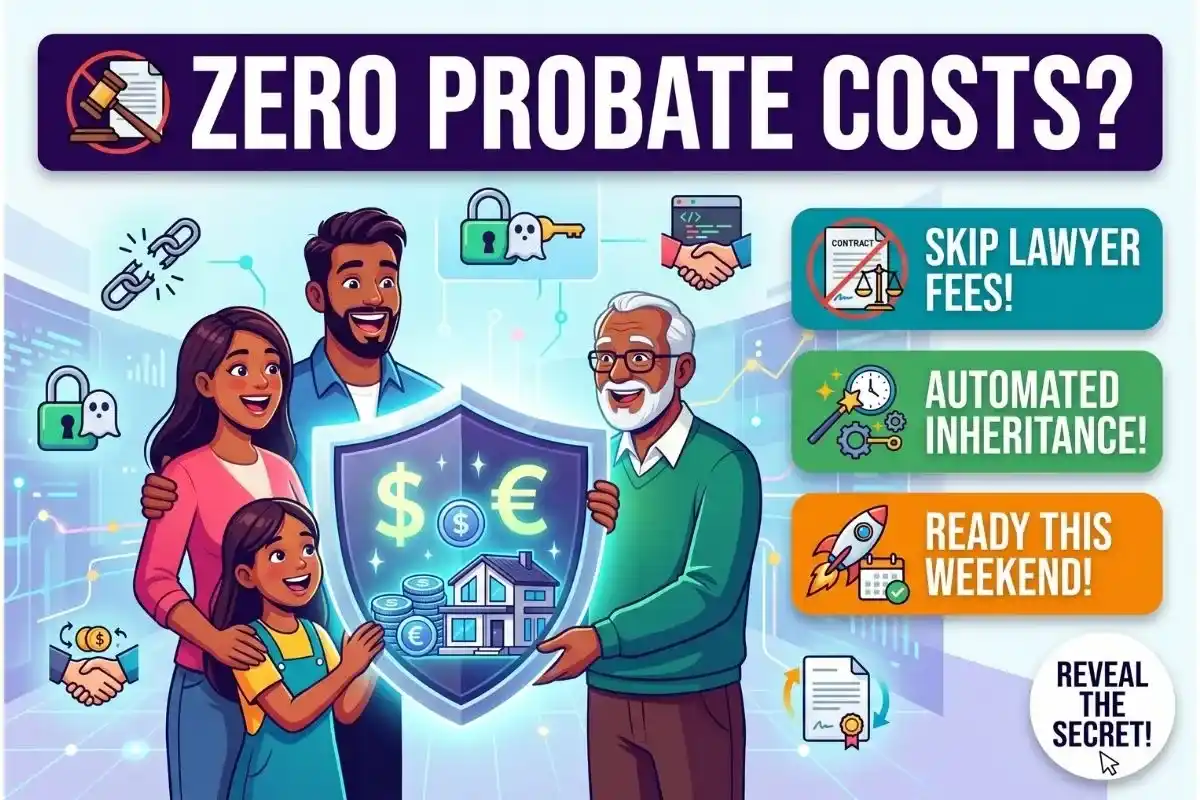
Imagine spending your entire life building a financial safety net for your children, only to have a significant portion of it eaten away by exorbitant legal fees, administrative costs, and prolonged probate court battles after you pass away. For centuries, transferring assets to the next generation has been controlled by gatekeepers, making generational wealth a complex, expensive endeavor reserved primarily for the ultra-rich. However, the digital age has introduced a revolutionary alternative that flips this traditional model on its head. By combining blockchain technology with decentralized governance, modern families are discovering a groundbreaking way to manage their assets collaboratively. Setting up a “Trustless DAO” to protect your family’s savings this weekend is not only possible, but it is becoming increasingly popular among forward-thinking households eager to secure their financial futures.
The Evolution of Generational Wealth
Historically, families have relied on traditional legal structures like revocable living trusts or family limited partnerships to dictate how their assets should be managed and distributed across generations. While these structures are effective, they require a high degree of trust in third parties, such as lawyers, trustees, and financial institutions, who inevitably charge substantial ongoing management fees for their services. Furthermore, the traditional probate process can be incredibly slow, public, and burdensome for grieving families, often tying up essential funds for months or even years. For a comprehensive overview of how traditional probate works and why many seek to avoid it, review the authoritative guidelines on the official USA.gov inheritance page. A Family Wealth DAO bypasses these archaic hurdles entirely by replacing expensive human intermediaries with immutable computer code.
What is a Family Wealth DAO?
At its core, a Family Wealth DAO operates much like a digital joint bank account, but with highly customizable rules that are mathematically enforced by a blockchain network rather than a traditional bank manager. When you establish one of these organizations, you issue specialized digital tokens to your family members, granting them voting rights proportional to their stake or equal standing across the board. If a family member wants to withdraw funds for a college tuition payment, start a new business, or cover a medical emergency, they must submit a formal proposal to the decentralized organization. The transaction will only execute if the required threshold of family members votes to approve it, ensuring that no single individual can drain the family savings impulsively. Every transaction, proposal, and vote is permanently recorded on a public ledger.
Crypto Inheritance and the Trustless Advantage
One of the most profound advantages of utilizing a decentralized structure is its ability to elegantly solve the notoriously difficult problem of crypto inheritance. Thousands of digital fortunes were lost forever because owners passed away without sharing complex private keys with their heirs. A trustless architecture mitigates this risk by incorporating automated mechanisms, often referred to as “dead man’s switches,” which periodically check for the creator’s activity on the network. If the creator fails to interact with the smart contract for a predetermined amount of time, the system automatically transfers the control of funds to designated heirs without any legal friction. You can learn more about the underlying mechanics of these self-executing agreements by reading the Wikipedia article on Smart Contracts, detailing how code autonomously facilitates and enforces an agreement.
Setting It Up This Weekend: The Blueprint
You might assume that creating such an advanced financial ecosystem requires months of programming expertise and thousands of dollars in development costs, but user-friendly platforms have democratized the entire process, making it feasible to complete over a single weekend. On Friday evening, you can sit down with your family to draft the foundational rules of your organization, discussing vital parameters such as voting power and quorum requirements. By Saturday afternoon, you can utilize intuitive, no-code web3 platforms to deploy your custom smart contracts onto a fast, low-cost blockchain network like Arbitrum or Polygon. Sunday can then be dedicated to funding the newly created digital treasury with stablecoins or decentralized assets, effectively finalizing the setup of your robust, tamper-proof family treasury before the work week begins.
Risks and Realities to Keep in Mind
Despite the incredible empowerment and efficiency offered by these decentralized frameworks, it is absolutely crucial for families to approach this technology with a clear understanding of the inherent risks and learning curves involved. The primary vulnerability in any trustless system is not necessarily malicious hacking, but rather human error, such as the accidental loss of the hardware wallets holding the voting tokens required to access funds. Furthermore, the legal and tax implications of operating a decentralized autonomous organization remain ambiguous in many jurisdictions, requiring families to consult with progressive tax professionals to remain compliant with regulations. Nevertheless, as the digital economy matures, the undeniable benefits of transparency and automation are making these digital vaults an increasingly attractive option for preserving generational wealth.
Integrating Traditional Assets into Web3
While the concept of a decentralized family treasury originated within the digital asset space, the ongoing evolution of asset tokenization is rapidly expanding what these autonomous organizations can hold and manage. Today, families are no longer restricted to merely storing volatile cryptocurrencies; they can deposit dollar-pegged stablecoins that yield predictable interest through decentralized finance protocols, effectively mirroring the function of a high-yield savings account. Moreover, innovative legal frameworks are emerging that allow real-world assets, such as real estate properties and gold reserves, to be represented as digital tokens. By wrapping a traditional limited liability company in a smart contract wrapper, a modern family can govern their entire diversified portfolio through a single, unified interface that operates twenty-four hours a day, without ever closing for banking holidays.
Comparing the Old and the New
To truly grasp the transformative nature of this technological shift, it is highly beneficial to compare the operational dynamics of a traditional family trust against the streamlined efficiency of a decentralized alternative. The following data table illustrates the stark contrasts between the two wealth management strategies, highlighting the differences in setup costs, operational speed, dependency on intermediaries, and overall transparency. By analyzing these key metrics, families can make informed decisions about whether transitioning their generational wealth into a trustless digital environment aligns with their long-term financial goals and risk tolerance. Understanding these fundamental distinctions is the first necessary step toward securing your family’s future in the digital age.
| Feature | Traditional Family Trust | Family Wealth DAO |
| Setup Cost | High (Lawyer fees, state filing) | Low (Blockchain network gas fees) |
| Setup Time | Weeks to Months | Hours to Days |
| Intermediaries | Lawyers, Banks, Assigned Trustees | None (Governed by Smart Contracts) |
| Transparency | Private, traditional paper-based | Public ledger, highly auditable by members |
| Asset Types | Fiat, Physical Property, Stocks | Crypto, Stablecoins, Tokenized Real-World Assets |
| Inheritance Execution | Manual probate or manual execution | Automated via conditional “Dead Man’s Switch” |
Frequently Asked Questions
What happens if a family member loses access to their governance voting token? In the decentralized world, losing a private key or a governance token is a significant concern, but a well-architected decentralized organization includes robust contingency plans to prevent catastrophic lockouts. If a family member loses their cryptographic credentials, the remaining members of the organization can initiate a specialized emergency proposal to revoke the lost token’s voting power and mint a replacement token for the affected individual. This democratic recovery process ensures that an honest mistake does not result in a permanent loss of access, though it requires the family to maintain a strict quorum and act collaboratively to approve the recovery transaction on the blockchain network.
Are these decentralized structures legally recognized for taxation and inheritance purposes? The legal recognition of decentralized autonomous organizations varies wildly depending on your specific country and local jurisdiction, making this one of the most complex aspects of establishing a digital treasury. In places like Wyoming or the Marshall Islands, specific legal frameworks exist to formally recognize these organizations as distinct legal entities, similar to traditional limited liability companies. However, in many other regions, tax authorities may simply view the organization as a general partnership, meaning that individual family members could be personally liable for capital gains taxes triggered by the organization’s activities, making it absolutely imperative to consult a knowledgeable tax advisor before launching.
Summary and Historical Curiosity
To summarize this incredible financial frontier, the ability to codify your family’s legacy into a mathematically enforced smart contract represents a monumental leap in the democratization of modern finance. As a fascinating piece of historical curiosity, the very first decentralized autonomous organization, known simply as “The DAO,” launched in 2016 and quickly raised over one hundred and fifty million dollars, proving the massive appetite for leaderless financial coordination on a global scale. While that early experiment faced significant technical challenges, the underlying technology has matured exponentially over the past decade. By setting up a Family Wealth DAO this weekend, you are pioneering a completely new standard for generational wealth preservation.

