


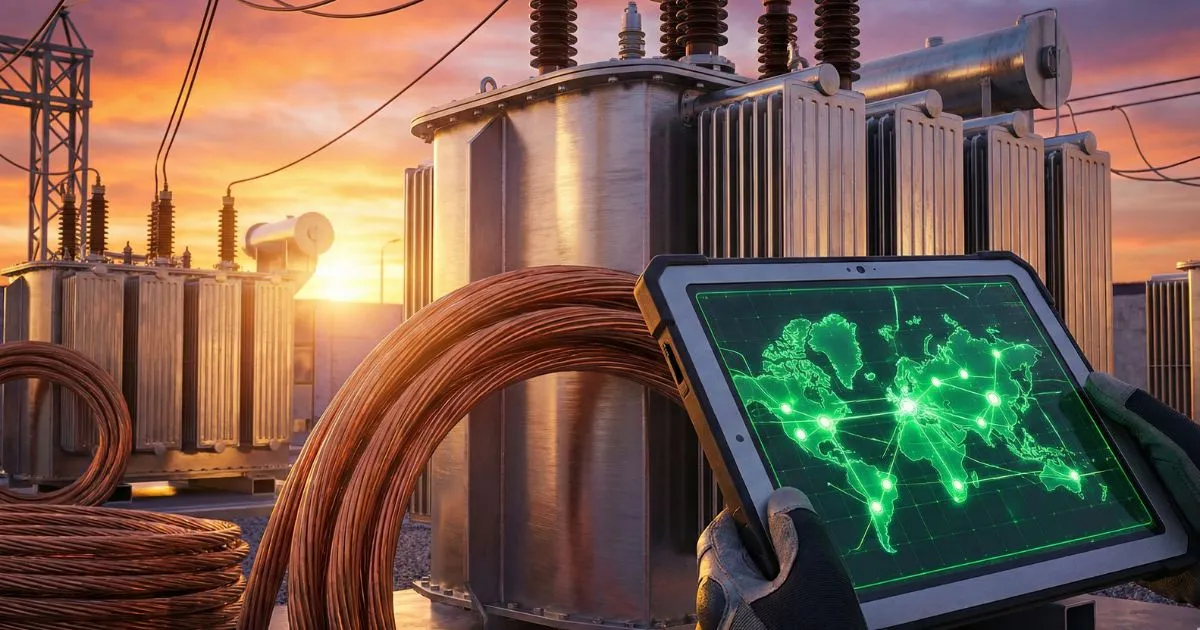
The hum of the transformer at the edge of my street sounds different this winter. It is a subtle change, perhaps just a psychological trick played by the headlines, but the energy market of 2026 has officially shed its old skin. We spent years bracing for a shortage of molecules—oil, gas, coal—only to find ourselves staring at a much more complex bottleneck. The crisis has migrated from the wellhead to the wire. We are no longer just fighting for the energy itself, but for the right to move it, store it, and manage the sheer unpredictability of its arrival.
If you look at the charts today, the narrative of 2024 and 2025 feels like a fever dream. Back then, we were obsessed with Brent crude and the geopolitical chess of pipelines. Now, the smart money is watching the load curves of AI data centers and the terrifyingly fast saturation of the intraday power markets. The Energy Grid Trading landscape has become a high-stakes game of seconds, where the winners are no longer the ones with the most fuel, but the ones with the most flexibility.
The rise of the flexible frontier and utility investments
There is a certain irony in the fact that we have more renewable energy than ever, yet our bills are climbing and the grid is more fragile than it was in the age of coal. We have hit a wall where the sheer volume of intermittent supply is choking the old copper veins of the national infrastructure. Investors who spent the last decade chasing pure-play renewable energy stocks are finding that the “capture rate” of solar is plummeting. When the sun is shining, everyone is producing, prices go negative, and the profit margins vanish into the ether.
This is where the shift becomes interesting for those of us looking for the next entry point. The crisis of 2026 is a crisis of synchronization. I have watched portfolios rotate away from the raw generation assets and toward the “enablers.” This is the era of the giant battery, the smart substation, and the software layer that sits between a thousand rooftop solar panels and the heavy industrial users. Utility investments are no longer the boring, “widows and orphans” stocks they used to be. They have become the primary battleground for the AI revolution.
Every time a tech giant announces a new cluster of H100s, they are essentially placing a massive, leveraged bet on the local utility’s ability to upgrade a transformer. The backlog for these components is measured in years, not months. If you can identify the companies that own the “right of way” or the manufacturing capacity for high-voltage equipment, you are holding the keys to the kingdom. It is a physical reality that no amount of digital innovation can bypass. You cannot download a physical power line.
Decoding the volatility of the modern energy grid trading
The volatility we are seeing in the early months of 2026 is unlike the commodity spikes of the past. It is jagged and localized. One region might be drowning in excess wind power at 3:00 AM, while a neighboring state is firing up expensive gas peakers to keep the data centers cool. This fragmentation is where the real alpha is hidden. I find myself less interested in the total global supply of oil and more obsessed with the “interconnection queue.”
If you want to understand how to trade this, look at the projects that are actually getting plugged in. Thousands of megawatts of solar are sitting idle because they cannot get a permit to cross a highway or a state line. The companies that are solving these “last mile” energy problems are the ones that will define the next decade of returns. It is about the shift from a centralized, top-down model to a messy, decentralized web.
We are also seeing a fascinating convergence between the energy markets and the compute markets. Power is becoming the base currency of the digital economy. In some circles, people are already valuing land not by its acreage or its proximity to a city, but by its proximity to a high-voltage substation with available capacity. It is a land grab that feels like the old railroad days, just with different cables.
The transition is painful, yes. The 2026 energy crisis is, at its heart, a growing pain. We are trying to run a 21st-century economy on a 20th-century nervous system. But for those who can see the wires behind the wall, the opportunities are massive. It requires a different kind of vision, one that values resilience and responsiveness over raw output.
There is a feeling of inevitability about it all. The old ways of trading energy—buying a dip in crude or waiting for a cold snap to boost gas—feel increasingly quaint. Now, we are trading the weather, the speed of government permits, and the cooling requirements of a thousand different algorithms. It is chaotic, it is unpredictable, and it is exactly where the next generation of wealth is being wired together.
The question is no longer about when the crisis will end, but about who will own the infrastructure that replaces it. The grid is being rebuilt in real-time, one substation at a time, and the ledger is still wide open for those willing to do the work of understanding the new flow.

