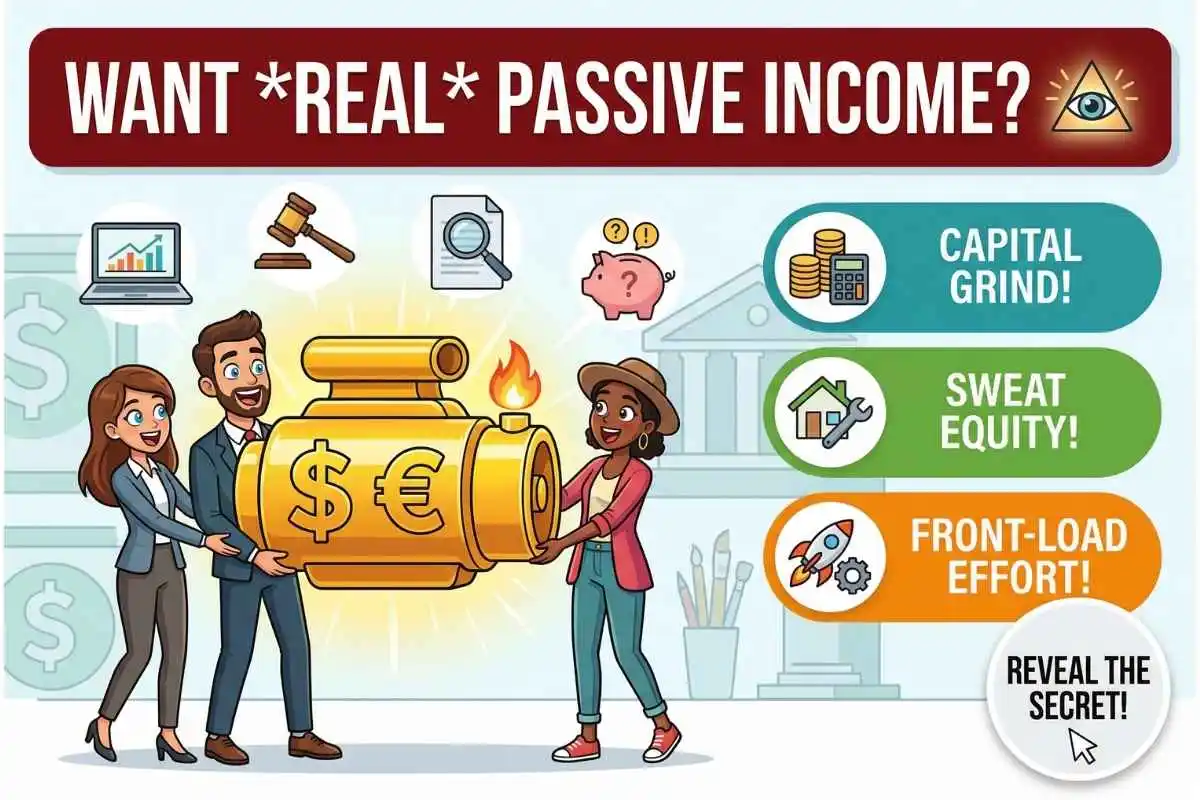
We live in an era where the internet is flooded with images of people sipping drinks on beaches, claiming they make money while they sleep. The phrase “passive income” gets tossed around as if it is a magical spell that instantly fills your bank account without any effort. However, the truth is far less glamorous and much more grounded in hard work. Passive income is rarely passive from day one. In reality, it involves front-loading a massive amount of time, energy, or capital before you ever see a single dime of recurring revenue. By definition, true passive income might eventually require little daily maintenance, but getting the engine started is a completely different story. Whether you are funneling your hard-earned cash into the stock market or spending late nights coding, the upfront cost is substantial. Understanding this hidden price tag is the key to setting realistic expectations and succeeding in building wealth. Let’s look at the real upfront work required for three of the most popular passive income streams today.
Stream 1: The Capital Grind of Dividend Investing
Our first stream is dividend investing, which is often touted as the ultimate hands-off wealth-building strategy. The concept is straightforward: you buy shares in established companies, and in return, they pay you a portion of their earnings regularly. It sounds incredibly easy, but the barrier to entry is entirely financial. To make a meaningful income from dividends, you need a colossal amount of upfront capital. If a stock portfolio has an average dividend yield of three percent, you would need hundreds of thousands of dollars invested just to generate the equivalent of a modest salary. The upfront work here is the grueling process of saving that money in the first place. It means years of living below your means, budgeting meticulously, and resisting the urge to inflate your lifestyle. Furthermore, you must spend countless hours researching companies, analyzing financial statements, and understanding market trends to ensure your investments are safe and the dividends remain sustainable over time.
Stream 2: The Sweat Equity of Real Estate
The second highly popularized stream is real estate, specifically owning rental properties. Many people dream of buying a single-family home and watching the monthly rent checks roll in. However, the physical and administrative labor required to get a rental property off the ground is staggering. First, there is the saving phase for a hefty down payment, closing costs, and an emergency reserve fund. Then comes the hunt for the right property, involving analyzing neighborhood dynamics, negotiating with sellers, and securing financing. Once you hold the keys, the real sweat equity begins. Properties rarely come in perfect condition, so you will likely spend weekends painting walls or managing contractors to get the unit rent-ready. After that, you must market the property, screen tenants, and draft airtight leases. The IRS explicitly outlines complex rules regarding what constitutes passive activity, as seen in their Passive Activity and At-Risk Rules, highlighting that actual participation is often strictly required.
If physical real estate sounds like too much manual labor, many investors pivot to Real Estate Investment Trusts (REITs) as a more hands-off alternative. A REIT is a company that owns, operates, or finances income-producing real estate, allowing individual investors to earn a share of the income without buying commercial property themselves. While this removes the need to fix toilets at midnight, it simply shifts the upfront work from physical labor to intensive analytical research. Just like picking individual stocks, selecting the right REIT requires a deep dive into the company’s portfolio, management team, and historical performance. You have to understand the nuances of different real estate sectors, whether it is healthcare facilities or commercial shopping centers. Additionally, you need to be aware of macroeconomic factors affecting real estate values, such as interest rate fluctuations. The intellectual upfront work and the capital accumulation phase remain significant hurdles here.
Stream 3: The Content Treadmill for Digital Products
The third stream, creating digital products or online courses, is the darling of the modern creator economy. The pitch is enticing: create a product once, and sell it an infinite number of times with zero inventory costs. Whether it is an e-book or a comprehensive video course, the profit margins can be incredibly high. However, the upfront time commitment is absolutely monumental. Before you can sell anything, you have to acquire a highly marketable skill or deep expertise in a specific subject. Then, you spend weeks drafting outlines, recording videos, editing content, and designing a polished final product. But creating the product is only half the battle. The most daunting upfront work involves building an audience who actually wants to buy what you are selling. This requires an exhaustive effort on social media, writing blog posts, or running a video channel to establish trust. You become a full-time marketer long before the income becomes truly passive.
Comparing the Upfront Costs
To give you a clearer picture of how these three streams compare, it is helpful to look at the numbers and the primary type of investment required for each. While the exact figures will vary wildly depending on your personal financial situation, market conditions, and the specific niche you choose, this breakdown highlights the core differences in upfront costs. Notice how the barrier to entry shifts from heavy capital requirements in the financial markets to heavy time and energy commitments in the digital space. Understanding these trade-offs is crucial when deciding which vehicle aligns best with your goals.
| Income Stream | Primary Upfront Requirement | Estimated Time to First Revenue | Ongoing Maintenance Level |
| Dividend Investing | High Capital (Money) | Low (Days to Weeks) | Low |
| Real Estate (Rental) | High Capital & Labor | Medium (Months) | Medium to High |
| Digital Products | High Time & Energy | High (Months to Years) | Low to Medium |
Frequently Asked Questions
Is passive income completely tax-free?
While it is called “passive,” the Internal Revenue Service definitely still wants its share. Passive income is absolutely not tax-free, though it is often taxed differently than the active income you earn from a traditional job. For example, qualified dividends and long-term capital gains might be taxed at a lower rate than your regular salary, which is a significant advantage for investors. However, rental income is generally taxed as ordinary income, although you get the benefit of deducting depreciation and operating expenses, which can lower your overall tax burden. Income from selling digital products is usually considered active business income by the tax authorities if you are continually working to promote it. You should always consult with a certified tax professional to understand exactly how your specific income streams will be taxed and managed.
Can I start building passive income with no money at all?
You can absolutely start building passive income with no money, but you must be prepared to invest a massive amount of your personal time and energy instead. If you lack financial capital, your best route is typically through the digital product or content creation space. Writing an informative blog, starting a video channel, or designing digital templates requires very little monetary investment upfront. However, the trade-off is that you will be working for free for many months to build an audience and establish trust. You are essentially trading your “sweat equity” for future returns. Conversely, traditional passive income streams like dividend investing or real estate absolutely require upfront cash. If you are starting from zero, your initial focus must be on increasing your active income and ruthlessly saving for seed capital.
A Final Curiosity: Reframing the “Passive” Mindset
As we wrap up our exploration of these financial strategies, it is important to remember that the concept of passive income is better understood as “delayed income.” The fascinating curiosity about wealth building is that the most successful individuals do not look for shortcuts; instead, they willingly embrace the massive upfront friction that deters the average person. Think about the sheer willpower required to save your first hundred thousand dollars for a dividend portfolio, or the resilience needed to create fifty videos before a single person buys your course. That initial barrier to entry is actually your greatest asset, because it dramatically reduces the amount of competition you will face once you reach the other side. When you shift your mindset from seeking easy money to strategically investing your current time and capital for future freedom, the entire game changes. The upfront work might be grueling, but the long-term reward is undeniably worth the immense effort.