


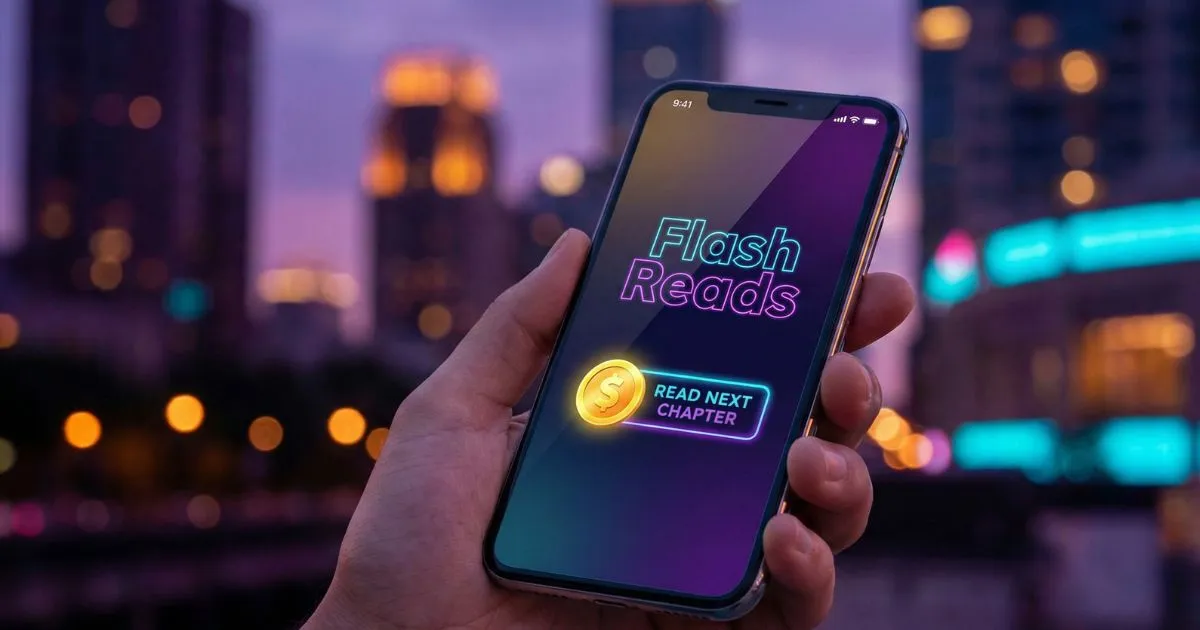
The Great Compression of attention is not a myth, it is a business model that finally matured this winter. We have spent years talking about the gold fish memory of the modern consumer, but 2026 is the year we stopped complaining and started cashing the checks. If you look at the landscape of digital assets right now, there is a quiet, intense heat surrounding a specific kind of property that most institutional investors would have laughed at five years ago. I am talking about the rise of micro-publishing through flash fiction apps, where stories under 500 words are being sold like digital snacks to millions of commuters, students, and office workers during their thirty-second micro-breaks. It is a strange time to be in finance, watching the valuation of a thousand-page epic novel get outpaced by a collection of bite-sized, high-tension dramas that take less time to read than it takes for an espresso to pull.
There is a visceral quality to this market that reminds me of the early days of mobile gaming. Back then, we saw the shift from complex console titles to the “time-wasters” that eventually became multi-billion dollar franchises. Today, the written word is undergoing the same radical downsizing. People still want to be moved, they still want the adrenaline of a thriller or the warmth of a romance, but they want it in a format that fits between a Slack notification and an elevator door opening. These mobile storytelling platforms are not just repositories for hobbyists anymore, they are sophisticated revenue engines utilizing hybrid monetization models that mix micro-transactions with high-intent subscription funnels. It is about capturing a user for three minutes and making those three minutes the most profitable part of their digital day.
The Economic Engine of Flash Fiction Apps
When you peel back the hood of a successful micro-publishing venture, you see a mechanism that is surprisingly resilient to the typical volatility of the broader ad market. The revenue here is driven by what I call the “cliffhanger tax.” Readers land on these apps through highly targeted social snippets, get hooked into a narrative arc within the first fifty words, and then hit a soft paywall right at the moment of peak tension. In 2026, the tech has evolved to the point where on-device AI can sense when a reader is most engaged, triggering a micro-purchase prompt for the next “drop” of content at the exact millisecond their dopamine peaks. This is not the clunky, intrusive advertising of the past decade. It is a seamless, almost invisible hand that moves the reader from a free user to a paying fan without ever breaking the flow of the story.
The overhead for these assets is remarkably lean compared to traditional media houses. You do not need a massive editorial board when you have a decentralized army of creators who understand the rhythm of mobile storytelling better than any New York editor ever could. The value lies in the platform, the data it gathers on reading patterns, and the ability to scale a single successful story into a dozen different languages using hyper-realistic translation tools that maintain the emotional punch of the original text. We are seeing portfolios of these niche apps being traded in private circles because they offer something rare: high-margin, recurring revenue that scales with user acquisition costs that remain surprisingly low. The audience is not just looking for a story, they are looking for a habit, and once that habit is formed, the LTV of a single reader can rival that of a mid-tier SaaS subscriber.
Scaling Growth in the Era of Mobile Storytelling
The real magic happens when you realize that these apps are not just stand-alone islands. They are part of a broader shift toward what the industry is calling frictionless entertainment. In the current market, a piece of flash fiction that performs well is no longer just a text file, it is the blueprint for a vertical video series, a podcast, or a branded community on a third-party server. The agility of these small-scale stories allows for a rapid testing of intellectual property. Why spend two years and five million dollars developing a pilot for a streaming service when you can test a concept on a flash fiction app for five hundred dollars and have a definitive answer on its viability within forty-eight hours? This rapid iteration is what makes the sector so attractive to those of us who prefer data-backed bets over creative gambles.
I have watched several operators take a single, struggling app and turn it into a powerhouse by simply cleaning up the user journey and introducing a more sophisticated “token” economy. Users in 2026 are very comfortable with the idea of paying small amounts for immediate gratification. If the story is good enough, they will spend five dollars a week, fifty cents at a time, without a second thought. It is the democratization of the impulse buy, applied to the oldest form of human entertainment. We are moving away from the “all you can eat” subscription fatigue of the early 2020s and toward a more honest, pay-as-you-go relationship with content. This shift favors the nimble, the niche, and the owners of the platforms that facilitate these micro-exchanges.
There is a certain irony in the fact that as our technology becomes more complex, our stories are becoming shorter. But from an investment perspective, that brevity is a superpower. It allows for a level of density in monetization that long-form content simply cannot match. You can’t put a paywall every three hundred words in a Tolstoy novel without being chased out of the room by a mob of angry purists, but in the world of flash fiction apps, that is exactly what the audience expects and, strangely enough, what they enjoy. It creates a game-like environment where the “win” is the resolution of the plot.
The horizon for this niche looks incredibly bright, mostly because the barriers to entry are finally starting to rise. It is no longer enough to just have a library of text, you need the infrastructure to manage the global rights, the AI-driven personalization, and the payment rails that handle thousands of tiny transactions a second. This move toward professionalization means that the existing assets in the space are becoming increasingly valuable. We are seeing a consolidation phase where the “smart money” is quietly picking up the most efficient apps before the general market catches on to just how much money can be made five hundred words at a time.
I find myself wondering where the ceiling is for this kind of hyper-condensed media. Is there a point where the stories become too short to matter? Perhaps, but we haven’t hit it yet. As long as there are people standing in lines, sitting on trains, or hiding in bathroom stalls for a three-minute escape from their reality, there will be a massive, hungry market for these digital micro-fictions. The real winners won’t be the ones writing the stories, but the ones who own the digital real estate where those stories live and breathe. It is a fascinating corner of the finance world to inhabit right now, one where the smallest units of content are generating some of the largest returns on the board.

