


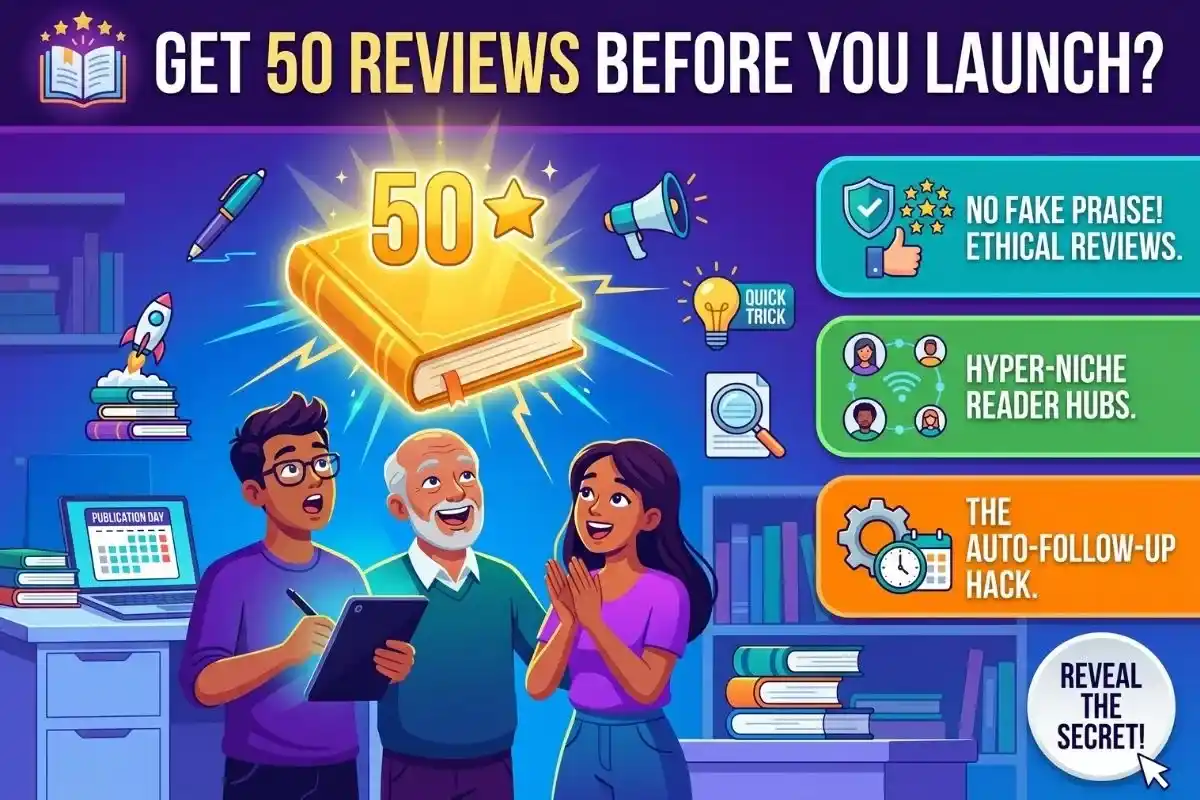
Imagine waking up on publication day, opening your retailer page, and seeing a vibrant collection of fifty honest reviews already sitting there. For many new authors, this sounds like an impossible dream achieved only through shady tactics. However, the publishing landscape has continually evolved, and achieving a massive head start on your reader feedback is an entirely legitimate practice when done correctly. The secret does not lie in buying fake praise or harassing your distant relatives for five-star ratings. Instead, it revolves around a highly effective approach to ARC Book Marketing that aligns with ethical standards. Let us dive deep into the specific strategy that will dramatically transform your upcoming launch and ensure your book gets the attention it deserves.
The Magic of ARC Book Marketing
At the heart of this early-review phenomenon is a concept known as ARC Book Marketing, which stands for Advance Reader Copies. The digital age has democratized this process, allowing indie authors to distribute electronic versions of their unreleased books to eager readers. The core premise is a mutually beneficial exchange: you provide a free copy of your manuscript, and the reader voluntarily agrees to leave an honest review on retail platforms once the book goes live. It is imperative to understand that this is not a transaction where you are purchasing a positive critique. The reviews must be genuinely held opinions, whether they are glowing commendations or constructive assessments, ensuring that the integrity of the reader-author relationship remains completely intact and above board.
Crafting Your Book Launch Strategy
Integrating this process into your comprehensive book launch strategy requires careful timing and meticulous organization. You cannot simply hand out free copies a week before publication and expect a flood of reviews to magically appear. A truly effective campaign begins at least three to four months prior to your launch date. This extended runway gives prospective readers ample time to consume the material without feeling rushed, which inherently leads to higher-quality feedback. During this period, your primary objective is to assemble a curated list of early reviewers. You must establish clear communication channels, set precise expectations regarding when and where reviews should be posted, and provide the digital files in multiple formats. By blending this outreach into your broader promotional efforts, you create a synchronized wave of momentum.
Sourcing Trustworthy Reader Reviews
The modern 2026 trick to accelerating this process is tapping into hyper-niche, highly engaged micro-communities. Rather than begging for attention on massive social media feeds where organic reach is non-existent, authors are now utilizing specialized Discord servers, genre-specific reading apps, and vetted ARC platforms. When you source your early readers from these hubs, you are connecting with people who consider reading and reviewing to be a serious hobby. These individuals pride themselves on discovering new talent and providing thorough reader reviews that carry weight with consumers. However, you must always stay on the right side of consumer protection laws. According to the Federal Trade Commission (FTC), reviewers who receive a free product must explicitly disclose that fact in their evaluation to maintain transparency.
The Power of Automated Follow-Ups
Securing the commitment of an advance reader is only half the battle; the real magic happens in the follow-up sequence. Human beings are inherently forgetful, and even the most enthusiastic reader can lose track of a release date amidst their busy lives. The ethical trick relies on setting up a gentle, automated, and personalized communication loop. Approximately one week before the book launches, send a polite reminder expressing your gratitude and reiterating the publication date. Then, on the actual launch day, send a celebratory message that includes direct, easy-to-click links to the specific pages on major retailers where they need to drop their review. By removing all friction and making the submission effortless, you dramatically increase your conversion rate, effectively securing your fifty reviews.
Maintaining Ethical Boundaries
As you execute this strategy, remember that maintaining a respectful boundary is what keeps the practice entirely ethical. You must never pressure an ARC reader into leaving a positive rating; their only obligation, if they choose to fulfill it, is to offer their honest perspective. If a reader did not enjoy the book or simply did not have time to finish it, it is crucial to accept that outcome gracefully and avoid any confrontational follow-ups. Building a sustainable career means playing the long game, and a diverse range of reviews actually lends credibility to your book’s page. Readers are savvy; they know that a suspicious perfect average might be artificially inflated. A natural spread of authentic opinions generated through a transparent ARC campaign will ultimately serve you best.
The Data Behind the Strategy
To better visualize how the timing of your advance copy distribution impacts your final review count, it is incredibly helpful to look at industry averages. Authors who rush their process often find themselves disappointed, wondering why their carefully selected readers failed to deliver on launch day. The reality is that reading takes time, and expecting someone to drop everything to read your book is simply unrealistic. The data clearly shows that providing a longer runway dramatically increases the likelihood of a reader completing the book. Below is a breakdown of how your ARC campaign timeline directly correlates with expected conversion rates.
| Time Before Launch | Estimated Reader Completion Rate | Expected Review Conversion Rate | Ideal Strategy |
| 1-2 Weeks | 15% – 25% | 10% – 15% | Far too rushed; highly discouraged. |
| 1 Month | 40% – 50% | 30% – 40% | Acceptable for novellas or short reads. |
| 2-3 Months | 65% – 75% | 50% – 60% | The industry standard sweet spot. |
| 4+ Months | 80% – 90% | 70% – 85% | Ideal for complex, lengthy novels. |
Frequently Asked Questions (FAQ)
Navigating the complex world of early book promotion can sometimes feel overwhelming, especially when you are trying to do everything strictly by the book. To help clarify this intricate process and ensure you are fully prepared for your upcoming launch, we have thoughtfully compiled detailed answers to some of the most frequently asked questions regarding advance copies and securing legitimate feedback. Understanding these foundational core concepts is absolutely vital for any author looking to maximize their audience reach and build a sustainable career without accidentally violating any strict retail platform rules or governmental regulations.
What exactly is an ARC? An Advance Reader Copy, often abbreviated as an ARC, is a pre-published version of a book that is provided to readers, reviewers, and influencers entirely for free. The primary purpose of distributing these copies is to generate early buzz and secure a foundational layer of social proof before the book is officially released to the general public. While traditional publishers used to send physical paperbacks, modern indie authors predominantly use digital formats like EPUB files to save on printing costs. Providing these digital ARCs allows authors to reach a global audience instantly and efficiently.
Is it legal to give away free books for reviews? Yes, it is absolutely legal and completely ethical to give away free copies of your book in exchange for honest reviews, provided you follow regulatory guidelines. The most critical rule, as enforced by consumer protection agencies like the FTC, is that the reviewer must publicly disclose that they received a free copy of the book. Furthermore, you cannot explicitly demand a positive review, nor can you offer financial compensation or gift cards in exchange for a five-star rating, as this completely violates retail platform terms of service and undermines reader trust.
What happens if an ARC reader leaves a bad review? When an advance reader leaves a critical or negative review, the best and only appropriate response is to do absolutely nothing. It is a fundamental truth of the publishing industry that art is subjective, and not every single reader is going to connect with your specific storyline. In fact, having a few lower-rated reviews actually makes your book’s overall rating look much more authentic to potential buyers. Engaging in arguments or demanding that the reader remove their critique is highly unprofessional and can permanently damage your reputation in the literary community.
The Curiosity Corner: The Psychology of the Early Reviewer
Have you ever wondered why someone would willingly commit to reading and reviewing a book for a completely unknown author without any financial compensation? The psychology behind this phenomenon is fascinating and deeply rooted in human nature’s desire for discovery and community status. Early reviewers often view themselves as literary tastemakers; they genuinely love the thrill of unearthing a hidden gem before the rest of the world knows about it. By offering them an advance copy, you are granting them VIP access to an exclusive club. They feel valued because an author has entrusted them with an unreleased piece of art. This intrinsic motivation is far more powerful than any paid incentive. When you understand that these readers are motivated by a sense of prestige, you can tailor your ARC Book Marketing efforts to celebrate their contribution, fostering a fiercely loyal fanbase.

