


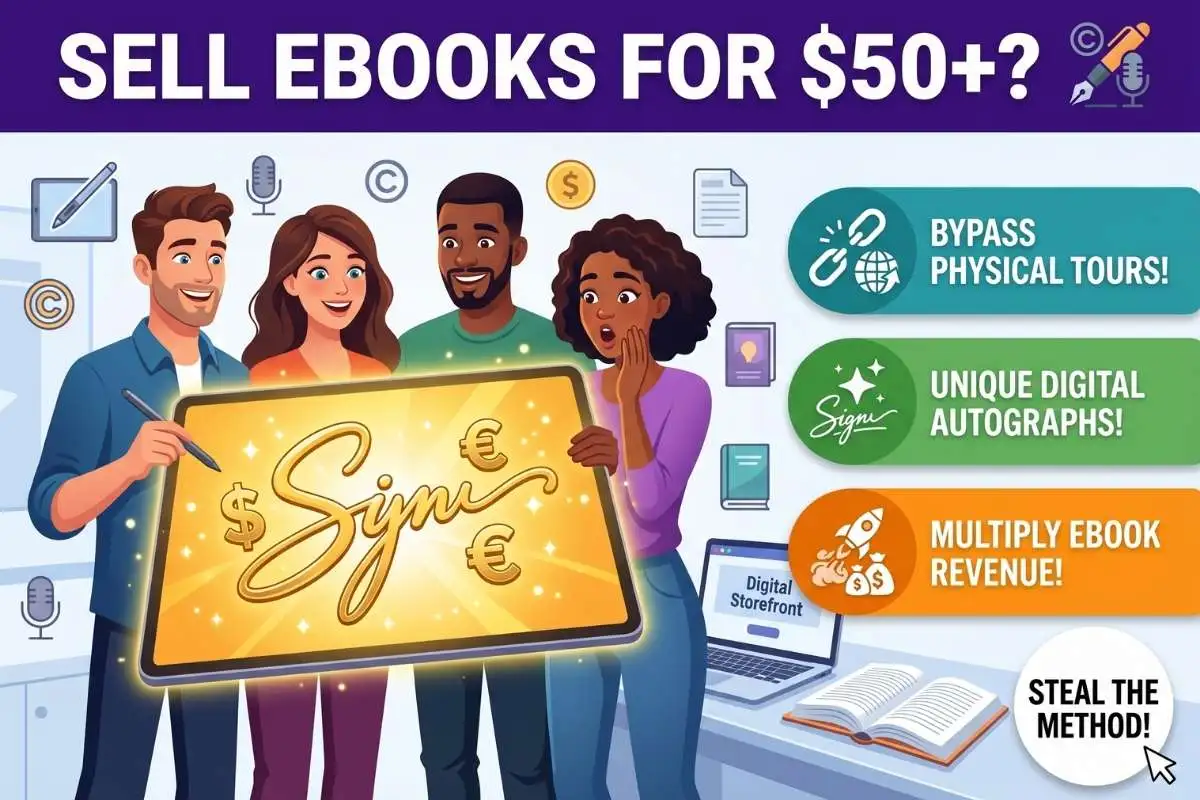
Imagine sitting at your desk, hundreds of miles away from your nearest reader, yet holding the power to hand them a completely unique, personalized piece of your creative soul. In the fast-paced digital landscape of 2026, the creator economy has evolved far beyond the simple exchange of a standard digital file for a few dollars. Authors and independent creators have discovered a revolutionary way to bridge the gap between the instant convenience of digital media and the intimate, human connection of a physical book signing event. They are selling personalized digital autographs inside unique eBooks, charging premium prices of $50 or more, and their most dedicated followers are enthusiastically paying for the privilege. This is a fundamental shift in how we value digital ownership and the evolving relationship between a creator and their core audience. Let us explore how you can harness this strategy, bypass traditional gatekeepers, and forge a lucrative, direct connection with your true fans today.
The Evolution from Physical Signings to Digital Exclusivity
For centuries, the physical book signing has been a staple of the publishing industry, serving as a ritualistic gathering where readers could meet their literary heroes and receive a tangible testament of that encounter. However, the logistics of global book tours are overwhelmingly expensive, mentally exhausting, and inherently limit the number of fans an author can physically reach. Today, the landscape has dramatically shifted, and the very concept of the autograph has transcended physical paper, evolving into embedded digital inscriptions. In 2026, a personalized digital autograph is no longer just a hastily copy-pasted image; it is a cryptographically secured, uniquely rendered page seamlessly integrated into the reader’s personal copy of the eBook. This digital exclusivity provides the exact same psychological thrill as a physical signature, but it completely removes geographical boundaries. Fans from Tokyo to Toronto can now experience the joy of opening a highly anticipated new book to find a custom, hand-written message addressed specifically to them, making that specific digital file a one-of-a-kind artifact in a world of infinite digital replication.
The Economics of the “True Fan” Business Model
Understanding why a reader would willingly pay $50 for a digital book requires a deep dive into the economics of modern fandom and the shifting values of online consumers. The traditional publishing model relies heavily on selling massive volumes of low-priced books, a strategy that favors algorithmic discovery and massive corporate marketing budgets. Conversely, the direct-to-consumer model thrives entirely on the concept of “true fans”—a core group of highly dedicated supporters eager to purchase everything a creator produces. When you offer a uniquely inscribed, digitally autographed eBook, you are not competing on the baseline price of the text; you are selling an exclusive, memorable experience and a verified piece of digital memorabilia. If an author has an audience of just one thousand deeply invested readers, converting even a fraction of them at a premium $50 price generates substantial, independent revenue. This direct financial support empowers creators to write more niche, passionate works without worrying about appealing to the lowest common denominator, ultimately creating a healthier ecosystem for independent artists.
The Technology Making Digital Signatures Secure
The practical implementation of personalized digital autographs relies on sophisticated yet highly accessible publishing technologies that have finally reached mainstream maturity in 2026. Independent creators are utilizing dynamic file generators and secure digital delivery platforms that allow them to inject customized, hand-drawn digital ink and personalized text directly into the master file of a book before it is dispatched to the buyer. Furthermore, to assure dedicated fans that their premium copy is genuinely unique, many authors are adopting secure timestamping methods similar to the digital record-keeping standards used by the United States Copyright Office. This invisible layer of security ensures that the file possesses a verifiable digital provenance, proving its authenticity. By assigning a unique identifier to every personalized copy sold, authors effectively protect their hard work from mass piracy while elevating the perceived value of the digital asset. The fan isn’t just downloading a standard file; they are taking ownership of a verified, digitally signed first edition linked directly to their identity.
Step-by-Step: Crafting the Personalized Experience
Implementing this premium offering into your creative business is surprisingly straightforward, provided you focus meticulously on delivering an impeccable customer experience. The process typically begins with opening a limited-time digital storefront, which immediately creates a vital sense of urgency and exclusivity for your upcoming release. When a fan purchases the $50 personalized tier, they are prompted to fill out a brief online form, sharing their name and a small personal detail—perhaps their favorite character from your series. As the creator, you then use a tablet and digital stylus to hand-write a custom, thoughtful dedication directly onto a digital title page template. Specialized software seamlessly merges this customized image page into the standard digital file of your book. Finally, the personalized file is securely emailed directly to the reader’s inbox via a unique, single-use download link. This bespoke workflow requires significantly more time per sale than an automated download, which is exactly why the premium price tag is entirely justified and respected by your audience.
Cultivating Long-Term Loyalty Through Digital Intimacy
Ultimately, the true, lasting power of the personalized digital autograph extends far beyond the immediate influx of premium revenue; it is fundamentally about cultivating profound, long-term loyalty that ever-changing algorithmic platforms cannot disrupt. When a reader opens an eBook and sees their own name carefully written out in the author’s distinctive handwriting, accompanied by an inside joke or a thoughtful response, the cold digital divide vanishes instantly. That reader permanently transforms from a passive, casual consumer into an active patron and a lifelong, vocal advocate for your creative work. In an era where artificial intelligence can easily generate endless streams of generic content, human authenticity and verifiable personal attention have become the ultimate luxury goods. By taking the dedicated time to individually acknowledge your true fans through these customized digital artifacts, you build an unbreakable, deeply supportive community. This strategy guarantees that when your next ambitious project launches, you will be warmly welcomed by an eager audience ready to support your journey.
The Financial Impact: Standard vs. Premium Digital Sales
To clearly illustrate the power of this direct-to-consumer model, let us compare the revenue generated from standard digital storefronts versus a personalized, premium digital offering.
| Sales Model | Price Per Unit | Platform Fee | Creator Profit Per Unit | Sales Needed for $1,000 Profit |
| Standard Retailer (e.g., Amazon) | $4.99 | 30% | $3.50 | ~286 sales |
| Direct Standard Digital Sale | $9.99 | 5% | $9.49 | ~106 sales |
| Direct Personalized Autograph | $50.00 | 5% | $47.50 | ~22 sales |
Frequently Asked Questions
Do I need an expensive tablet to create digital autographs? No, you do not need top-of-the-line hardware. Any standard consumer tablet with a basic stylus is sufficient for writing legible, personalized digital signatures. Many authors even use affordable digital drawing pads connected to their desktop computers.
How do I prevent buyers from illegally sharing their personalized files? The beauty of the personalized digital autograph is that it acts as a natural deterrent to piracy. Because the file prominently features the buyer’s real name and a personal message, they are significantly less likely to upload it to public sharing sites.
Is $50 too much to ask for an eBook? It is crucial to remember that you are not just selling the text of the eBook; you are selling a unique experience. While $50 is too much for a casual reader, it is highly attractive to your “true fans” who actively want to own exclusive memorabilia and support your career.
Can traditionally published authors use this strategy? Yes, depending on the wording of their publishing contracts. Many traditionally published authors retain the rights to sell limited direct, special editions. Always consult your literary agent to ensure you are not violating distribution exclusivity clauses before launching a digital storefront.
A Final Curiosity: The Future of the “First Edition”
As we look further into the 2020s, the concept of a “first edition” book is undergoing a fascinating transformation. Historically, a first edition was valuable simply because it was part of the initial physical printing press run—a mechanical limitation that created natural scarcity. Today, digital files have no mechanical limits, which initially stripped eBooks of any collectible value. However, the personalized digital autograph has artificially reintroduced scarcity and provenance into the digital realm.
It is entirely possible that in the near future, the most highly sought-after literary collectibles will not be dusty, yellowing hardcovers found in antique shops, but perfectly preserved, cryptographically verified digital files containing the very first digital signatures an author ever minted. By embracing this technology today, you aren’t just earning better revenue; you are actively pioneering the future history of digital literature and giving your fans a masterpiece they will treasure forever.

