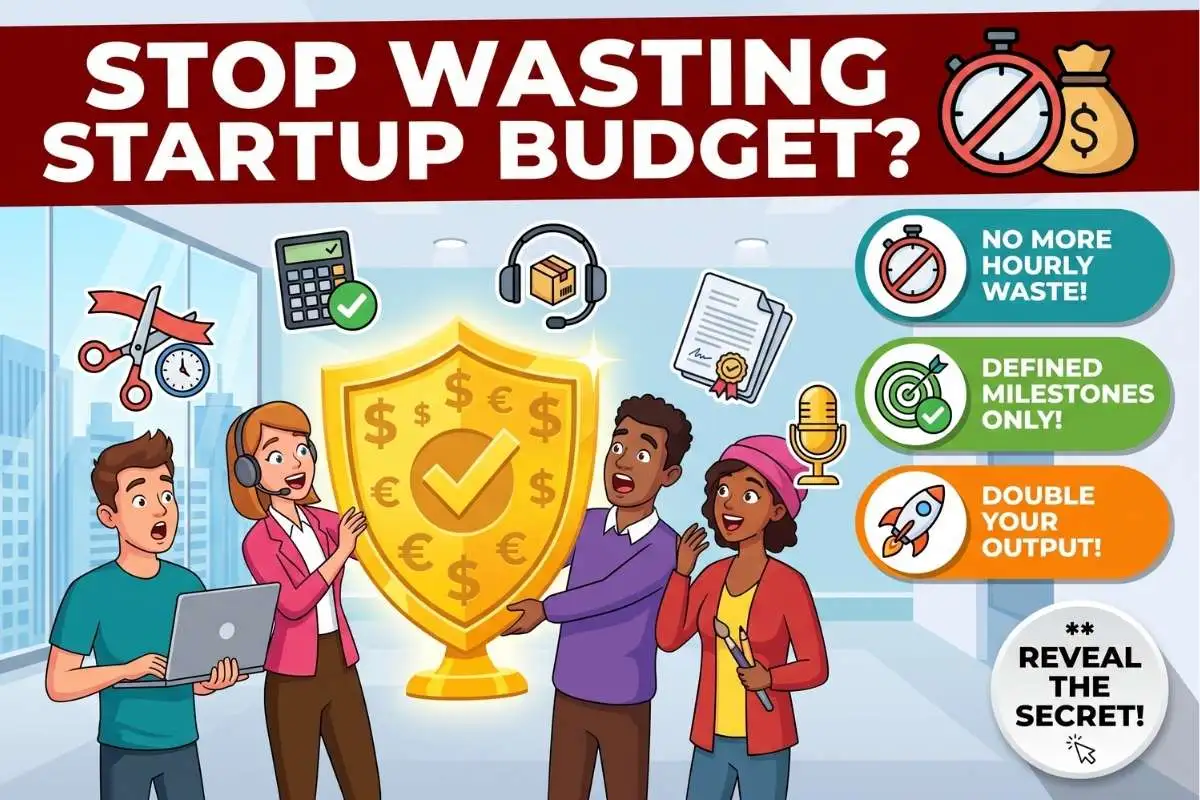
Picture a bustling startup founder sitting in a dimly lit office at two in the morning, staring blindly at a spreadsheet of ballooning labor expenses. Every tick of the clock represents another dollar draining from the company’s runway, yet the actual software product is barely inching toward its launch date. This is the classic trap of the modern gig economy: paying for time rather than tangible results. When businesses compensate freelancers strictly for the hours they sit in front of a monitor, they inadvertently punish efficiency and reward slow, dragging labor. But a quiet revolution is reshaping how agile companies operate. By shifting to outcome-based contracts—agreements that tie financial payouts directly to completed milestones rather than clocked minutes—startups are discovering they can dramatically accelerate their output while slashing wasted budget.
The Economics of Paying for Results
The traditional hourly billing model contains a fundamental conflict of interest that quietly erodes startup productivity. When a talented freelance developer or marketer is paid by the hour, their financial incentive is to take as long as plausibly possible to finish a task. Conversely, the startup founder wants the task completed at lightning speed. This misalignment breeds micromanagement, anxiety, and endless disputes over automated time-tracking screenshots. Transitioning to an outcome-based framework flips this dynamic entirely on its head, aligning the freelancer’s goals with the company’s bottom line. Under this model, you agree on a fixed price for a strictly defined deliverable—be it a fully functional checkout page, a high-converting sales funnel, or a comprehensive market research report. If a seasoned expert completes that deliverable in three brilliant hours, they earn an excellent effective hourly rate, and your startup gets its crucial asset days ahead of schedule. You are no longer purchasing raw time; you are purchasing human ingenuity, applied expertise, and finality. By removing the ceiling on how fast a freelancer can earn their fee, you naturally attract elite performers who rely on their speed and deep domain knowledge to scale their own freelance businesses.
Engineering the Unambiguous Milestone
The secret to making outcome-based agreements work lies entirely in the psychological and technical art of scoping the work before a single line of code is written. In an hourly setup, founders often hand over vague instructions and correct course as the clock ticks. In an outcome-based reality, ambiguity is your absolute greatest enemy, often leading to frustrated contractors and stalled projects. To double your output, you must learn to translate broad business desires into binary, indisputable milestones. A milestone cannot simply be “improve our website’s user experience.” Instead, it must be engineered as: “Redesign the mobile checkout flow in Figma, incorporating Apple Pay, and achieving a documented page load speed under two seconds.” When the finish line is painted in bright, unmistakable colors, both parties operate with immense confidence. The contractor knows exactly what constitutes a completed job, freeing them to work autonomously without constant check-ins. To structure these legally sound agreements and understand the broader labor implications of independent contractor classifications, founders should frequently consult guidance from regulatory bodies like the U.S. Department of Labor, which provides clear frameworks on worker independence and contract compliance.
Shifting the Psychological Risk
When a startup operates on strict hourly billing, the entire financial and operational risk rests squarely on the shoulders of the business. If a freelancer runs into an unexpected technical bug or decides to spend four hours researching a basic problem, the startup pays for that learning curve. Outcome-based contracting acts as an insurance policy by transferring the execution risk back to the independent contractor, where it belongs. Freelancers who willingly accept milestone-based pay are implicitly signaling their high level of competence. They know how to solve the problem, they have likely solved it dozens of times before, and they are confident they can deliver within the agreed budget. This dynamic completely alters the daily management style within a startup. Instead of acting as babysitters monitoring digital punch cards, founders transform into true executive partners. This structure also mirrors the macroeconomic trends documented by labor economists regarding the evolution of the flexible workforce; you can explore the historical shift toward specialized project labor through comprehensive overviews on Wikipedia’s Gig Economy Portal. When contractors manage their own time and absorb their own operational friction, startup leadership is suddenly freed up to focus on high-level strategy, fundraising, and customer acquisition.
Comparing Freelance Compensation Models
| Feature / Metric | Traditional Hourly Billing | Outcome-Based (Milestone) Contracts |
| Primary Incentive | Maximize billable hours logged | Maximize speed and efficiency of delivery |
| Management Overhead | High (Requires time-tracking & auditing) | Low (Focuses strictly on final review) |
| Budget Predictability | Unpredictable (Prone to scope creep) | Highly Predictable (Fixed cost per asset) |
| Financial Risk Bearer | The Startup (Pays for learning curves) | The Freelancer (Absorbs execution delays) |
| Talent Quality Attracted | Mid-tier (Comfortable with steady pacing) | Top-tier (Confident in rapid execution) |
Frequently Asked Questions
What happens if the freelancer delivers poor-quality work just to finish quickly?
This is mitigated by tying milestone releases strictly to a “Definition of Done” (DoD) agreed upon in the initial contract. Payment is never released upon mere submission; it is released upon acceptance. If the work fails to meet the pre-established objective criteria, the contractor must revise it at their own expense before the milestone payout is unlocked.
How do I price a milestone if I don’t know how many hours it will take?
Base your pricing on the value the deliverable brings to your business, combined with standard market rates for the completed asset. Ask seasoned freelancers for fixed-price project quotes rather than hourly estimates. Over time, you will develop an internal catalog of what specific outcomes are worth to your startup’s growth.
Can outcome-based contracts work for ongoing, creative tasks like content writing?
Yes, absolutely. Instead of paying a writer for four hours of drafting, contract them for a “monthly cluster of four 1,500-word SEO-optimized articles fully uploaded to the CMS.” The outcome is the published asset ready for indexing, regardless of whether the writer drafted it in a single afternoon or over an entire week.
The Curiosity: The 15-Minute Picasso Lesson
There is a famous apocryphal tale about the legendary artist Pablo Picasso that perfectly captures the soul of outcome-based work. As the story goes, Picasso was sitting in a Paris café when an admirer approached him, handed him a napkin, and begged for a quick sketch. Picasso finished a brilliant drawing in just thirty seconds and handed it back, asking for 10,000 francs. The woman was astounded. “Ten thousand francs?” she protested. “It only took you thirty seconds!” Picasso smiled gently and replied, “No, madam. It took me forty years.”
When you hire independent talent for your startup, remember the napkin. You are not paying for the minutes the stylus touches the paper; you are paying for the years of accumulated failures, triumphs, and specialized mastery that allow a professional to solve your burning business problem in a fraction of the time it would take anyone else.