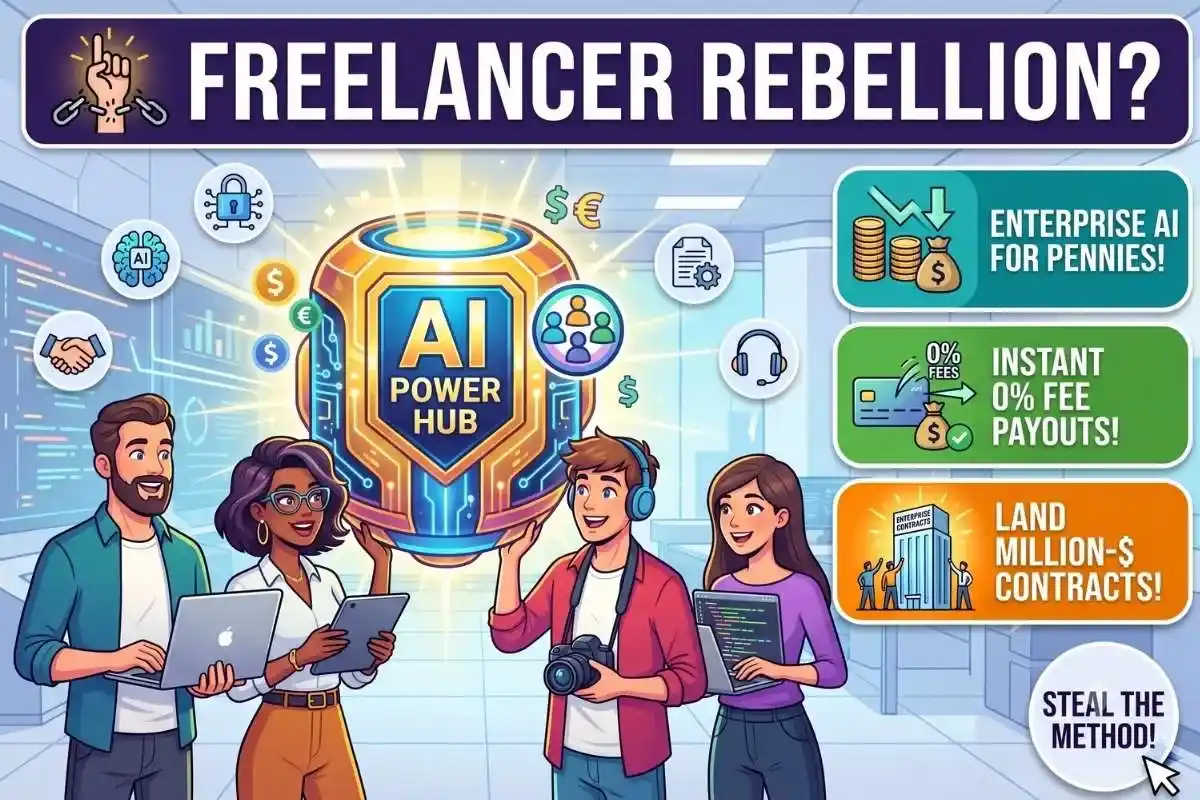
For decades, the ideal image of the independent freelancer was the solitary creative working from a quiet home office or a sun-drenched cafe. Today, that solo journey has become increasingly unsustainable. The sheer velocity of artificial intelligence deployment has fundamentally altered the rules of the gig economy. To deliver competitive work in 2026, independent professionals require access to enterprise-grade AI clusters, costly multi-agent subscription tiers, and continuous cybersecurity infrastructure. Faced with rising overhead costs and algorithmic platform gatekeeping, independent workers are abandoning solo operations. Instead, they are reviving an age-old economic model upgraded for the Web3 era: digital guilds structured as Decentralized Autonomous Organizations (DAOs).
The Economics of Resource Pooling in AI Guilds
The primary driver pushing independent workers into collectives is stark financial necessity. As generative AI transitioned from a novelty to core infrastructure, the financial burden of staying competitive escalated dramatically. Solo developers, designers, and consultants now face monthly overheads amounting to thousands of dollars just to access premier foundation models, proprietary data pipelines, and high-performance cloud compute. By organizing into structured digital collectives via Decentralized Autonomous Organizations, freelancers pool their financial capital to purchase enterprise-grade API tiers and shared computational servers at a fraction of the individual cost. Beyond shared hardware and software licenses, these guilds compile collective asset repositories—such as vetted prompt libraries, custom fine-tuned local models, and specialized automation workflows—that give every participating member the productive output of an entire traditional agency.
Eliminating Middlemen with Automated Escrow
Beyond reducing operating expenses, AI guilds are revolutionizing how independent workers interact with enterprise clients by eliminating traditional marketplace intermediaries. Legacy freelance platforms historically extracted anywhere from 10% to 20% in commission fees while subjecting workers to unilateral policy shifts and delayed international payout schedules. In a decentralized guild, organizational governance and financial workflows are embedded directly into on-chain Smart contracts. When a client commissions a project from a guild, funds are deposited into an automated escrow vault. Upon the verified submission of agreed-upon deliverables, cryptographic protocols instantly distribute revenue to the contributing members according to pre-coded splits. This automated financial infrastructure removes administrative overhead, eliminates currency conversion delays, and guarantees that workers retain the full monetary value of their labor.
Collective Bidding and Enterprise-Scale Competitiveness
Working alone, an independent professional is naturally constrained by time and specialized expertise, making it nearly impossible to secure massive enterprise contracts. Corporate clients require end-to-end digital transformation pipelines combining complex front-end engineering, back-end blockchain integration, compliance auditing, and custom AI model deployment. Solo freelancers are routinely bypassed for these lucrative corporate opportunities in favor of large consultancies. AI guilds solve this bottleneck through dynamic talent swarming. When an enterprise contract is published, the guild’s internal matching algorithms assemble a tailored, cross-disciplinary squad of specialists within hours. This structure allows individual freelancers to bid on multi-million-dollar corporate RFPs as a unified front, successfully competing with established consulting firms while retaining autonomy over their daily schedules.
Data Sovereignty and the New Gig Economy Infrastructure
As artificial intelligence systems increasingly consume massive amounts of proprietary work for model training, intellectual property rights have become a primary concern for independent creators. Traditional marketplace platforms routinely reserve the right to scrape user uploads and client deliverables to train proprietary algorithms, often without compensating the original creators. By organizing within decentralized networks, AI guilds establish sovereign digital workspaces built on distributed storage systems and open-source infrastructure. Members retain strict cryptographic ownership over their workflows, training datasets, and custom agent behaviors. According to labor trends tracked by the Bureau of Labor Statistics, independent workers increasingly prioritize long-term career autonomy and digital asset ownership over short-term task placement. Guilds provide the exact technological framework needed to safeguard intellectual property while collaborating at scale.
Traditional Platforms vs. Decentralized AI Guilds
The shift toward decentralized guilds represents a structural divergence in how digital labor is organized, compensated, and managed across the global economy.
| Feature | Traditional Freelance Platforms | Decentralized AI Guilds (DAOs) |
| Platform Commission | 10% to 20% per transaction | 0% to 3% protocol treasury contribution |
| Tool & AI Access | Individual freelancer pays full cost | Enterprise tiers shared across guild members |
| Payment Settlement | 5 to 14-day clearance cycles | Instant automated smart-contract distribution |
| Governance & Rules | Unilateral corporate platform control | Democratic member voting via token weight |
| Dispute Resolution | Centralized platform support agents | Peer-reviewed decentralized arbitration panels |
| Contract Capacity | Limited to small or mid-sized tasks | Enterprise-scale collaborative swarming |
Frequently Asked Questions
What exactly is an AI Guild in the context of 2026?
An AI Guild is a professional cooperative of independent workers—such as developers, data scientists, strategists, and designers—who use a Decentralized Autonomous Organization structure to pool financial resources, share advanced artificial intelligence tools, and jointly bid on large client projects.
Do I need deep cryptocurrency expertise to join a decentralized guild?
No. While underlying operations utilize blockchain networks for smart contracts and transparent treasury management, most guilds in 2026 use simplified user interfaces. Members typically interact with standard project management dashboards and digital wallets that handle technical complexities automatically in the background.
How do guild members decide who works on incoming client projects?
Projects are generally distributed through internal skill-matching algorithms combined with open proposal boards. Members opt into specialized working pods based on their verified portfolio credentials, availability, and reputation scores earned from previous successful guild deployments.
How are disputes handled if a client is dissatisfied with a deliverable?
Instead of relying on a centralized corporate customer service agent, decentralized guilds utilize structured peer arbitration panels. Vetted guild members with relevant technical expertise review the project specifications and deliverables, conducting transparent votes to resolve disputes fairly.
A Final Curiosity: The Sovereign Collective
History often moves in concentric circles. In medieval Europe, independent craftsmen and artisans formed merchant guilds to protect trade secrets, establish rigorous quality standards, and support members through economic hardships. Industrialization and corporate hierarchy eventually displaced these localized cooperatives for centuries. Today, at the frontier of the artificial intelligence revolution, the modern digital worker is returning to this ancient concept.
By merging the community-first principles of historical guilds with the trustless, borderless execution of decentralized networks, freelancers are building a new economic reality. They are proving that the future of work does not belong to isolated individuals competing in a race to the bottom, nor to monolithic corporations monopolizing artificial intelligence infrastructure. Instead, it belongs to the sovereign collective: autonomous individuals pooling their brilliance to achieve unprecedented scale.