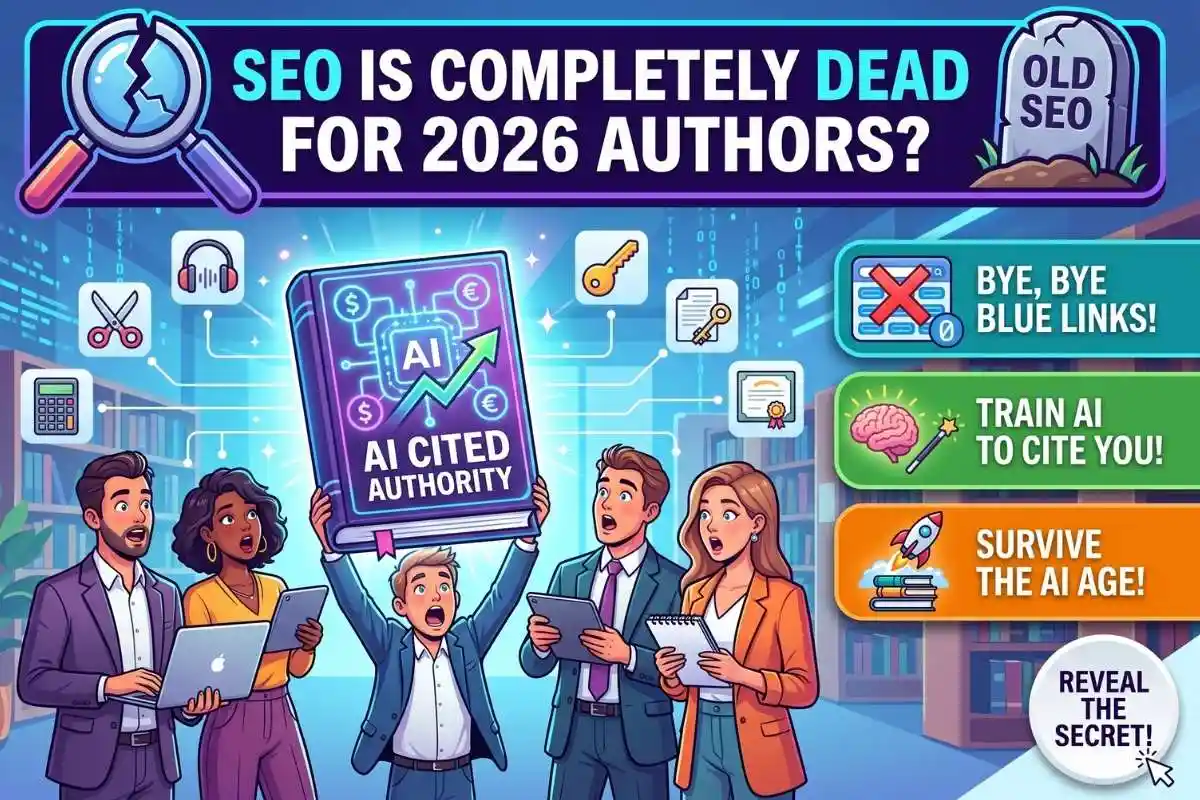
For nearly three decades, digital writers and independent authors played by a predictable set of rules dictated by search engine algorithms. You researched high-volume keywords, sprinkled them throughout your prose, built backlinks, and waited for ten blue links on page one. But as we navigate through 2026, that click-based web has been quietly retired, replaced by conversational artificial intelligence interfaces that synthesize knowledge rather than signposting it. Readers no longer scroll through endless pages of search results to find what they need; instead, they ask an intelligent assistant and receive a single summary. For authors trying to build an audience, this shift represents an existential reality: traditional search optimization is no longer just losing its effectiveness—it is completely dead.
The Great Search Collapse of 2026
The collapse of traditional organic search traffic did not happen overnight, but its final acceleration caught many content creators completely off guard. Recent industry data reveals that major AI chat interfaces now process billions of queries every single week, directly bypassing traditional browsers and capturing top-of-funnel research intent. When an automated overview triggers at the top of search results, websites experience an immediate reduction in click-through rates. Readers are embracing what digital strategists call the zero-click experience, meaning they consume your hard-won insights directly inside the chat window without visiting your domain. If your publishing strategy relies solely on driving human eyeballs to promotional landing pages via organic rankings, you are effectively shouting into an empty stadium.
To survive this dramatic transformation, authors must transition their mindset toward Generative Engine Optimization, a discipline designed to make creative work visible inside synthesized machine responses. Unlike legacy search algorithms that simply indexed keyword density and site popularity, generative engines map complex semantic relationships to determine which entities represent true authority. The foundational goal of GEO is not to capture a transient human click, but to train large language models to recognize your brand, cite your arguments, and recommend your books as reference material. In this new paradigm, ranking number one on traditional engines offers zero protection if artificial intelligence systems exclude your voice from their summaries.
The Core Mechanics of GEO Versus Legacy SEO
Understanding the structural divergence between these two optimization frameworks is the very first step toward reclaiming your digital visibility. Traditional optimization treated every web page as an isolated digital billboard, relying heavily on artificial signals like guest-post backlinks and repetitive header tags to trick crawlers into granting higher placement. Generative optimization, conversely, operates on extraction and synthesis, requiring authors to structure their prose so that artificial intelligence parsers can effortlessly digest, verify, and quote underlying facts. When an answer engine evaluates your article, it breaks user questions into tiny sub-queries, scanning paragraphs for direct answers rather than marketing fluff.
Furthermore, modern artificial intelligence models heavily penalize web pages that hide valuable information behind complex dynamic code or aggressive pop-up paywalls. If your website relies on heavy client-side scripts to render text, or if you bury your core thesis deep inside a sprawling introduction, answer engines will simply skip your domain and extract knowledge from a cleaner competitor. Authors who thrive in 2026 focus obsessively on clear information hierarchy, factual accuracy, and immediate semantic relevance, ensuring their writing serves as raw fuel powering conversational search responses across the digital ecosystem.
| Feature | Traditional SEO (Legacy) | Generative Engine Optimization (2026) |
| Primary Goal | Rank high on search engine result pages | Be cited and synthesized inside AI answers |
| Core Metric | Organic click-through rate and web traffic | Brand mentions and AI answer inclusion |
| Key Signals | Backlink volume and keyword density | Factual accuracy, structure, and entity clarity |
| Content Style | Fluffy introductions with repeated keywords | Direct, extractable answers and scannable lists |
| User Behavior | Browsing multiple blue links and tabs | Zero-click reading inside chat interfaces |
Actionable Survival Strategies for Modern Authors
The most immediate change authors must implement is adopting an answer-first structural framework across all their digital publications. In the old days of blogging, writers often crafted winding anecdotes to keep readers on the page longer, but generative engines view this narrative padding as structural friction. To capture AI citations, you must open every major section of your writing with a direct summary that addresses the core topic within the first two hundred words. By delivering your primary takeaway upfront, you make it trivially easy for answer engines to extract your thesis and attribute the insight directly to your name.
Another vital survival tactic involves cultivating what computer scientists refer to as entity authority—establishing your name as a distinct, trusted node within global knowledge graphs. Artificial intelligence engines cross-reference information across diverse platforms, including social media discussions and specialized databases, to verify whether an author truly possesses expertise. You can accelerate this recognition by publishing original data, comparison tables, and expert definitions that other publications naturally want to reference. When machine learning systems observe your name repeatedly associated with domain insights across reputable platforms, your chances of being featured in automated overviews increase exponentially.
Finally, authors must embrace technical transparency by ensuring their publishing platforms are fully accessible to automated crawlers and machine parsers. Many independent writers unknowingly block artificial intelligence bots through misconfigured security plug-ins or content delivery networks, rendering their catalog invisible to modern answer engines. You should regularly audit your site architecture to confirm that your textual content renders in pure HTML accompanied by structured schema markup. This technical diligence acts as a universal translator, communicating your book descriptions, biography, and thematic categories directly into the memory of generative search systems.
Frequently Asked Questions About GEO
Does the rise of GEO mean authors should completely abandon their existing websites?
Not at all; your personal website remains your primary digital asset and the central anchor for your online identity, but its strategic purpose has fundamentally shifted. Instead of treating your site purely as a net to catch random search engine traffic, you must view it as an authoritative knowledge repository designed to feed generative engines. By hosting clean, well-structured articles and comprehensive book metadata directly on your own domain, you provide the exact verifiable source material that artificial intelligence models rely on when synthesizing recommendations for curious readers worldwide.
How can independent authors measure their success with Generative Engine Optimization?
Measuring generative visibility requires looking beyond traditional analytical metrics like raw page views and bounce rates, which are rapidly losing relevance in a zero-click world. Modern authors track their GEO performance by monitoring brand mentions inside conversational search interfaces, analyzing referral traffic specifically arriving from artificial intelligence chat domains, and utilizing emerging tracking tools designed to audit citation frequency across major language models. When your direct book sales and subscriber sign-ups continue to grow despite declining organic search clicks, you know your generative optimization strategy is successfully working.
Can fiction authors benefit from GEO, or is it strictly for non-fiction writers?
Fiction authors benefit immensely from generative optimization, particularly when readers ask virtual assistants for nuanced reading recommendations based on specific tropes, moods, or comparative titles. When a reader asks an answer engine for cozy sci-fi mysteries featuring found families, the underlying algorithm scans web discussions, reviews, and author websites to extract matching thematic entities. By clearly structuring your book descriptions, detailed character profiles, and thematic breakdowns on your accessible domain, you ensure that artificial intelligence assistants confidently recommend your novels to highly targeted genre fans seeking their next great read.
Curiosity: The Human Advantage in an AI World
Here is the ultimate curiosity of the generative search revolution: as machines take over the mechanics of information retrieval, genuine human authenticity has become the most valuable currency on the internet. Because artificial intelligence models are trained on vast oceans of existing digital content, they constantly risk recycling generic consensus and synthetic noise. Consequently, algorithms are actively hunting for undeniable proof of human experience, original thought, and unique emotional resonance to anchor their synthesized answers in reality. For authors willing to adapt their structural formatting for machine readability while doubling down on authentic storytelling, 2026 offers an unprecedented opportunity. Traditional optimization may be buried in the digital graveyard, but compelling human voices—properly optimized for generative discovery—are poised to reach wider audiences than ever before.