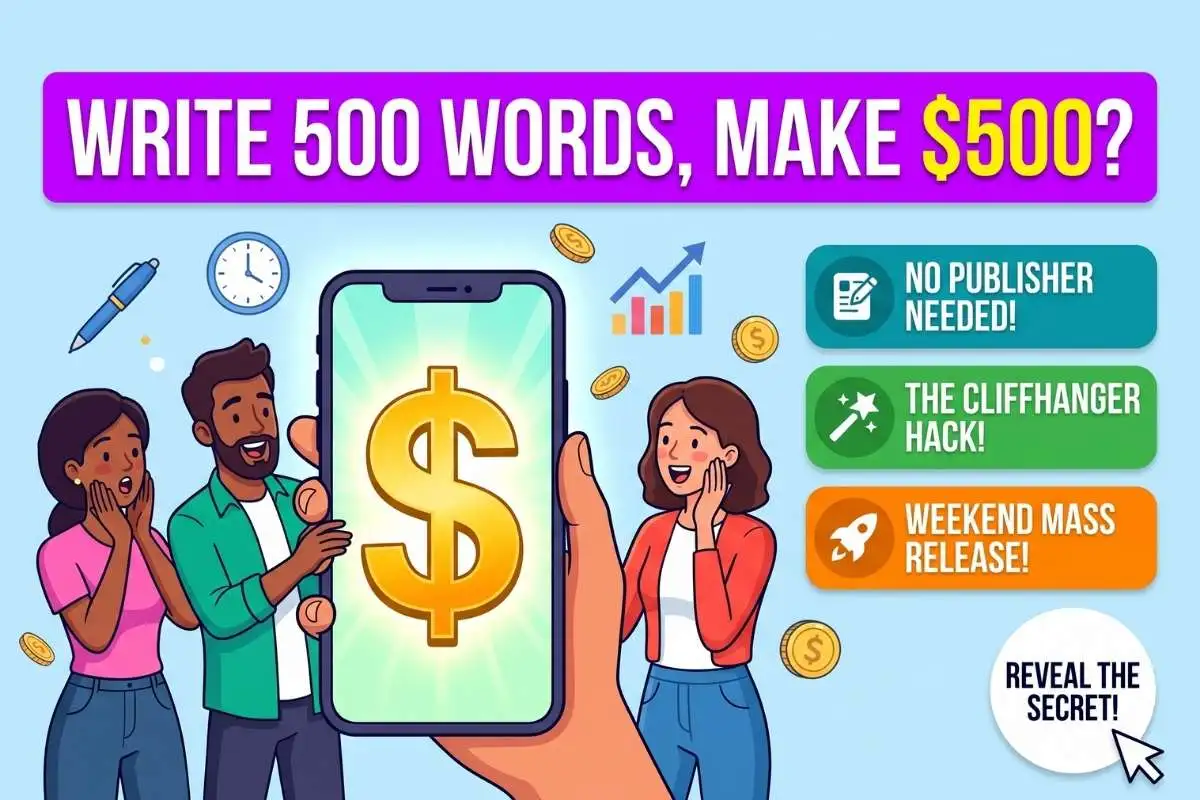
Imagine waking up on a Sunday morning, grabbing your coffee, and checking your smartphone to see that you have just made five hundred dollars. Now, imagine that this income did not come from a grueling corporate job, a risky cryptocurrency investment, or a complex e-commerce store, but simply from writing engaging stories. The landscape of modern publishing has dramatically shifted, moving away from traditional gatekeepers and hefty paperbacks toward fast-paced, bite-sized consumption on digital devices. Welcome to the lucrative, fast-paced world of micro-chapter fiction. This innovative approach to storytelling allows ambitious writers to capitalize on the shrinking attention spans of modern readers. By dedicating just a small fraction of your day to writing a mere five hundred words, you can tap into a massive global audience hungry for daily content. This article will guide you through the exact strategy needed to turn a modest daily writing habit into a highly profitable weekend payout, demystifying the algorithms and mobile platforms that make this modern digital gold rush possible.
The Digital Renaissance of Serialized Storytelling
The phenomenon of serialized storytelling is experiencing a massive digital renaissance, driven entirely by the ubiquitous presence of smartphones in our daily lives. Much like how prestige television shows keep us hooked week after week, mobile fiction applications have mastered the art of episodic delivery, feeding readers bite-sized chapters during their daily commutes, lunch breaks, or the quiet moments right before sleep. Platforms such as Webnovel, Radish, and GoodNovel have revolutionized the publishing industry by creating an ecosystem where readers pay small micro-transactions—often just a few pennies’ worth of digital coins—to unlock the next chapter of their favorite ongoing saga. This model is incredibly effective because it entirely removes the intimidation factor of starting a massive, thousand-page novel. Instead, it offers instant, easily digestible gratification. Readers are more than willing to spend a few cents to find out what happens next. When multiplied by thousands of dedicated fans, these tiny micro-transactions quickly snowball into significant weekly earnings for the author. To understand the historical precedent for this, one only needs to look at the rich history of serialized fiction, which dominated the Victorian publishing era before evolving into today’s highly profitable app-based economy.
Mastering the Daily Habit and the Art of the Cliffhanger
Writing a successful micro-chapter fiction series does not require you to be a literary genius crafting flowery, complex prose; rather, it requires you to be an absolute master of pacing, intense suspense, and emotional engagement. The true beauty of this strategy lies in its accessibility: committing to just five hundred words a day is a highly achievable goal for almost anyone, regardless of how chaotic or busy their daily schedule might be. Five hundred words is roughly equivalent to a single page and a half of text, a manageable chunk that can easily be drafted during a quiet hour in the morning or evening. However, the secret sauce to making those five hundred words profitable is the absolute necessity of the daily cliffhanger. Every single update must end on an unresolved note—a shocking revelation, a sudden betrayal, or a life-or-death predicament. You are not writing to resolve conflicts; you are writing to escalate them continuously. According to data and insights on adult reading habits from authoritative bodies like the National Endowment for the Arts, consistent engagement is vital for maintaining a loyal readership. You are essentially training your audience to crave your daily update, transforming your story into an indispensable part of their routine.
The Mechanics of the Weekend Mass Release
So, how exactly does writing just five hundred words a day translate into a five-hundred-dollar payout over a single weekend? The strategy relies heavily on the “mass release” mechanic utilized by nearly all top-tier mobile fiction applications. Throughout the standard workweek, from Monday to Friday, you publish your daily five-hundred-word chapters, often offering them for free or at a highly discounted rate to act as a marketing funnel. This daily consistency builds momentum, attracts new readers through the application’s algorithm, and deepens the emotional investment of your existing audience. Then, as Friday evening approaches and your readers settle into their weekend leisure time, you execute the mass release: dropping five to ten premium, locked chapters all at once. Because you have spent the entire week building up a massive, unbearable cliffhanger, your readers are primed and ready to spend their purchased digital coins to binge-read the newly available content. They will gleefully pay to unlock chapter after chapter, desperate to see how the suspenseful climax unfolds, generating immediate revenue and pushing your story up the trending charts.
Embracing Tropes and Meeting Reader Expectations
To truly succeed in this highly competitive mobile marketplace, you must leave your literary ego at the door and wholeheartedly embrace the specific tropes and genres that heavily dominate these digital platforms. Mobile fiction readers are exceptionally loyal and willing to spend money, but they also have very specific, well-defined tastes. Genres such as billionaire romance, werewolf and shifter fantasies, LitRPG (Literary Role Playing Games), and CEO revenge stories consistently top the charts and generate the highest revenue for authors. Your job as a strategic digital author is not to reinvent the wheel, but to take these popular, highly proven tropes and execute them with your own unique twist and flair. Understanding your target audience is absolutely paramount; you need to know exactly what kind of emotional payoff they are seeking when they open the app on their phone. Are they looking for a Cinderella-style glow-up, a high-stakes power fantasy, or an angsty enemies-to-lovers dynamic? By aligning your daily five-hundred-word chapters with the intense desires and expectations of these voracious readers, you ensure that your story remains highly clickable, easily marketable, and continually profitable.
Treating Your Writing Like a Startup Business
Ultimately, turning the micro-chapter fiction strategy into a reliable, consistent stream of high income requires you to treat your writing less like a casual weekend hobby and more like a lean, efficient startup business. This means diligently tracking your analytics, understanding which specific chapters result in the highest reader drop-off, and continuously optimizing your pacing based on real-time audience feedback. It also requires an ironclad, unwavering discipline to maintain that daily writing habit, even on days when the creative inspiration simply isn’t flowing. Many highly successful mobile authors utilize detailed outlines, character bibles, and storyboards to ensure they can produce their daily word count quickly and without suffering from debilitating writer’s block. Furthermore, diversifying your income streams by cross-posting your content on multiple non-exclusive platforms or eventually packaging your completed serialized novels into full-length e-books can exponentially increase your overall earnings. By combining creative storytelling with cold, calculated business strategy, you can easily transform a simple smartphone application into a powerful economic engine.
Platform Comparison: Where to Publish Your Serial
Understanding the landscape is key to maximizing your weekend earnings. Here is a brief overview of the top platforms currently dominating the micro-chapter fiction space:
| Platform | Primary Genres | Monetization Model | Exclusivity Requirement |
| Webnovel | Fantasy, LitRPG, Romance | Pay-per-chapter (Digital Coins) | Optional (Higher royalties if exclusive) |
| Radish | Romance, Paranormal, YA | Freemium & Pay-to-unlock | Non-exclusive options available |
| Kindle Vella | Thriller, Sci-Fi, Romance | Tokens per 100 words read | Exclusive to Amazon serialization |
| GoodNovel | Werewolf, Billionaire | Tiered contracts & Coin unlocks | Exclusive contracts heavily preferred |
Frequently Asked Questions (FAQ)
Q: Do I lose the copyright to my work when publishing on these mobile apps?
A: It depends entirely on the platform and the contract you sign. Non-exclusive contracts allow you to retain full rights and publish elsewhere, while exclusive contracts often grant the platform specific distribution rights in exchange for guaranteed minimum payouts. Always read the terms of service carefully.
Q: What happens to my readership if I miss a day of writing?
A: Consistency is the lifeblood of mobile fiction algorithms. Missing a day can cause a slight dip in your daily rankings, but communicating with your readers via author notes can mitigate the fallout. However, skipping multiple days regularly will severely impact your weekend mass-release earnings.
Q: Do I need to hire a professional editor before I start posting my chapters?
A: While good grammar is important, mobile readers prioritize fast pacing and frequent updates over pristine prose. You do not need a professional editor to get started. Self-editing and utilizing basic spelling and grammar-checking software are usually sufficient for daily releases.
The Curiosity Cabinet: The Original “Micro-Chapter” Hustlers
While reading stories on smartphones feels like a distinctly modern phenomenon, the underlying business strategy is centuries old. Long before digital coins and mobile applications existed, legendary authors like Charles Dickens and Alexandre Dumas were the original masters of the micro-chapter mass release. In the 19th century, novels were incredibly expensive to print as complete books. To make literature affordable, publishers began printing stories in weekly or monthly newspaper installments. Dickens became famous for ending his weekly serialized chapters of The Old Curiosity Shop on massive cliffhangers. The anticipation was so intense that when the ship carrying the final installment arrived in New York, readers literally crowded the docks, shouting to the sailors, “Is Little Nell dead?” Today’s mobile fiction authors are simply using modern technology to execute the exact same psychological strategy that made Victorian authors incredibly wealthy.