


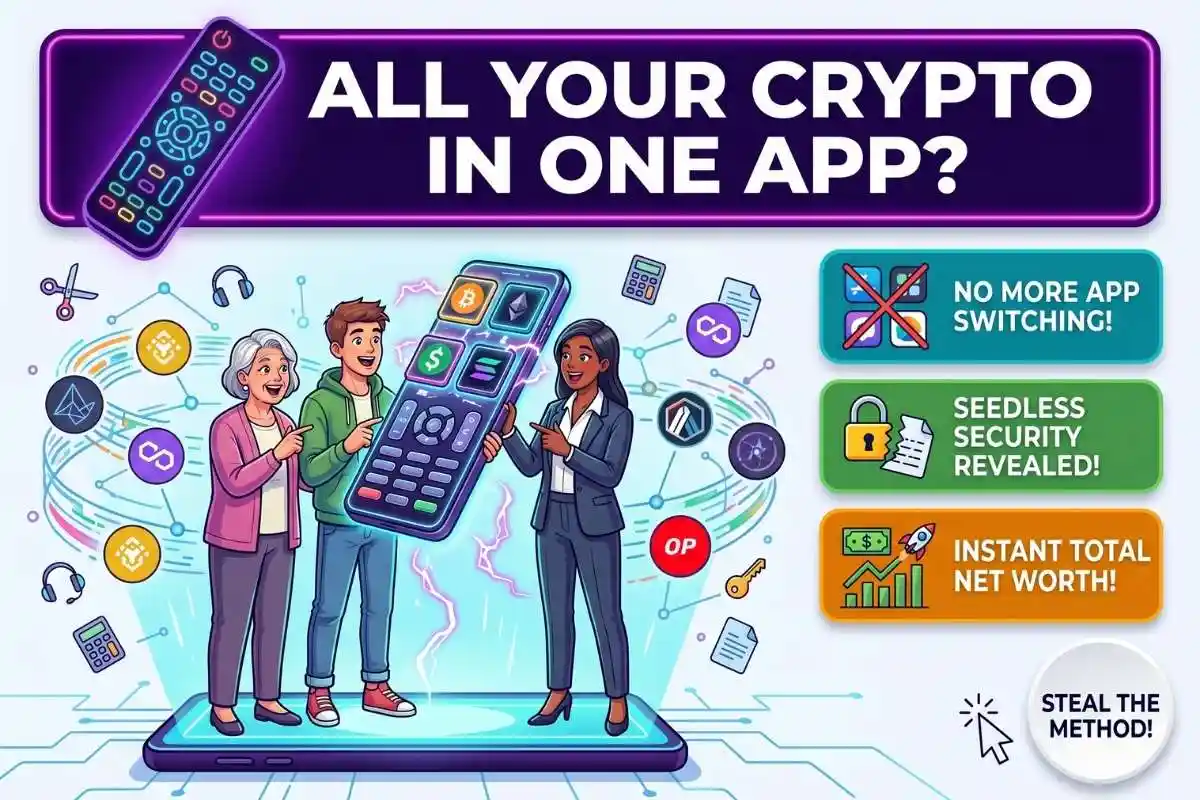
Welcome to the future of decentralized finance. As we settle into 2026, the digital asset landscape has grown far beyond the simple days of buying and holding Bitcoin on a single, isolated network. The modern cryptocurrency ecosystem is a vibrant, bustling web of interconnected blockchains, each offering unique technological advantages. From the lightning-fast transaction speeds of Solana to the robust smart contract capabilities of Ethereum and the emerging Layer-2 scaling solutions that have revolutionized transaction costs, opportunity is everywhere. However, this incredible technological diversity brings a significant organizational challenge: fragmentation. Managing tokens, decentralized applications, and digital collectibles across half a dozen different networks can quickly become an overwhelming nightmare. If you have ever felt stressed by a chaotic desktop folder filled with a dozen different browser extensions and mobile apps, it is officially time for a digital spring cleaning. This weekend guide is dedicated to helping you consolidate your scattered digital wealth into one secure, streamlined application. We are going to explore the absolute best multi-chain crypto wallets of 2026, empowering you to navigate the broader blockchain universe with confidence, security, and unparalleled ease.
The Multi-Chain Reality of 2026
If you have been paying close attention to the digital asset space over the past few years, you already know that the era of keeping your entire cryptocurrency portfolio confined to a single blockchain is completely obsolete. Today, the average active cryptocurrency investor holds digital assets that are scattered across anywhere from four to six entirely different networks. A standard portfolio might include Bitcoin sitting safely in cold storage, Ethereum utilized for interacting with complex digital agreements, stablecoins operating on a Layer-2 network like Arbitrum to minimize exorbitant gas fees, and perhaps some highly volatile tokens on Solana for fast-paced trading. Historically, keeping track of all these varied assets required a frustrating, high-friction user experience involving constant network switching and multiple software installations. Fortunately, the cryptocurrency wallet ecosystem has evolved dramatically to meet these complex demands. By 2026, a modern multi-chain wallet acts as your universal dashboard and financial command center. It allows you to seamlessly manage, swap, stake, and secure a highly diversified portfolio from one single interface. You no longer have to jump through technical hoops or memorize a dozen different user interfaces just to see your total net worth; everything is consolidated securely in your pocket or internet browser.
Software Giants: Trust Wallet and MetaMask
When evaluating the best mobile-first software solutions to consolidate your digital assets over a quiet weekend, Trust Wallet and MetaMask consistently dominate the industry conversation for very good reasons. Trust Wallet, functioning as a powerhouse mobile application, has expanded its architectural capabilities massively. It now boasts native support for well over 100 distinct blockchains and literally millions of different digital assets. It is designed to be a simple, plug-and-play solution for mainstream users who desire an easy, highly intuitive way to hold varied coins and tokens in one unified place without overwhelming technical jargon. On the other side of the spectrum, MetaMask—which originally cemented its massive reputation as the premier gateway for Ethereum and compatible networks—has completely transformed its fundamental architecture. Through the implementation of its revolutionary “Snaps” system, MetaMask has broken free of its Ethereum-only constraints to securely support completely different networks like Solana and Bitcoin. While MetaMask remains the absolute gold standard for decentralized application enthusiasts and power users, both of these applications empower users with absolute self-custody. This means you alone possess the cryptographic private keys to your funds, ensuring true ownership free from the interference of centralized institutions.
Hardware Security Meets Multi-Chain Convenience
For those individuals managing a significant amount of digital wealth, relying entirely on software connected to the internet—commonly referred to in the industry as a “hot wallet”—presents unnecessary and easily avoidable security risks. Hardware wallets, or “cold storage” devices, are absolutely essential for establishing robust, impenetrable security, ensuring that your private cryptographic keys remain entirely offline and completely inaccessible to remote internet hackers. In 2026, premium devices like the Ledger Flex and Tangem have successfully bridged the historical gap between hardcore, uncompromising security and seamless multi-chain convenience. The Ledger Flex, for instance, features a military-grade secure element chip and a tamper-proof electronic ink touchscreen. It integrates flawlessly with popular multi-chain software interfaces, ensuring that while you can easily browse and interact with diverse ecosystems, every single transaction must be physically verified and authorized on your offline device. The U.S. Securities and Exchange Commission (SEC) and other federal agencies frequently emphasize the critical importance of understanding the inherent risks associated with digital assets. Upgrading your security posture by pairing your multi-chain activities with a certified hardware wallet is the single most effective step you can take to mitigate the constant threats of phishing attacks and hidden malware.
Specialized Wallets for the Web3 Power User
If your weekend consolidation project involves diving deep into advanced blockchain activities like decentralized lending, interacting with complex exchanges, or hunting for lucrative rewards across a multitude of emerging networks, specialized multi-chain wallets like OKX Web3 and Rabby Wallet are meticulously designed specifically for your needs. The OKX Web3 wallet functions as a highly sophisticated decentralized “super app.” It seamlessly aggregates liquidity from decentralized exchanges across dozens of different blockchains to ensure you consistently receive the absolute best financial rates on cross-chain token swaps, completely eliminating the need to use risky external bridge protocols. Similarly, Rabby Wallet has rapidly emerged as an indispensable favorite among advanced multi-chain users due to its intense, unyielding focus on proactive transaction security. Before you ever click “approve,” Rabby automatically simulates the exact outcome of your transaction in the background, aggressively warning you of potentially malicious smart contracts, hidden wallet-draining signatures, or sophisticated address poisoning scams. These advanced, feature-rich wallets recognize that the multi-chain future is not merely about passively holding digital assets, but actively, confidently, and securely moving value across a wildly complex web of interconnected decentralized financial protocols.
The Rise of Seedless and Smart Contract Wallets
As we navigate the rapidly maturing wallet landscape of 2026, perhaps the most exciting and consumer-friendly innovation is the industry-wide shift away from the traditional 12 or 24-word seed phrase. For over a decade, this analog piece of paper has been a massive point of friction and a terrifying vulnerability for new cryptocurrency users. Today, Smart Contract wallets and Multi-Party Computation (MPC) technologies are rapidly establishing themselves as the new gold standard for user-friendly, foolproof security. Multi-chain wallets utilizing MPC technology fundamentally change how keys are managed by cryptographically distributing your private key shares across multiple secure remote servers and your personal device. This ingenious approach means there is no single point of failure and no master password to accidentally lose or inadvertently expose to a malicious actor. Furthermore, smart contract wallets introduce revolutionary features like decentralized social recovery. This allows trusted friends, verified family members, or your own secondary hardware devices to collaboratively help you regain access to your multi-chain funds if your primary phone is ever lost or destroyed. This paradigm shift makes managing a complex portfolio significantly less intimidating.
At a Glance: 2026 Multi-Chain Wallet Comparison
| Wallet Name | Custody Type | Chains Supported | Best Suited For | Security Highlight |
| Trust Wallet | Software (Hot) | 100+ Blockchains | Mobile-first users & beginners | Proactive risky transaction alerts |
| MetaMask | Software (Hot) | EVM, Solana, BTC | DeFi enthusiasts & developers | Extendable multi-chain Snaps |
| Ledger Flex | Hardware (Cold) | 5,500+ Assets | Long-term secure holding | EAL6+ Certified Secure Element |
| OKX Web3 | Software (Hot) | 60+ Blockchains | Cross-chain traders | Built-in decentralized exchange aggregator |
| Tangem | Hardware (Cold) | 90+ Blockchains | Seedless cold storage | NFC-enabled smart card technology |
Frequently Asked Questions (FAQ)
What exactly makes a wallet “multi-chain”?
A true multi-chain wallet is capable of generating and managing addresses across entirely different, incompatible blockchain architectures from a single application. While older wallets could only interact with the Bitcoin network or only with the Ethereum network, a multi-chain wallet uses complex cryptographic derivation paths to let you control Bitcoin, Ethereum, Solana, and Cosmos assets simultaneously without needing to install separate software for each specific coin.
Are software wallets safe enough for storing large amounts of cryptocurrency?
While modern multi-chain software wallets employ robust encryption and impressive security alerts, they are still fundamentally connected to the internet. This connectivity makes them inherently vulnerable to sophisticated malware, keyloggers, and clipboard-hijacking viruses. For holding significant, life-changing amounts of digital wealth, security experts unanimously recommend keeping the bulk of your funds in a cold storage hardware wallet, leaving only your “spending cash” or actively traded assets in a software hot wallet.
Can I use my existing hardware wallet with applications like MetaMask or Trust Wallet?
Yes, absolutely! One of the most powerful weekend upgrades you can make is connecting a hardware wallet (like a Ledger or Trezor) to a multi-chain software interface like MetaMask. In this hybrid setup, MetaMask acts merely as the visual dashboard allowing you to interact with decentralized websites, while the actual private keys never leave the secure chip inside your hardware device. You get the beautiful interface of the software combined with the impenetrable security of the hardware.
The Final Takeaway: A Universal Remote for the Blockchain
Taking a few hours this weekend to migrate your scattered digital assets into a unified, secure multi-chain wallet is one of the most rewarding steps you can take in your cryptocurrency journey. It not only provides tremendous peace of mind but also drastically reduces the friction of participating in the broader Web3 economy.
Curiosity Fact: Did you know that your cryptocurrency does not actually “live” inside your multi-chain wallet? Wallets do not store coins; they exclusively store the cryptographic keys that prove your ownership of data entries recorded on public global ledgers. Think of a multi-chain wallet less like a physical leather wallet holding cash, and much more like a high-tech universal remote control. This single remote is specifically programmed to securely interact with dozens of entirely different global banking mainframes at the exact same time, allowing you to seamlessly command your assets anywhere in the digital world.

