
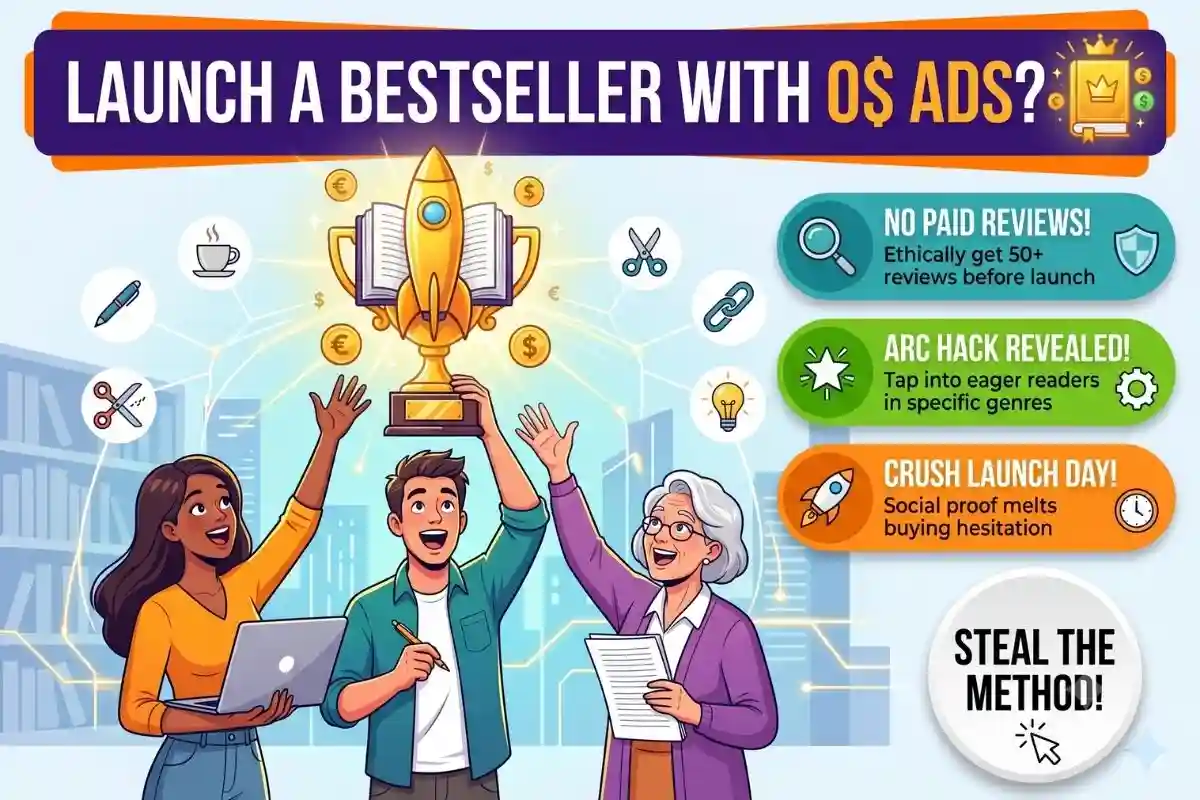
Every writer dreams of the perfect launch day. You complete an intensive weekend writing sprint, polishing the final chapters of your manuscript with a surge of creative adrenaline. You format the file, design an eye-catching cover, and finally hit the publish button. Yet, without a solid marketing foundation, even a brilliantly crafted story can quickly vanish into the endless digital void. The secret weapon separating a silent launch from a roaring success isn’t a massive advertising budget; it is the strategic, ethical deployment of a launch team. Securing fifty reviews before your book is even available to the public might sound like an impossible task, but it is entirely achievable. By understanding early readership dynamics and treating your audience with profound respect, you can build a marketing engine that practically runs itself.
The Power of Advance Reader Copies
Imagine you are an author who has just poured your soul into a brand-new manuscript. You hit publish, and you wait eagerly for sales to roll in. But days pass, and all you hear is the digital equivalent of crickets. The harsh reality of modern publishing is that writing the book is only half the battle; the other half is convincing strangers to take a chance on your work. This is exactly where Advance Reader Copies, or ARCs, come into play. Long before a book is available to the general public, savvy authors and publishers distribute early versions of the manuscript to a dedicated group of eager readers. In exchange for free, early access to the story, these readers agree to leave an honest review on publication day. This specific strategy provides crucial social proof, showing potential buyers that the book has been vetted. When a new reader stumbles upon your product page and sees fifty glowing reviews right out of the gate, their purchasing hesitation melts away. They aren’t taking a blind risk; they are joining an already thriving community of satisfied readers.
Building Your ARC Team Ethically
Building this foundational team of readers must be done with absolute integrity, which brings us to the core concept of ethical marketing. It can be incredibly tempting to ask friends and family to artificially inflate your review count, or worse, to pay shady services for guaranteed five-star ratings. However, these practices explicitly violate the terms of service of major retailers and run afoul of strict consumer protection laws. According to the Federal Trade Commission’s Endorsement Guides, any material connection between an endorser and an advertiser must be clearly and conspicuously disclosed to the public. In the book world, this means your ARC readers must explicitly state in their reviews that they received a free copy of the text in exchange for their honest opinion. Ethical recruitment means finding strangers who genuinely love your specific genre and inviting them to read your work without any pressure or coercion. You are not buying their praise; you are simply gifting a book and asking for genuine thoughts. This important distinction is vital for maintaining your long-term reputation and ensuring that your reviews are authentic, trustworthy, and entirely organic.
The Logistics and Timeline of Distribution
To successfully orchestrate a marketing campaign yielding fifty reviews by your launch date, you must master the timeline and logistics of ARC distribution. If you are planning a massive “weekend writing sprint” to finalize a rapid-release novella, your marketing engine needs to be running smoothly long before you ever type “The End.” Historically, as detailed extensively in the Wikipedia entry for Advance copy, uncorrected proofs were expensive physical books mailed primarily to magazine critics and bookstore buyers months in advance. Today, the digital revolution allows independent authors to send electronic files instantly across the globe. A standard, effective campaign should begin at least four weeks before your official launch day. During the first week, you should aggressively solicit sign-ups through your newsletter, social media channels, and specialized platforms connecting authors with reviewers. By week two, the digital files should be securely in your readers’ hands. This gives them a comfortable two to three weeks to read the book at their own leisurely pace. Rushing a reader is a surefire way to generate resentment and inevitably lower ratings. Respecting their personal time is a core pillar of any ethical marketing strategy.
Engaging Reviewers Without Coercion
Delivering your manuscript seamlessly is perhaps the most critical logistical hurdle you will face during your entire ARC campaign. If a reader is forced to jump through complex technical hoops just to open your book, their frustration will undoubtedly color their reading experience. Simply attaching a PDF to a mass email is an outdated, clunky method that often leads to severe formatting errors on modern e-readers. Instead, successful modern authors rely on dedicated digital distribution services that handle the heavy lifting of file conversion and secure delivery. These platforms allow readers to easily select their preferred format—whether that is an EPUB file for an Apple device or a specialized format for a Kindle e-reader. Furthermore, these services provide step-by-step downloading instructions, acting as a dedicated tech support team so you don’t have to troubleshoot software issues yourself. By removing absolutely every possible point of friction between the reader and your story, you ensure their first impression of your brand is overwhelmingly positive. A smooth delivery process translates directly into a higher completion rate and, ultimately, significantly more reviews on launch day.
Transitioning from ARC to Launch
The final phase of a successful ARC campaign involves the delicate, gentle art of following up with your readers. No matter how much they genuinely enjoyed your book, people lead busy lives, and writing a thoughtful review can easily slip down their daily to-do list. Ethical follow-up requires a careful, practiced balance between friendly persistence and respectful distance. A good rule of thumb is to send a polite reminder email about three days before your official launch, providing direct, clickable links to the retail platforms where they should cross-post their thoughts. On the actual launch day, a celebratory email thanking them profusely for their participation is entirely appropriate and highly recommended. Throughout this communication, it is absolutely imperative to reiterate that you are seeking honest reviews, not just positive ones. Make it abundantly clear that their feedback, whether a glowing five-star recommendation or a constructive three-star critique, is deeply valued. This highly transparent approach relieves the pressure on the reader and fosters a trusting, long-term relationship, effectively turning a one-time reviewer into a loyal superfan ready for your next release.
Comparing ARC Distribution Methods
Understanding where to find your readers is crucial. Below is a breakdown of the primary avenues authors use to gather their launch teams ethically.
| ARC Platform Type | Primary Benefit | Average Cost | Ideal Author Profile |
| Direct Newsletter | Highest engagement and reader loyalty | Free (software cost only) | Established authors with an existing mailing list |
| Specialized ARC Services | Connects you with genre-specific strangers | Low to Moderate | Debut authors needing initial social proof and reach |
| Social Media Teams | High potential for viral, visual marketing | Free (requires high time investment) | Authors writing highly marketable, trending tropes |
Frequently Asked Questions About ARC Campaigns
Do I need a massive mailing list to find 50 ARC readers?
Not at all. While having an established mailing list certainly helps, debut authors can seamlessly utilize dedicated ARC distribution services to tap into existing pools of eager readers. By offering your newly minted book on platforms designed to match specific genres with targeted readers, you can build a fresh audience from scratch, easily gathering your required fifty reviewers without any pre-existing fan base.
What happens if an ARC reader leaves a one-star review?
Negative reviews are an unavoidable reality of the publishing industry and should never be feared. In fact, a few critical reviews can actually lend immense credibility to your overall rating, proving to potential buyers that your reviews are authentic rather than purchased or curated. Ethical marketing means graciously accepting honest feedback and using it to improve your future writing sprints.
Are ARC reviews considered “Verified Purchases” on retail sites?
Generally, no. Because the reader received the book for free outside of the specific retailer’s ecosystem, the review will naturally lack the “Verified Purchase” badge. However, platforms do allow unverified reviews as long as the reader includes a clear disclaimer stating they received a free advance copy. The sheer volume of these honest reviews provides the crucial social proof needed for success.
The Curious Origins of the Book Blurb
As you prepare for your intensive weekend writing sprint, it is undeniably fascinating to look back at the historical origins of early book endorsements. The modern concept of the “blurb”—a promotional quote boldly printed on a book’s cover—was actually popularized in the late 19th century by the legendary American poet Walt Whitman. After receiving a private, highly complimentary letter of praise from the esteemed Ralph Waldo Emerson, Whitman boldly printed Emerson’s glowing words directly on the spine of the second edition of Leaves of Grass without ever asking for permission. While Whitman’s aggressive marketing tactic was highly effective at the time, it certainly wouldn’t pass the strict ethical standards of modern digital publishing!
Today, we have the incredible luxury of building genuine, transparent relationships with our readership. Gathering fifty reviews before your book hits the market is no longer a matter of deceptive marketing or exclusive backroom industry connections; it is entirely about community building. By smartly leveraging the power of Advance Reader Copies, adhering strictly to ethical disclosure guidelines, and ensuring a frictionless reading experience, you set the perfect stage for a spectacular launch. Your weekend writing sprint deserves to be read, and with an ethical ARC team standing firmly behind you, your story will finally get the spotlight it has earned.
