
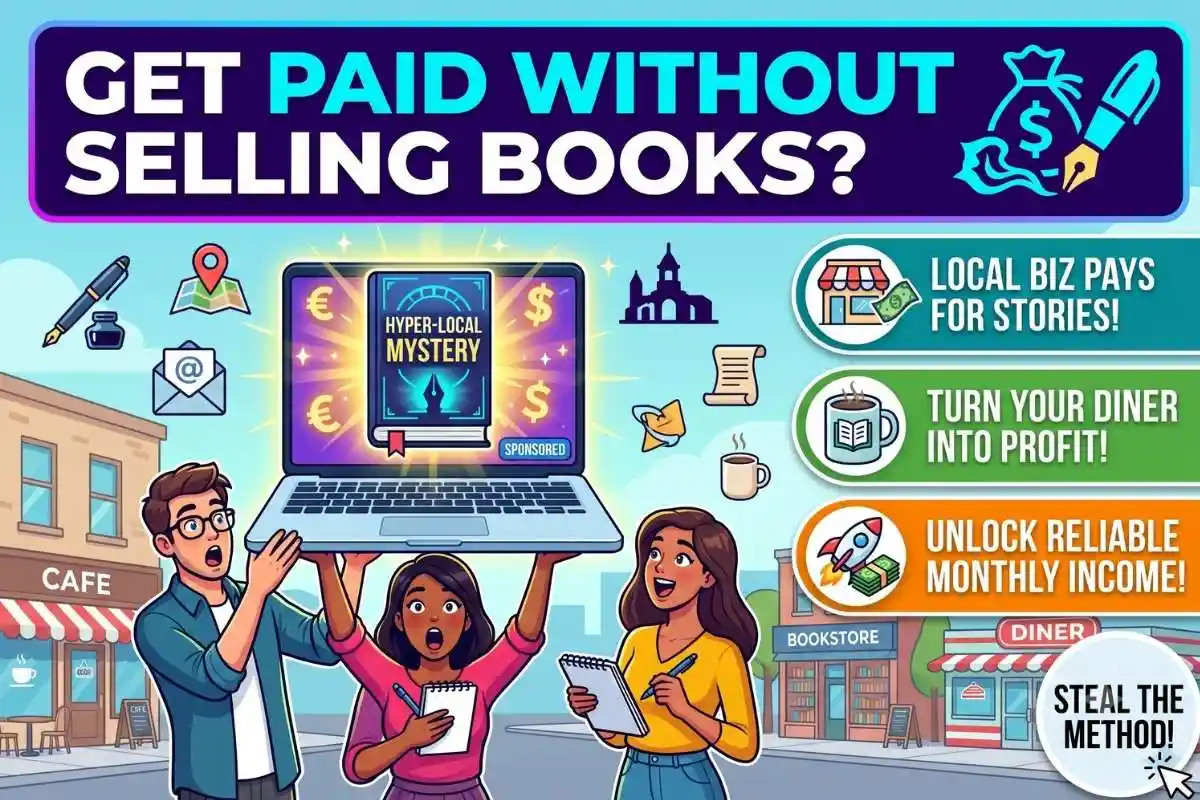
Imagine opening your email inbox on a Tuesday morning, not to find bills or promotional spam, but to read a serialized mystery set in the very diner where you buy your morning coffee. For decades, fiction writers have struggled with the unpredictable cycle of publishing, relying heavily on digital bookstores and global audiences to pay their rent. But a quiet revolution is taking place right in our neighborhoods. By writing hyper-local fiction—stories set in real, recognizable community spots—creative writers are unlocking a reliable income stream through newsletter sponsorships. Local businesses are discovering that sponsoring an engaging, locally-focused fictional newsletter is far more effective than buying a stagnant advertisement in a traditional newspaper.
The Magic of Hyper-Local Storytelling
The secret sauce of hyper-local fiction lies in the psychological phenomenon of recognition and belonging. When readers encounter streets they walk every day, or see their favorite neighborhood bookstore featured as a key plot point in a thriller, their emotional engagement skyrockets. This intense local resonance transforms a simple email broadcast into a shared community event that neighbors discuss over backyard fences. According to historical documentation on content marketing on Wikipedia, traditional advertising often interrupts what the audience is interested in, whereas storytelling is what they actively seek out. By seamlessly weaving real neighborhood locales into engaging narratives, you create a captivating reading experience that fosters deep community pride.
Building Your Subscribed Audience First
Before you can expect a local coffee shop or boutique to write you a sponsorship check, you must build a dedicated, loyal audience that trusts your artistic voice. You do not need tens of thousands of global subscribers to make this business model financially viable; in the world of hyper-local newsletters, a hyper-targeted list of five hundred local residents is worth infinitely more than five thousand random readers scattered across the globe. Start by releasing short, serialized fictional episodes on a predictable schedule, promoting them through community social media groups and word-of-mouth. Encourage your early readers to reply with feedback or suggest local landmarks for future plotlines, turning the reading experience into an interactive dialogue.
Crafting the Perfect Pitch for Merchants
When you step into a local business to pitch a sponsorship, remember that you are offering a high-converting, targeted advertising solution rather than asking for a charity handout. Small business owners are frequently overwhelmed by complex digital ad platforms and are looking for simple, authentic ways to reach neighborhood customers. Frame your proposal around community engagement and brand storytelling rather than raw impressions. For guidance on how small enterprises allocate their marketing budgets and value community outreach, consult resources from the Small Business Administration, which emphasizes local customer retention. Establish clear, tiered pricing structures, such as a basic logo placement or a premium tier where a short story episode is set explicitly inside the sponsor’s establishment.
Navigating Creative Integrity and Ethics
While collaborating with commercial sponsors is an exciting way to fund your writing career, maintaining your creative integrity and reader trust must remain your absolute top priority. Readers will quickly unsubscribe if they feel your fiction has devolved into a thinly veiled, deceptive advertisement for the highest bidder. To prevent this, always maintain a clear boundary between sponsored placements and organic storytelling, ensuring that any commercial integration serves the narrative rather than disrupting it. Be transparent with your audience by clearly labeling sponsored content and explaining that these local partnerships make it possible for you to distribute the stories for free. Furthermore, choose your sponsors wisely, aligning only with businesses that share your core community values.
Comparing Newsletter Sponsorships to Traditional Ads
Understanding how your hyper-local newsletter compares to traditional local advertising methods is crucial when negotiating with potential sponsors. Many neighborhood merchants are accustomed to spending their marketing dollars on print media, mailbox coupon bundles, or boosted social media posts, all of which often yield low engagement and trackability. By presenting a clear comparison of return on investment, reader loyalty, and cost-effectiveness, you can position your serialized fiction as a premium, innovative alternative. The following data table illustrates how author newsletter sponsorships stack up against standard local marketing channels, giving you the hard evidence needed to close your deals with complete confidence.
| Marketing Channel | Average Open Rate | Audience Trust Level | Cost to Sponsor | Community Impact |
| Hyper-Local Fiction Newsletter | 45% – 60% | Very High (Creative storytelling) | $50 – $250 / issue | High (Promotes neighborhood pride) |
| Local Print Newspaper Ad | Passive / Unknown | Moderate | $150 – $500 / run | Low (Often overlooked or discarded) |
| Direct Mail / Flyer Bundles | < 2% Response | Low | $200 – $600 / campaign | Very Low (Viewed as junk mail) |
| Boosted Social Media Posts | 1% – 5% Click Rate | Low to Moderate | Variable ($10 – $100+ daily) | Moderate (Subject to algorithm shifts) |
Frequently Asked Questions
How do I find the right local businesses to pitch for my newsletter?
Finding the right sponsors begins with observing your neighborhood with the eyes of both a resident and a storyteller. Look for thriving local businesses that naturally serve as community hubs, such as independent bookstores, cozy coffee shops, family-owned restaurants, craft breweries, and boutique fitness studios. These merchants already value neighborhood culture and rely heavily on repeat local customers to sustain their everyday operations. Make a comprehensive list of businesses where you personally shop and enjoy spending time, as your genuine enthusiasm for their services will shine through during your pitch. Avoid pitching large corporate chains initially, as their marketing budgets are usually controlled by distant corporate offices rather than local branch managers.
What if a business wants to dictate the plot of my story?
It is vital to establish clear creative boundaries right from the very start of any neighborhood sponsorship agreement. When you negotiate the contract, explain clearly that the sponsor is purchasing brand visibility and community goodwill, not editorial control over your artistic narrative. While you might happily agree to set a dramatic scene inside their bakery or have a main character order their signature iced coffee, you must retain ultimate authority over the plotlines, dialogue, and character arcs. Most business owners will deeply respect this arrangement when you explain that an authentic, compelling story resonates much better with readers than a forced, overly promotional advertisement that reads like a cheesy sales pitch.
How many subscribers do I need before I can start charging for sponsorships?
You do not need a massive, nationwide audience to start generating meaningful income from local sponsorships; hyper-local newsletters thrive on geographic density and reader loyalty rather than sheer numbers. In most suburban neighborhoods or city districts, reaching a milestone of three hundred to five hundred verified local subscribers is more than enough to justify charging a reliable monthly sponsorship fee. A local merchant understands that five hundred nearby residents reading an email every single week represents a substantial portion of their potential regular customer base. Focus your efforts on proving high engagement, such as an open rate consistently above forty percent, which demonstrates to local advertisers that your audience is paying close attention.
Why Your Backyard is the Future of Publishing
As the digital landscape becomes increasingly crowded with globalized, algorithmic content, human beings feel a deep, instinctive yearning for genuine local connection and community storytelling. By turning your narrative gaze toward the streets, parks, and storefronts of your own hometown, you are doing much more than just building a profitable, independent writing career; you are actively chronicling the living, breathing culture of your neighborhood. The outdated myth that authors must starve in isolation or rely solely on distant, gatekeeping publishers is rapidly fading away, replaced by an empowering model of direct neighborhood patronage. Take a mindful walk around your block today, observe the quiet human dramas unfolding behind familiar storefronts, and ask yourself: what captivating story is waiting to be written right in your own backyard?
