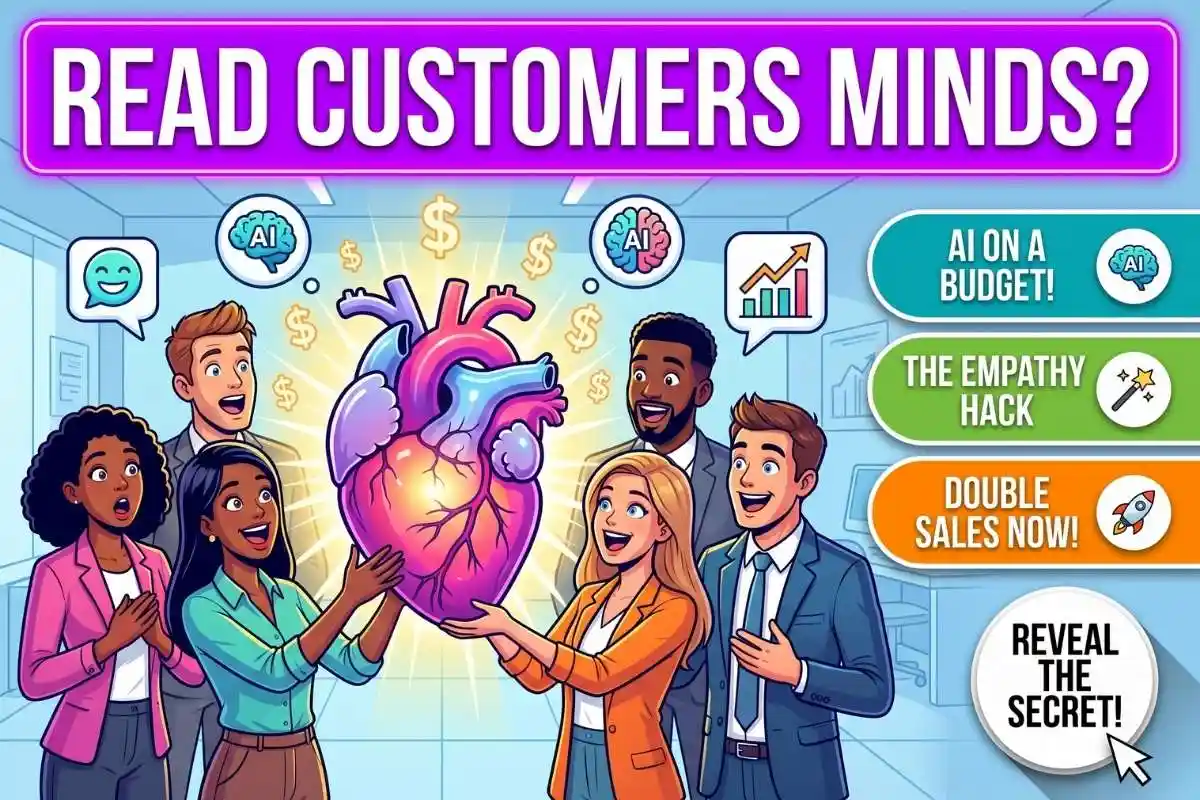
Imagine a world where your favorite store knows exactly what you want before you even walk through the doors, simply by understanding your mood. This is happening right now, reshaping how businesses interact with customers on a daily basis. We are talking about emotional AI, a groundbreaking approach to branding using sentiment technology to intelligently interpret human emotions. As we step into May—a month heavily associated with renewal and a significant shift in consumer spending habits—there is absolutely no better time to leverage this technology. By integrating sentiment tech into your daily operations, you are not merely selling a product; you are building a deeply empathetic relationship with your buyers. Adopting an emotional AI branding strategy this May could be the exact catalyst needed to double your sales. It is entirely about meeting your audience emotionally and crafting a perfectly timed message that deeply resonates.
The Dawn of Empathy in Artificial Intelligence
To understand how you can logically double your business sales using sentiment tech, we must first explore what this fascinating technology actually entails. At its core, emotional AI—formally known as affective computing—is a specialized branch of technology that develops systems capable of accurately recognizing and interpreting human emotions. Rather than treating customers like static data points on a spreadsheet, this technology allows businesses to actively listen to the subtle emotional cues hidden in social media posts, online reviews, and customer service voice interactions. When you employ sentiment analysis, you are essentially deploying an automated empathy engine for your brand. This engine sifts through thousands of digital interactions in real-time to determine if the overarching mood toward your brand is positive, negative, or neutral. Instead of passively waiting for quarterly reports to realize a promotional campaign completely missed the mark, sentiment tech alerts you immediately. You can delve much deeper into the academic origins of this field by reading the Affective computing Wikipedia page.
Turning Customer Sentiment into Tangible Sales
How exactly does understanding a customer’s mood translate into doubling your sales this May? The answer lies in the sheer power of personalized, emotionally resonant marketing. Traditional advertising relies heavily on an outdated “spray and pray” methodology, broadcasting a uniform message to the masses and hoping it sticks with someone. Emotional AI completely flips this ineffective model upside down. Imagine running a springtime promotional campaign for a new line of outdoor gear. By utilizing sentiment analysis tools, you might suddenly discover your audience is feeling incredibly overwhelmed and yearning for a peaceful escape into nature. Armed directly with this emotional insight, you can instantly tailor your advertising copy to focus on the liberating feeling of freedom, rather than listing boring technical product specifications. This alignment between what the customer currently feels and what the brand ultimately offers creates a frictionless, highly persuasive path to purchase. Furthermore, sentiment tech helps you seamlessly target your most delighted customers with perfectly timed up-sell opportunities.
Navigating the Ethical Landscape and Consumer Trust
While the potential to double your sales using emotional AI is undeniably exciting, it is absolutely crucial to navigate this new landscape with a remarkably strong ethical compass. The ability to analyze consumer emotions comes with significant responsibility regarding individual privacy and data security. Modern consumers are highly educated and fiercely aware of their digital footprints, and any perception that a brand is being manipulative can instantly trigger a severe public backlash. Transparency must always be the foundational cornerstone of your emotional AI branding strategy. Customers should transparently know when their data is being utilized to tailor their shopping experiences. When forward-thinking brands use sentiment analysis ethically, their primary goal is to remove friction and greatly enhance the overall buyer journey. To comfortably ensure your business consistently stays on the right side of consumer protection laws, it is highly recommended to follow federal guidelines. Reviewing the official resources provided by the Federal Trade Commission (FTC) helps you clearly understand the strict boundaries of fair and deceptive advertising practices.
Practical Steps to Launch Your May Strategy
Now that we have thoroughly covered the theory and ethical boundaries, it is time to look closely at the practical steps you can take to implement this powerful strategy right now. May is the absolute perfect launchpad because collective consumer energy drastically shifts toward summer preparations, making it a highly dynamic period for sentiment tracking. The first crucial step is to integrate a robust social listening tool directly into your existing digital marketing stack. These intuitive platforms will automatically monitor online brand mentions and accurately categorize the underlying emotions of your audience. Next, you must establish a responsive, cross-functional internal team. Your marketing, sales, and customer service departments must communicate seamlessly and rapidly. If sentiment tech detects a massive surge in positive emotion around a specific new product, the sales team can immediately launch a highly targeted flash promotion. Finally, you should start small by consistently A/B testing your messaging based on these emotional insights to rapidly drive immediate, highly profitable conversions.
The Future of Retail and Empathetic Commerce
Looking strategically beyond this current month, the seamless integration of sentiment technology is rapidly becoming the defining characteristic of modern, successful commerce. We are aggressively transitioning from a rigid era of transactional retail into a fluid era of empathetic commerce, where the emotional intelligence of a brand directly dictates its total market share. Businesses that stubbornly fail to adapt to this reality will eventually find themselves speaking a language their customers completely ignore. The true beauty of a modern emotional AI branding strategy is that it continuously learns and adapts over time. The more consumer data the system processes, the more precise its emotional predictions become, dynamically allowing your brand to anticipate buyer needs before they are even explicitly articulated. As you confidently implement these modern tools this May, always remember that the ultimate goal is the steady cultivation of a resilient, customer-centric brand ecosystem. By successfully marrying artificial intelligence with genuine human empathy, you are positioning your business directly at the forefront of the upcoming retail revolution.
Market Expansion Data
Here is a quick look at how rapidly the global affective computing market is currently expanding, proving that emotional AI is not just a passing trend, but a permanent, highly profitable shift in modern business technology.
| Year | Global Market Size (Estimated) | Key Market Driver |
| 2024 | $79.4 Billion | Early adoption in healthcare and retail |
| 2026 | $136.2 Billion | Mainstream marketing sentiment analysis |
| 2030 | $388.2 Billion | Omnichannel empathetic AI integration |
Frequently Asked Questions About Emotional AI
What exactly is sentiment analysis and how does it work?
Sentiment analysis is a sophisticated technology that uses natural language processing, machine learning, and artificial intelligence to evaluate digital text—such as social media posts, emails, customer support tickets, or product reviews—and determine the underlying emotional tone behind it. Instead of merely tracking keywords, the AI evaluates the context and nuances of the language to categorize the overall sentiment as positive, negative, or neutral. By doing so, it helps brands understand public perception in real-time. This means that instead of relying on outdated surveys, a business can instantly gauge how consumers are reacting to a new product launch or a sudden change in market conditions, allowing for immediate and informed strategic adjustments.
Is emotional AI expensive to implement for a small business?
The assumption that emotional AI is prohibitively expensive is a common misconception, but it is not necessarily true today. While massive, enterprise-level biometric systems and custom-built algorithms can be incredibly costly, the market is now flooded with affordable, cloud-based social listening tools designed specifically for small to medium-sized businesses. These user-friendly platforms offer robust basic sentiment tracking that can provide immediate, actionable value without breaking the bank. Many software-as-a-service providers offer tiered subscription models, meaning a local boutique or a startup can access the same foundational AI insights as a global corporation, making this powerful technology accessible and highly practical for virtually any forward-thinking brand.
Can sentiment technology completely replace human marketers?
The definitive answer is no, and the technology should never be utilized with that goal in mind. Sentiment technology is a highly advanced analytical tool meant to enhance and elevate human creativity, not replace it entirely. While artificial intelligence can process massive amounts of raw data and identify emotional trends with a speed no human could match, it still requires true human empathy, intuition, and strategic thinking to craft a genuinely resonant marketing campaign based on those insights. The AI acts as a compass pointing toward the customer’s mood, but it is the human marketing team that must ultimately steer the ship, building the authentic connections that ultimately drive brand loyalty and sustained sales growth.
The Curiosity Corner: Reading the Unseen
Did you know that some advanced emotional AI systems can literally read “micro-expressions”—involuntary, rapid facial muscle movements that last only a fraction of a second? While typical marketing sentiment tools focus primarily on analyzing text and voice data, the absolute cutting edge of affective computing utilizes optical sensors and cameras to detect a customer’s hidden emotional reaction to a video ad or a physical product display before they are even consciously aware of how they feel. This fascinating capability highlights just how deeply technology can understand human nature and predict consumer behavior with astonishing accuracy. It bridges the gap between what people say they feel and what their subconscious physical reactions actually reveal.
Summary
As you finalize your comprehensive marketing plans this May, it is vital to remember that the businesses experiencing the most dramatic and sustained growth are those that treat their customers like human beings, rather than just numerical metrics on a conversion chart. An emotional AI branding strategy empowers you to listen deeply, respond authentically, and provide genuine value precisely when it is needed most. By consistently utilizing sentiment technology to guide your digital messaging and refine your sales approach, you can foster a profound sense of brand loyalty that competitors will struggle to match. Taking this innovative step right now can potentially double your business sales, beautifully setting the stage for a highly successful, resilient, and profitable summer season.