


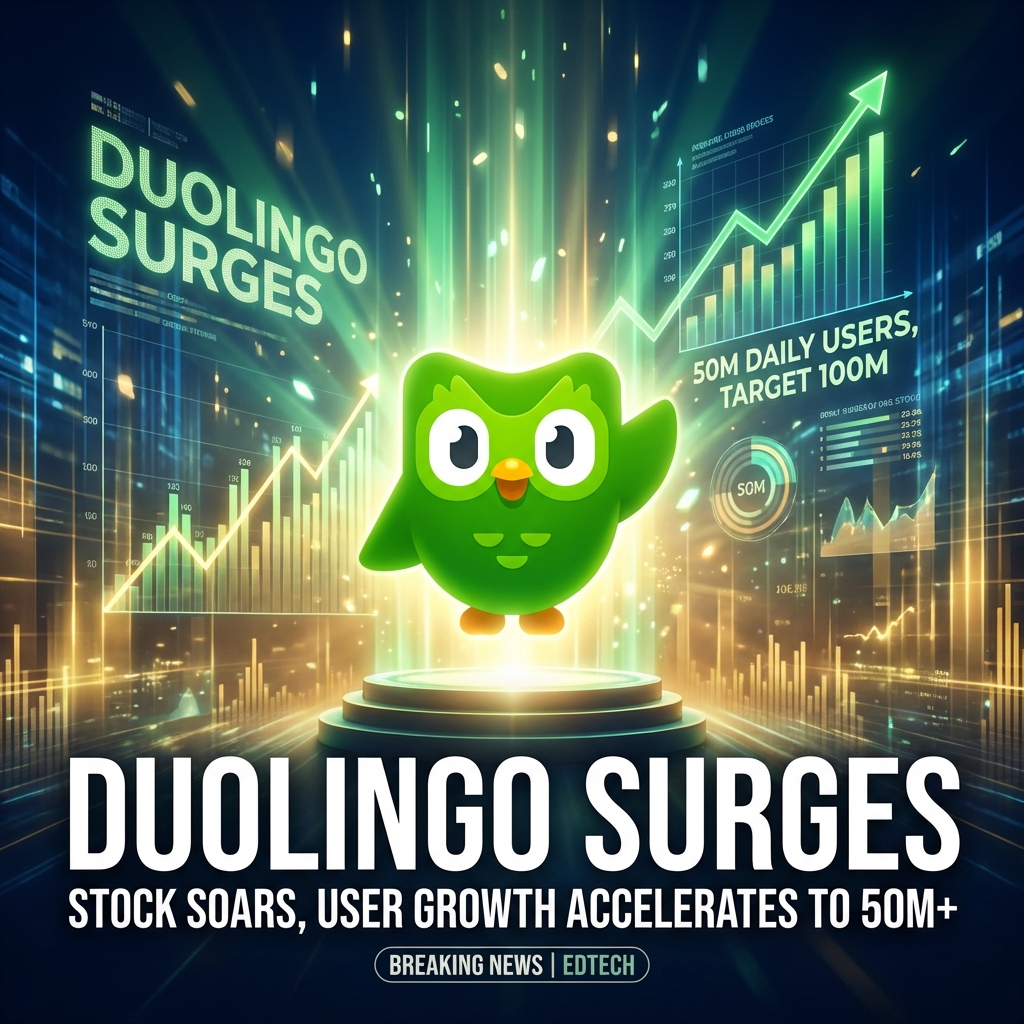
The market usually rewards immediate, explosive growth, treating any slowdown as a scarlet letter signaling terminal decline. This is the fundamental rule of viral tech investment. Yet, in a fascinating and counterintuitive move that has analysts scrambling, Duolingo’s recent performance suggests they are intentionally pressing the brakes on near-term profits to engineer a far bigger, more durable future. The inevitable result? A massive investor confidence surge that sent the \*\*Duolingo stock\*\* soaring, even as management spoke candidly about moderating near-term financial growth.
This isn’t a story about stagnation; it’s a masterclass in long-term framing. Duolingo just crossed a monumental threshold, reporting they surpassed fifty million daily active users during the fourth quarter of 2025\. That alone would normally trigger a major rally. However, the real story, the one fueling the current excitement, lies in the stated strategy shift communicated by CEO Luis von Ahn. They are deliberately pivoting resources to turbocharge the free learning experience, optimizing word-of-mouth acquisition to chase an ultimate target of one hundred million daily active users. Wall Street is interpreting this pause not as weakness, but as an aggressive land-grab for market dominance that sidelines competitors unprepared for this tactical shift.
The 50 Million Milestone and the Strategic Trade-Off
Surpassing fifty million daily active users is statistically enormous, cementing Duolingo’s position as the undisputed global leader in mobile language learning. More importantly, it proves the core product appeal remains incredibly robust. The fact that they achieved this milestone while simultaneously setting the stage for a temporary growth moderation speaks volumes about the underlying strength of their network effect. When a company growing this fast announces a slowdown, the default reaction from the traditional financial analysts is often panic, assuming market saturation or product fatigue. Duolingo is actively dismantling that assumption by tying the slowdown directly to an aggressive investment in the free tier.
The central thesis being sold to the market is simple: acquisition volume precedes monetization scale. By ruthlessly improving the experience for the massive free user base, they are creating better word-of-mouth, which is the cheapest and most sustainable form of user acquisition in the digital economy. They are framing their reliance on the free layer not as a necessary evil, but as a highly managed engine designed to feed future monetization efforts across their expanding ecosystem. This dedication proves a maturity often lacking in high-growth tech firms; they understand that growth without an expanding, highly engaged top-of-funnel is simply unsustainable in the long run.
Furthermore, management highlighted the expansion into new educational verticals like chess, math, and music. These new offerings cannot succeed without a massive, pre-built user conduit. The decision to slow near-term financial growth is therefore a direct capital injection into these future growth engines. If users adopt Duolingo for language and stay within the ecosystem for calculus or guitar lessons, the lifetime value increases exponentially. This pivot suggests the company views itself less as a language app and more as a universal learning platform, a transition that demands a population base far exceeding the current fifty million mark. It demands the hundred million target.
The market’s positive reaction—the surge in \*\*Duolingo stock\*\*—is the acknowledgment that sophisticated investors trust this long-view strategy. They see the intentional sacrifice of immediate earnings per share visibility as a necessary cost to secure a virtually unassailable monopoly position in the broader digital education category.
Historical Parallels: Sacrificing Today for Tyranny Tomorrow
This strategic move echoes several legendary shifts in tech history where leaders chose long-term positioning over short-term shareholder satisfaction. Think back to Amazon in its early days. For years, the mantra was reinvestment into logistics, infrastructure, and low pricing, often resulting in negligible profit margins or even losses for entire fiscal periods. Outsiders viewed this as wasteful spending; insiders understood it was network construction designed to make competition economically unviable once scale was achieved. Duolingo appears to be applying a software-era version of this strategy to edtech.
We can also draw comparisons to the classic platform wars of the early 2010s. Platforms that rapidly flooded the market with free or heavily subsidized offerings—even if it meant burning capital—were the ones that eventually gained pricing power. When consumers are reticent to pay for digital education, the key is establishing ubiquity first. Duolingo is betting that once a user is deeply embedded in its personalized, AI-driven learning path, the friction to switch to a competitor—even one offering a potentially cheaper subscription—becomes insurmountable due to sunk time investment and learning curve familiarity.
In the realm of social media, companies often experience plateaus where growth slows, prompting existential questions. The successful companies navigated those slowdowns by broadening their core offering or investing heavily in infrastructure that allowed for eventual scale acceleration. Duolingo’s current strategy is a planned deflation of the hyper-growth narrative, replacing it with a disciplined construction narrative. They are effectively saying, We have proven we can grow fast. Now watch us prove we can conquer the entire learning landscape.
This disciplined approach also sends a strong message regarding their use of AI. The company is not just sprinkling AI features on top of an existing product; it is fundamentally rethinking the learning delivery mechanism. Building a truly superior, engaging, and personalized free experience requires significant engineering commitment, which naturally pulls focus and resources away from immediate monetization tweaks. Investors appear to be rewarding the courage to dedicate resources to foundational, AI-driven product improvement rather than superficial subscription upsells.
The AI Crucible: Why Better Teaching Means Superior Economics
The integration of artificial intelligence is the true economic engine driving this strategy—and the reason investors are looking past the moderated growth guidance. Duolingo’s competitive moat going forward will not be its gamification structures, which are easily copied, but the depth and efficacy of its personalized learning algorithms. If Duolingo, powered by AI, can demonstrably teach users faster and more effectively than traditional methods or competitors, it becomes indispensable.
The goal of boosting the free experience is to let the AI algorithms ingest truly massive amounts of user interaction data from this larger pool of fifty million users. More data points mean smarter models, which leads to better teaching efficacy, which, in turn, feeds the word-of-mouth loop. This creates a virtuous cycle where investment in the free tier directly compounds the quality differential for the paid tier, making the upgrade decision a no-brainer for dedicated learners.
This focus on teaching better provides a powerful defense against market shocks. In a lean economic environment, consumers scrutinize every subscription. If Duolingo can prove through measurable outcomes that one hour on their platform equates to two hours on a competitor’s, the perceived value proposition for both the ad-supported free tier and the premium subscription skyrockets. The quality of service becomes the ultimate barrier to entry.
The expansion into mathematically intensive or technically demanding subjects like music theory and math requires a much more robust and adaptive AI backend than simple vocabulary reinforcement. These future products need the scale that only a massive, highly engaged user base can provide for iterative testing and refinement. Management is explicitly using 2026 as a development laboratory, accepting the near-term dilution of financial metrics to ensure the platform is robust enough to handle the ambition of truly universal education.
Share Repurchases: The Quiet Signal of Institutional Confidence
While the growth focus captured the headlines, the Board’s authorization of a new share repurchase program offers a crucial secondary signal to the market. When a company believes its stock is undervalued based on its long-term potential, deploying capital to buy back shares is a classic, powerful move. It signals management’s deeply held belief that the stock price does not yet reflect the true value of the assets they are building.
This buyback framework gives the company flexibility to manage dilution from stock-based compensation while simultaneously putting a floor under the publicly traded share price. It acts as ballast against the short-term skepticism that might arise from the moderated growth guidance. Essentially, Duolingo is communicating: We are slowing the top line slightly, but we are confident enough in our future cash flow generation that we are willing to use our cash reserves to support the stock price today. This dual action—slowing growth for scale, buying back shares for value—is a sophisticated balancing act.
Crucially, the share repurchase mandate is open-ended, carrying no expiration date. This structure avoids the quarterly pressure of having to execute large buybacks immediately, allowing management the discretion to deploy capital only when market conditions are favorable or when the stock dips due to temporary volatility. It is a long-term capital allocation tool, perfectly aligned with the long-term growth strategy they are currently executing on the product side. It suggests that the internal financial models project significant free cash flow expansion once the hundred million user goal is within striking distance.
Scenario Modeling: Where Does the Stock Go From Here?
Investors now face three primary pathways as they watch Duolingo execute this ambitious strategy over the next 18 to 24 months. The first, and perhaps the most likely scenario given management’s commitment, is the Achievement Scenario. Duolingo successfully leverages the improved free experience to rapidly accelerate user growth through word-of-mouth, achieving something close to the one hundred million DAU target within the projected medium-term window. Concurrently, their new offerings in math and music prove viable, leading to multi-product monetization streams. In this outcome, the stock experiences a prolonged upward trajectory post-2026 as the market re-rates the company from a niche edtech player to a foundational global education utility.
The second scenario is the Execution Lag. The strategy itself is sound, but the execution of the AI-driven platform improvements takes longer than anticipated, or the expansion into new verticals stumbles due to unforeseen competitive pressure or content difficulty. Growth moderates temporarily, but the user base remains sticky. In this case, we would expect choppy, volatile periods for the stock. Investors would demand to see tangible proof of superior learning outcomes, and any delay in showing clear monetization uplift when free growth finally re-accelerates could lead to impatience, potentially testing the support provided by the ongoing share repurchase authorization.
The final, high-risk path is the Ecosystem Failure. This occurs if the core language business becomes saturated, and the new verticals fail to gain traction, or if a competitor cracks the personalized learning code more effectively. If the massive investment into the free tier does not translate into measurable word-of-mouth advantage, the trade-off—moderated financial growth—will be viewed as a catastrophic error. This would see the stock facing severe downward pressure as the market realizes the cost of maintaining market leadership without immediate returns is too high. However, given Duolingo’s track record and the sheer scale of engagement already present, this remains the least probable outcome, largely mitigated by the leadership’s clear-eyed articulation of the plan and the ongoing capital management flexibility.
What is undeniable is that Duolingo has shifted the narrative. They are no longer just a successful language app; they are aggressively staking a claim on the future of universal digital education, using a calculated pause in immediate profit maximization as the strategic anvil upon which to shape their future dominance. Watching how quickly they can move from fifty million users to the hundred million target will be the defining financial story of the coming year.
FAQ
What is the primary strategic reason Duolingo is reportedly slowing down near-term financial growth?
The company is intentionally pivoting resources to turbocharge the free learning experience to chase an ultimate target of one hundred million daily active users (DAU). This aggressive land-grab for market dominance is seen as building a more durable future foundation for monetization.
How many Daily Active Users (DAU) did Duolingo recently report surpassing?
Duolingo surpassed fifty million daily active users during the fourth quarter of 2025. This milestone cements their current position as the undisputed leader in mobile language learning.
Why is Wall Street interpreting the slowdown positively, leading to a stock surge?
Sophisticated investors trust the long-view strategy, viewing the temporary sacrifice of immediate earnings as a necessary cost to secure an unassailable monopoly position in digital education. They see it as evidence of aggressive land-grabbing.
What historical company strategy does Duolingo’s current pivot resemble?
The move echoes Amazon’s early strategy of prioritizing reinvestment into logistics, infrastructure, and low pricing over immediate profit margins to create insurmountable scale. Duolingo is applying a software-era version of this network construction to edtech.
Beyond language learning, what new educational verticals is Duolingo expanding into?
Management highlighted expansion into new verticals including chess, math, and music. These new offerings require a massive, pre-built user conduit to succeed.
How does improving the free tier directly impact Duolingo’s monetization cycle?
Improving the free experience creates better word-of-mouth acquisition, which is the cheapest form of user acquisition, feeding a larger, highly engaged top-of-funnel for future monetization efforts. It establishes ubiquity before demanding payment.
What is the significance of the share repurchase program authorized by the Board?
The buyback program signals management’s deep belief that the stock is undervalued based on long-term potential, putting a floor under the share price against short-term skepticism. This acts as ballast while they execute their growth strategy.
How does the open-ended nature of the share repurchase mandate benefit management?
The structure allows management discretion to deploy capital only when market conditions are favorable or the stock dips due to temporary volatility, rather than forcing immediate execution quarterly. It aligns with the long-term capital allocation strategy.
What is the core AI-driven competitive moat Duolingo is trying to build?
The moat lies in the depth and efficacy of their personalized learning algorithms, rather than easily copied features like gamification. The goal is superior teaching results that make the platform indispensable.
What is the purpose of feeding the AI algorithms with data from a larger free user pool?
More users interacting with the free tier provide more data points, leading to smarter models and better teaching efficacy, which strengthens the word-of-mouth loop. This compounds the quality differential for the paid tier.
What is the ‘Achievement Scenario’ for Duolingo stock over the next 18-24 months?
This scenario involves Duolingo successfully hitting close to the 100 million DAU target through word-of-mouth, while new offerings prove viable, leading to sustained upward trajectory as the company is re-rated as a global education utility.
What risk does the ‘Execution Lag’ scenario present to investors?
If the AI platform improvements or new vertical expansions take longer than anticipated, investors may become impatient waiting for monetization uplift. This could lead to choppy, volatile periods for the stock price.
Under what conditions would the ‘Ecosystem Failure’ scenario potentially materialize?
This occurs if the core language business saturates and new verticals fail to gain traction, meaning the massive investment into the free tier did not translate into a measurable word-of-mouth advantage. This would mark the trade-off as a catastrophic error.
How does Duolingo intend to justify the upgrade decision for dedicated learners based on the AI focus?
If the AI proves the platform teaches faster and more effectively (measurable outcomes), the perceived value proposition for the premium subscription skyrockets, making the upgrade a ‘no-brainer’ for dedicated users.
According to the article, what type of growth narrative are Duolingo’s leaders intentionally replacing?
They are deliberately replacing the ‘hyper-growth narrative’ common in tech with a ‘disciplined construction narrative.’ They are proving they can conquer the entire learning landscape, not just grow fast.
Why are new, technically challenging verticals like math and music crucial to the 100 million user goal?
These subjects require a far more robust and adaptive AI backend than basic vocabulary reinforcement, needing the scale of a massive user base for iterative testing and refinement before content can be perfected.
What fundamental assumption about high-growth tech firms is Duolingo actively dismantling with its strategy?
They are dismantling the assumption that any slowdown in rapid growth signals market saturation or product fatigue by tying the slowdown directly to aggressive, strategic investment in the free user base.
Why are investors rewarding the dedication to foundational product improvement over superficial subscription upsells?
Investors recognize that deep, AI-driven product improvement—which requires significant engineering commitment—builds lasting value, unlike superficial tweaks designed only for short-term monetization.
What is the role of word-of-mouth user acquisition in Duolingo’s strategy?
It is viewed as the cheapest and most sustainable form of user acquisition in the digital economy, heavily optimized by ruthlessly improving the experience for the large free user base. This scales the top of the funnel.
What duration is management using as a development laboratory to ensure platform robustness for universal education?
Management is explicitly using 2026 as a development laboratory, accepting near-term dilution of financial metrics to ensure the platform’s AI infrastructure can handle the ambition of true universal education.
What is the ultimate market perception Duolingo is aiming for with this pivot?
They are aiming to transition from being perceived as only a successful language app to being recognized as a foundational global education utility. This requires securing ubiquitous market presence first.

