


The Digital Front Door: Why Brick-and-Mortar is Now Just the Back Office
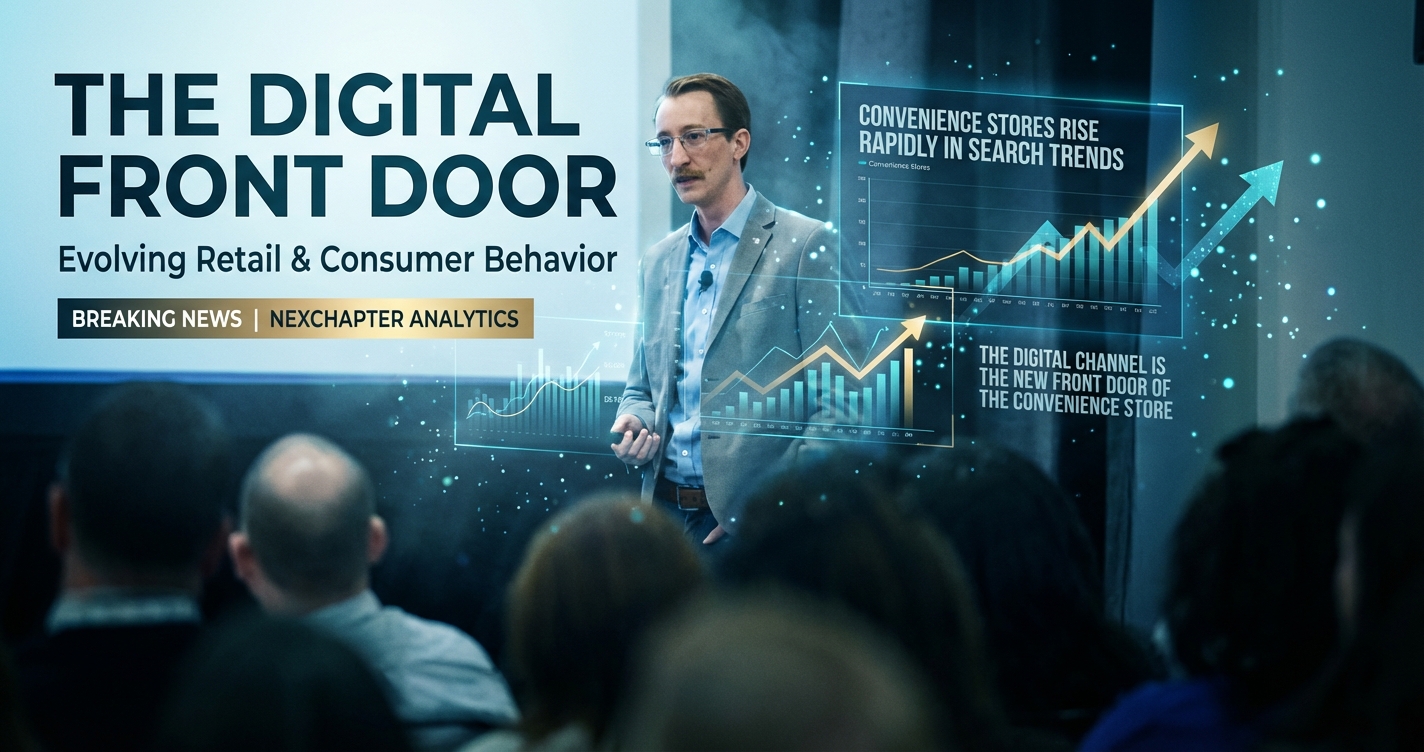
The humble corner store, once reliant solely on foot traffic and quick cash transactions, is undergoing a seismic, digitally-driven transformation that investors and legacy retailers must pay immediate attention to. Search trends are surging around the term “convenience store,” not because someone is looking for the nearest gas pump, but because the very nature of how we buy snacks, coffee, and fuel is being rewritten by e-commerce logic. We are witnessing the elevation of the digital channel from a mere supplementary tool to the absolute cornerstone of modern convenience retailing. Experts are now pointing toward a future where over half of all transactions bypass the traditional counter entirely.
Matt Van Gilder, Vice President of Omnichannel at NexChapter, a consulting firm deeply embedded in this shift, has provided concrete data suggesting the velocity of this change is accelerating faster than previously modeled. Currently, nearly 30% of foodservice sales within these chains are already flowing through digital avenues. This is not an abstract future projection; this is the reality for dozens of operators right now. When a sector sees nearly a third of its revenue shift digitally in the realm of immediate consumption items, it signals a profound structural breakdown in old business models. The physical store is fast becoming a fulfillment hub, authenticated and initiated by a smartphone screen.
The implications for competitive advantage are enormous. Retailers who have been slow to integrate loyalty programs, targeted promotions, and smooth digital ordering are effectively ceding market share to those who have embraced this new reality. Van Gilder suggests that the synergy between robust foodservice offerings and seamless e-commerce capabilities creates an exponential return, predicting a “one plus one equals three” effect. This synergy is the secret sauce that separates the market leaders from the laggards in this intensifying digital \*\*competition\*\*.
The 50% Tipping Point: Benchmarks from Quick Service Giants
To understand the gravity of the convenience store foodservice projection, one must look at analogous industries that have already crossed this threshold. Quick-service restaurants, the fast-food titans like McDonald’s and KFC, have already breached or are hovering near the 50% digital sales mark. Chipotle, celebrated for its technology integration, is already boasting nearly 40% of its volume originating from digital orders. This is crucial context. If established quick-service restaurants, dealing with highly standardized menus and production flows, have successfully digitized the majority of their transactions, the barrier to entry for convenience stores is lower than perceived.
Convenience stores offer a different but equally compelling proposition: high frequency and immediate necessity. While a customer might plan a Chipotle order, the stop at a \*\*convenience store\*\* is often spontaneous or habitual. The success stories referenced by NexChapter show that convenience retailers seeing the highest digital penetration—those in the top quartile—are already achieving digital volumes up to an astounding 62% of total sales. This isn’t a niche trend affecting a few outliers; it is the demonstrated capability within the industry itself. The path to 50-plus percent digital dominance is clearly viable and actively being walked by the industry leaders right now.
The data suggests that the perceived friction in digital adoption within this sector—concerns over order accuracy for unpredictable items like gasoline add-ons or highly customized coffee builds—is being powerfully overcome by customer demand for specified promotions and personalized reminders. The digital platform acts as a highly sophisticated memory, recalling preferences and pushing timely offers, which is something the standard checkout experience simply cannot replicate effectively.
Historical Echoes: From Catalog Sales to App Domination
This moment in convenience retail echoes several major disruptive shifts in consumer history, most notably the transition from localized retail hegemony to mass-market catalog sales in the 20th century, and later, the explosive growth of Amazon. When Sears pioneered the catalog, it annihilated localized general stores by offering breadth and accessibility beyond geographic constraints. People accepted a delay in delivery for superior selection and consistent pricing.
The subsequent shift to e-commerce repeated this pattern, trading immediacy for sheer convenience and infinite shelf space. What is unique about the convenience store digital evolution is that it is \*reintroducing\* a form of immediacy—order ahead, skip the line—while simultaneously leveraging the infinite reach of digital targeting. In the past, retailers fought over physical square footage. Now, the fight is over screen real estate and who owns the customer’s predictive purchasing profile. This is far more capital-intensive and data-driven than simply opening a new location.
Consider the evolution of grocery delivery. For years, skepticism plagued the idea of ordering perishables online. Once user experience solidified and initial logistical hurdles were cleared, the market rapidly normalized digital ordering. Convenience is being redefined; it is no longer just about the shortest line to pay, but about the shortest path to receiving the desired goods, whether that be via curbside pickup or rapid in-store fulfillment orchestrated entirely digitally.
The Technical Backend: Loyalty, Media, and the Data Pipeline
The engine driving this digital surge is the sophisticated integration of loyalty, retail media, and e-commerce infrastructure. When Van Gilder stresses that the digital channel is the “conduit,” he is referring to the central data hub where customer understanding resides. A top-performing retailer is not just taking orders; they are engineering demand.
For example, a customer usually buys a specific brand of energy drink only on Tuesdays. The digital system recognizes this pattern, cross-references it with weather data or a nearby event, and pushes a highly specific promotion Monday evening: Buy two Tuesdays, get a free coffee add-on. This precision targeting is impossible to achieve broadly on in-store signage. This ability to influence behavior through personalized digital nudges means that the marketing budget is now disproportionately tied to the performance of the digital platform.
Furthermore, this data repository is becoming an asset class unto itself—retail media. As more customers transact digitally, the retailer gains rich, first-party data on consumer journeys, which can then be monetized by allowing CPG brands to advertise directly within the retailer’s app or website. The profit margins on selling media space far exceed the slim margins of selling a packaged snack. Thus, the digital front door is not merely a sales channel; it is the primary revenue generator and valuation driver for modern convenience enterprises.
The Competitive Battlefield: Who Owns the Customer Data Estate?
The intense \*\*competition\*\* now centers around data ownership and platform maturity. Regional chains that rely on dated point-of-sale systems or have outsourced their loyalty programs entirely are finding themselves structurally disadvantaged. They are paying third parties for access to their own transactional data, crippling their ability to execute the agile, personalized strategies seen in the leading quartile.
The ability to leverage third-party partnerships—like incorporating third-party delivery services while maintaining core customer data—is also a balancing act. The ultimate goal for market leaders is to own the entire ecosystem: order placement, payment processing, and preference tracking, ensuring that every customer touchpoint reinforces brand loyalty rather than allowing margin leakage to external platforms.
This operational reality forces extraordinary capital investment. It requires modernizing POS systems, overhauling inventory management to seamlessly link physical stock to digital ordering queues, and hiring specialized omnichannel strategists. The initial outlay is significant, which creates a moat favoring large players who can sustain these investments against smaller, fragmented operations.
Future Scenario One: The Consolidation Tsunami
In the most direct scenario, the pressure exerted by this digital divergence leads to a wave of consolidation. Smaller, regionally successful convenience chains that lack the capital or expertise to build out fully integrated omnichannel platforms will become attractive acquisition targets for the digital leaders or even large private equity players betting on the industry shift. These acquisitions would aim to rapidly absorb established local consumer bases and plug them into existing, scalable digital infrastructure.
This is a replay of history seen in banking and telecoms: the essential service provider must master the complex technology stack, or be subsumed by those who have. We would see major national brands rapidly expanding their geographic footprint not by building hundreds of new gas stations, but by acquiring three successful regional chains, instantaneously boosting their digital revenue penetration by dozens of percentage points overnight. This consolidation wave would solidify market power among a very small group of digitally advanced firms.
Future Scenario Two: The Frictionless Fulfillment Arms Race
If consolidation is slow, the primary focus will become the arms race for fulfillment speed and accuracy. Once ordering digitally becomes standard, customers will develop zero tolerance for error. If 50% of sales are digital, then 50% of service execution must be perfect, digitally managed execution. This means advanced robotics in back-of-house food prep, hyper-efficient in-store employee training focused purely on digital fulfillment, and potentially micro-fulfillment centers integrated with existing stores.
The key metric won’t be average transaction value; it will be digital fulfillment cycle time. Store designs will morph dramatically, dedicating significant real estate not to aisle space, but to dedicated pickup zones and staging areas for delivery drivers, effectively transforming the architecture of the convenience \*\*convenience store\*\* itself from a browsing environment into an ultra-efficient speed factory for immediate consumption goods.
Future Scenario Three: The Rise of the Hyper-Niche Digital Player
A less conventional, but plausible, outcome involves disruptive startups targeting specific high-margin categories that convenience stores currently dominate, such as premium coffee or specialized snack boxes. These players bypass the legacy fuel and gas station infrastructure entirely, focusing solely on a digitally native, subscription, or delivery model aimed at the office worker or the urban consumer. They won’t compete on location density but on product curation and superior digital experience within a narrow band of goods—the “digital deli” concept.
These smaller, nimbler entities set new benchmarks for digital UX that conventional operators must then scramble to match, forcing a rapid adoption cycle even among incumbents who want to avoid being slowly starved of their most profitable impulse purchases. This scenario thrives on the agility that large, established organizations often struggle to attain, using technological agility as their primary competitive weapon against established physical footprints.
The evidence is overwhelming: for the modern retailer providing immediate gratification, the battleground is no longer the forecourt—it is the handheld screen. Ignoring the “new front door” means accepting irrelevance as consumers find the path of least digital resistance.
FAQ
What is the key takeaway regarding the future sales distribution in the convenience store sector?
Experts project that over 50% of all convenience store transactions will eventually bypass the traditional counter entirely. This shift is driven by the elevation of the digital channel to the cornerstone of modern convenience retailing. The physical store is rapidly evolving into a digital fulfillment hub.
According to Matt Van Gilder, what percentage of foodservice sales in some chains are currently digital?
Matt Van Gilder of NexChapter indicates that nearly 30% of foodservice sales within these chains are already flowing through digital avenues. This significant current volume signals a profound structural breakdown in older business models. This is immediate reality, not just a future projection for leading operators.
What is the predicted return synergy between robust foodservice and seamless e-commerce capabilities?
Van Gilder describes this synergy as creating an exponential return, suggesting a \
Which analogous industries provide context for the convenience store’s potential 50% digital sales tipping point?
The quick-service restaurant (QSR) giants, such as McDonald’s and KFC, have already breached or are near the 50% digital sales mark. Chipotle, notable for its tech integration, boasts nearly 40% of volume from digital orders. This demonstrates that digitizing highly standardized, immediate consumption items is feasible.
What digital sales volumes are the top-quartile convenience retailers currently achieving?
The convenience retailers seeing the highest digital penetration—those in the top quartile—are already achieving digital volumes up to an astounding 62% of total sales. This demonstrates that the path to the 50-plus percent digital dominance is not theoretical but actively being executed by industry leaders.
What common consumer friction points in digital adoption are being successfully overcome in convenience retail?
The perceived friction points, such as order accuracy for unpredictable items like gasoline or customized coffee builds, are being overpowered by customer demand. Digital platforms overcome this through superior memory, recalling preferences, and pushing timely, personalized offers.
How does the current digital transformation echo the historical shift brought about by catalog sales?
The catalog sales era (e.g., Sears) ended localized retail hegemony by offering superior selection and accessibility beyond geography. People accepted delivery delays for better options, similar to how early e-commerce worked. This highlights a historical pattern where improved access trumps location.
What is the unique aspect of the convenience store digital evolution compared to earlier e-commerce adoption?
The convenience store digital evolution is unique because it *reintroduces* immediacy (order ahead/skip the line) while harnessing the infinite reach of digital targeting. Unlike past retail fights over physical square footage, the current battle is over screen real estate and predictive purchasing profiles.
What is the primary revenue driver and valuation asset for modern convenience enterprises today?
The digital front door is becoming the primary revenue generator and valuation driver, often exceeding the slim margins of selling physical snacks. The data repository created by digital transactions is becoming an asset class known as retail media.
How does retail media monetize the customer data pipeline for convenience stores?
Retail media allows CPG brands to advertise directly within the retailer’s app or website, leveraging rich, first-party consumer journey data. The profit margins generated from selling this targeted media space far surpass those from physical product sales.
What critical infrastructure must top-performing retailers integrate to engineer demand?
Top retailers must integrate sophisticated loyalty programs, centralized e-commerce infrastructure, and retail media capabilities into one central data hub. This allows them to move beyond simple order taking to actively influencing consumer behavior through digital nudges.
What is the disadvantage faced by regional chains relying on outsourced loyalty programs?
Chains that outsource loyalty programs find themselves structurally disadvantaged because they pay third parties for access to their own transactional data. This cripples their ability to execute the agile, personalized marketing strategies leading competitors employ.
How is store design predicted to change as digital fulfillment increases?
Store designs will dedicate significant real estate away from traditional aisle space and toward dedicated pickup zones and staging areas for delivery drivers. The physical architecture will transform from a browsing environment into an ultra-efficient speed factory focused on immediate fulfillment.
What is the primary focus in the fulfillment arms race if consolidation is slow?
The primary focus will be on the arms race for fulfillment speed and accuracy, as customers will develop zero tolerance for error when 50% of service is digitally managed. The key metric will shift from average transaction value to digital fulfillment cycle time.
What constitutes a significant capital investment for convenience retailers embracing digital transformation?
Significant investment is required for modernizing legacy Point-of-Sale (POS) systems, overhauling inventory management to link physical stock to digital queues, and hiring specialized omnichannel strategists. This initial outlay creates a competitive moat favoring larger players.
What is Future Scenario One, and what drives it?
Scenario One predicts a consolidation tsunami where smaller chains lacking capital or expertise are acquired by digital leaders or private equity. This is driven by the necessity for essential service providers to master the complex technology stack or be subsumed by those who have.
In the context of the digital shift, what does it mean for a retailer to ‘own the entire ecosystem’?
Owning the ecosystem means controlling order placement, payment processing, and comprehensive preference tracking entirely in-house. This ensures that every customer touchpoint reinforces brand loyalty instead of allowing margin leakage to external delivery platforms.
What defines the disruptive potential of the ‘Hyper-Niche Digital Player’ (Future Scenario Three)?
These disruptive startups bypass legacy infrastructure entirely, focusing on high-margin categories like premium coffee via subscription or delivery models. They compete not on physical density but on superior digital user experience within a narrow, curated band of goods.
How do digital platforms allow retailers to influence customer behavior precisely?
Digital systems recognize purchasing patterns, cross-reference them with external data like weather or events, and push highly specific, timely promotions to the customer’s device. This precision targeting directly influences behavior in a way in-store signage cannot replicate.
What is the competitive risk of ignoring the ‘new front door’ of handheld screens?
Ignoring the handheld screen means accepting marketplace irrelevance as consumers gravitate toward the path of least digital resistance for their immediate gratification needs. Legacy operations risk being starved of profitable impulse purchases by agile competitors.
How does the digital transformation change who the convenience store is competing against?
The competition is shifting from established convenience chains to technology-driven entities that focus solely on data ownership and platform maturity. The battle is now less about maximizing physical square footage and more about maximizing screen real estate and customer data.

