


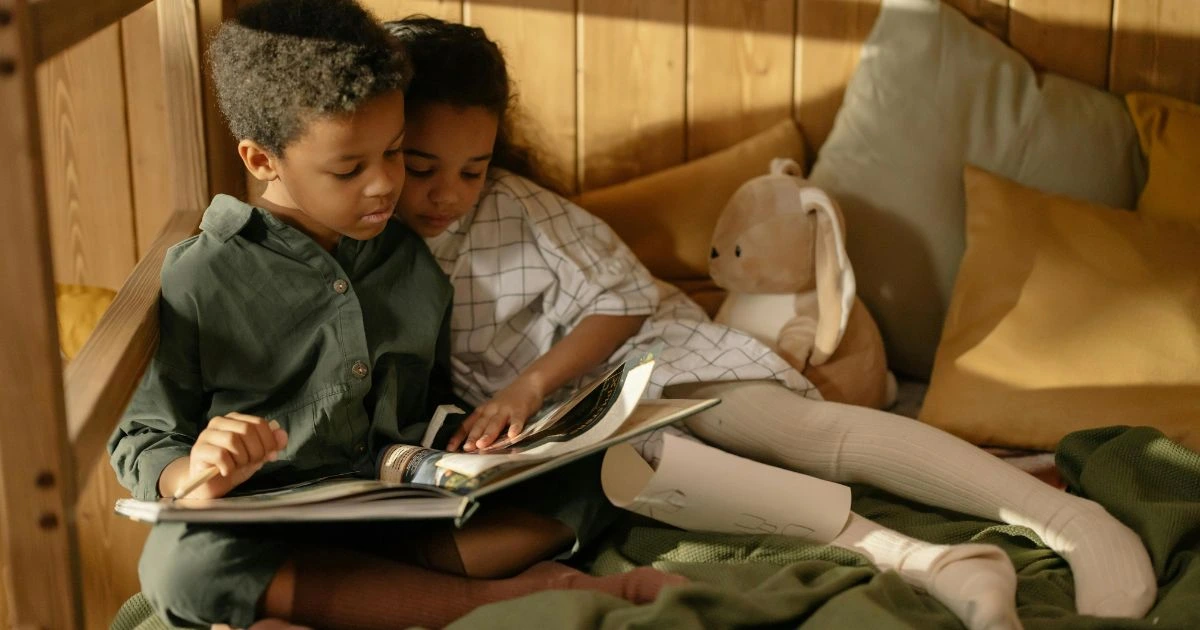
The sun was hitting the brickwork of a small coffee shop in Brooklyn this morning, and I watched a ten-year-old boy. He wasn’t on his phone. He was staring at a physical book, but his thumb was hovering over the page as if he expected it to react to a touch. It was a small, almost invisible gesture, but it stayed with me. We keep talking about Gen Alpha as if they are some alien species with silicon brains, but the truth is simpler and much more daunting for those of us trying to write for them. They are the first generation that doesn’t see a wall between the digital and the physical. To them, a story is a space they should be able to inhabit, not just a series of black marks on white paper.
If you are sitting down to write your next middle-grade or young adult project in 2026, you have to realize that the old rules of “relatability” have dissolved. We used to think that putting a smartphone in a character’s hand was enough to make a book modern. For Gen Alpha, that is just background noise. They are looking for something else. They want a narrative that mirrors the chaotic, non-linear way they actually experience the world.
The tactile evolution and the future of books
There is a strange paradox happening right now. While literacy rates have seen some rocky years, the physical book is becoming an “aesthetic object” again. I’ve noticed that kids in the United States are increasingly obsessed with the weight of a book, the texture of the cover, and even the smell of the paper. It is almost a form of rebellion against the infinite, frictionless scroll of their screens. But this doesn’t mean they want the same stories we grew up with.
The future of books for this cohort lies in what I like to call “High-Density Narrative.” These kids can process information at a speed that would give a Millennial a migraine. They are used to multi-track storytelling—watching a video while reading comments while listening to a lo-fi beat. When they open a book, if the prose is too decorative or the pacing too sluggish, they don’t just get bored; they feel like the book is lying to them about how fast life moves.
I’ve experimented with stripping back the “purple prose” and focusing on what I call the “Vivid Immediate.” It is about writing the way an eye moves across a room. You don’t describe the wallpaper for three paragraphs. You describe the one jagged tear in the corner that looks like a mouth. You give them the sharp, jagged edges of a world and let them fill in the rest. They are builders. They’ve spent their childhoods in Minecraft and Roblox; they don’t want a tour guide. They want a map and a set of tools.
Embracing the chaos of youth trends 2026
We have to talk about the “Chaos Aesthetic.” If you look at the memes and the video content that actually gains traction with this group, it is often absurdist, fast-paced, and deeply weird. There is a specific kind of humor that defines Gen Alpha—a sort of post-ironic sincerity that is hard to pin down. In 2026, the biggest youth trends involve a mix of high-tech and “dank” folk-culture. They might be using AI to generate homework help, but they are also obsessed with “slow living” and “cozy” vibes.
This creates a massive opportunity for self-publishers. We aren’t beholden to the slow-moving machinery of traditional publishing houses that are still trying to figure out what “rizz” means two years after the word peaked. To capture Gen Alpha reading interest, you have to be willing to be a little bit “cringe” by adult standards. You have to be willing to let your characters be fragmented.
I recently read a manuscript where the author included “meta-notes” in the margins, as if a previous reader had left them there. It wasn’t a gimmick; it was a way of acknowledging that for a digital native, no text is ever “finished” or “closed.” It’s a conversation. That’s the trick. You aren’t writing a monologue; you’re inviting them into a sandbox. They want to feel like the story could change if they looked at it from a different angle. This is why we are seeing such a surge in “hybrid” genres—romantasy that turns into a survival horror, or cozy mysteries that take place inside a glitchy simulation.
The boundaries are gone. If you’re trying to categorize your book into a neat little box for an Amazon category, you might already be losing them. They don’t care about categories. They care about “vibes” and “tropes.” They search for “found family + betrayal + rainy atmosphere,” not “Contemporary Fiction for Ages 9-12.”
I sometimes wonder if we are losing the art of the long-form thought, but then I see a kid deep in a 500-page fantasy epic and I realize the depth is still there. It’s just the entry point that has changed. The door has to be wider, and the lock has to be easier to pick. You have to hook them not with a plot twist, but with a feeling of “I know this world, but it’s slightly more interesting than mine.”
Writing for this generation feels like trying to catch lightning in a bottle made of shifting glass. You can’t be too polished. If the writing feels too “produced,” they smell the marketing. They want the imperfections. They want the author to feel like a person, not a brand. I’ve found that being honest about the struggle of writing, even within the text itself, creates a bridge that no “perfect” story ever could.
There is a specific kind of silence that happens when a child is truly lost in a book. It’s different from the silence of a screen. It’s more active. You can almost hear the gears turning as they build the architecture of the story in their heads. As a writer in 2026, your job isn’t to build the whole house. It’s to provide the foundation and maybe a few interesting windows.
The rest? They’ll build it themselves, and it will probably look nothing like what you imagined. And that’s exactly the point. We are moving into an era where the reader is a co-creator, and the sooner we drop the ego of the “all-knowing author,” the sooner we might actually write something they’ll keep on their shelves until the covers fall off.
Whether we are ready for it or not, the page is changing. It isn’t just paper anymore. It’s an interface. And the story? It’s just the beginning of the journey.
FAQ
They are gravitating toward high-density narratives that blend genres, often seeking “vibes” like cozy horror or speculative mystery over traditional categories.
Strip your prose of fluff, focus on “vibes,” and treat the reader as an equal collaborator in the story.
A trend toward non-linear, visually busy, and emotionally raw content that feels “unfiltered.”
It makes them want to “build” the story with the author; they enjoy deep lore and world-building they can theorize about.
No, but they should be “edutainment”—seamlessly integrated into the fun and gameplay of the story.
Text designed to look like a previous reader’s comments, adding a layer of community and mystery to the reading experience.
It’s more absurdist and surreal, often influenced by internet “chaos culture.”
Yes, but they prefer “lived-in” activism that feels part of the character’s life rather than a “message” book.
Writing that focuses on sharp, sensory details that ground the reader instantly in a scene.
Vital. The book must look good on a shelf and in a “flat-lay” photo; texture and special finishes are highly valued.
It remains a powerhouse, but it’s branching into more “niche” hybrids like sci-fi romantasy.
They enjoy both, but long novels need to be broken into “bingeable” segments with frequent payoffs.
They use AI for discovery and sometimes as a “reading companion” to explain complex lore or world-building.
Self-publishers can react to trends and cultural shifts much faster than traditional houses.
Yes, physical books are viewed as “aesthetic objects” and offer a tactical break from screen fatigue.
Through meta-fiction, non-linear structures, and “unreliable” narrators that invite the reader to solve the story.
A style of writing that prioritizes immediate, vivid imagery and fast pacing over long, atmospheric descriptions.
Only if it feels natural to the character. Forcing it usually backfires and feels like “marketing.”
Absurdist humor, “cozy” aesthetics, and a desire for “sincere” rather than “ironic” storytelling.
It’s not a lack of attention, but a higher filter for “boring” content. They process information faster and demand quicker narrative hooks.
It has become more about “trope-searching” and community-led recommendations rather than just following bestseller lists.

