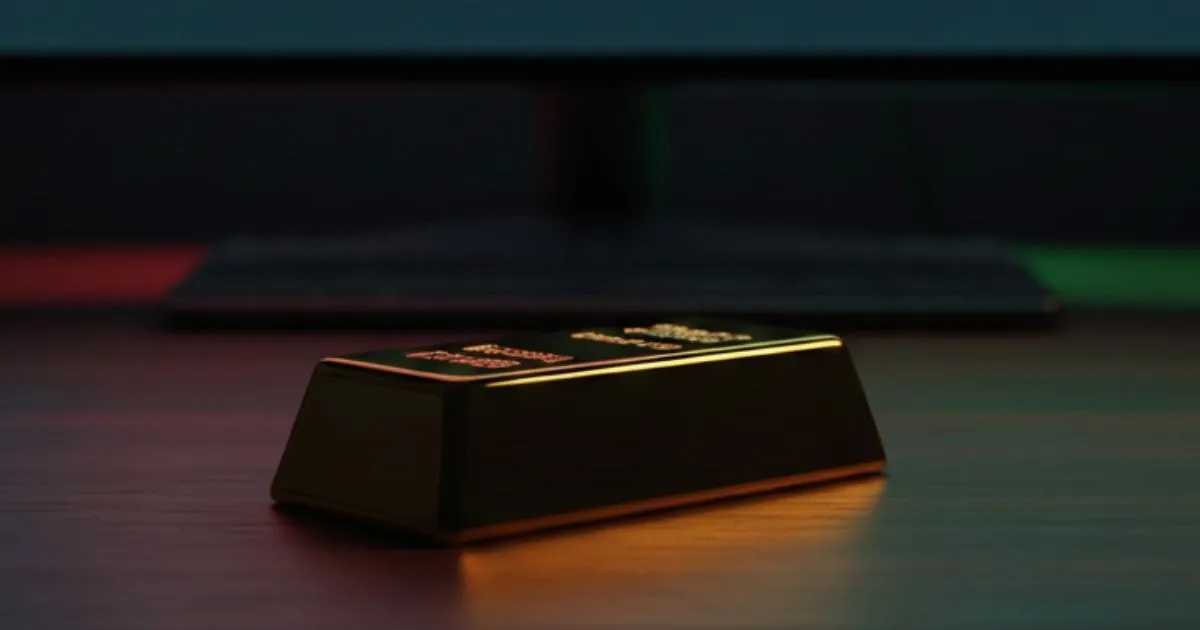
There is a specific kind of silence that settles over a room when the markets start to bleed. It is not a peaceful silence. It is heavy, the kind that makes you want to check your phone every thirty seconds just to see if the red numbers have stopped their slow crawl toward the bottom. We have all been there. You are staring at your screen, calculating how many months of work just evaporated in a single afternoon, and your first instinct is to do something. Anything. You want to sell, you want to hedge, or you want to pivot into whatever the latest trending ticker symbol happens to be. But over the years, I have learned that the most expensive thing you can own is a reactive nervous system.
The reality of modern finance is that we are constantly bombarded with the idea that more activity equals more success. We are told that the smart money is always moving, always shifting from one sector to another with the grace of a professional dancer. In my experience, that is mostly a performance designed to sell subscriptions and generate trade commissions. The people who actually build lasting wealth often look incredibly boring from the outside. They are the ones who bought a significant stake in a quality project or a physical commodity years ago and then simply forgot to panic. They understand that a true investment is not a trade. It is a commitment to a thesis that should not change just because the wind blew the wrong way on a Tuesday afternoon.
When we talk about finding balance in a modern portfolio, people often look for complex mathematical formulas. They want to know the exact percentage they should hold in physical bullion versus what they should risk on the frontier of the blockchain. But math only takes you so far when human psychology enters the building. You can have the perfect spreadsheet, but if you cannot sleep at night because your exposure to a volatile digital asset is too high, the spreadsheet is worthless. You will eventually make a mistake driven by exhaustion or fear, and that mistake will cost you more than any market downturn ever could.
Finding the Quiet Strength in a Physical Gold and Tangible Security Strategy
I remember talking to a man who had survived several major market collapses without losing his cool. I asked him what his secret was, expecting some deep insight into technical analysis or insider knowledge. He just laughed and told me that he always kept enough in the basement to make sure he never had to care what the stock market did in a single year. He was talking about the weight of history. There is a psychological grounding that comes from owning something you can actually touch. In a world where so much of our value is tied up in strings of code and digital promises, the cold weight of a physical metal acts as a tether to reality.
This is not about being a doomer or waiting for the end of civilization. It is about the fundamental nature of scarcity. We live in an era where anything digital can be replicated, forked, or diluted at the click of a button, yet the earth only gives up so much of its rare elements. When you integrate a gold position into your broader strategy, you are not just buying a hedge against inflation. You are buying the ability to stay rational when everyone else is losing their minds. It is the ultimate stabilizer. It allows you to look at the wild swings of your more speculative ventures with a sense of detached curiosity rather than heart-stopping dread.
The beauty of this approach is that it creates a foundation that allows you to be more aggressive elsewhere. If you know that your core capital is protected by an asset that has been recognized as value for thousands of years, you can afford to take calculated risks on the future. You can look at a promising startup or a new protocol and give it the time it needs to actually grow, rather than demanding it perform on a quarterly basis. Most people fail because they try to make their speculative plays act like their safe plays, and they end up with the worst of both worlds. They get the risk of the new without the staying power of the old.
Navigating the Future of Your Portfolio with a Digital Asset and Long Term Vision
The conversation is shifting now toward what comes next. We are seeing a massive transition in how ownership is defined and how value is moved across borders. If you ignore the technological shifts happening in the digital space, you are essentially betting against the evolution of the internet itself. But the trick is to participate without losing your soul to the volatility. I see so many people enter this space with the intention of being long-term holders, only to become day traders the moment the price drops ten percent. They get caught in the noise of social media and the endless cycle of hype and despair.
Building a portfolio that actually survives the next decade requires a certain level of intellectual honesty. You have to admit what you do not know. You have to accept that some of your bets will go to zero and that others will outperform your wildest expectations. The only way to navigate this is to stop looking for the exit every time things get uncomfortable. We have become a culture of people who are obsessed with the price of everything but the value of nothing. We watch the candles flicker on a chart and think we are seeing the heartbeat of the economy, when we are really just seeing the collective anxiety of millions of people who are just as lost as we are.
True wealth is often the result of being right and then being patient. It sounds simple, but it is the hardest thing in the world to execute. It requires you to ignore the neighbor who just made a fortune on a meme coin and the news anchor telling you that the sky is falling. It requires you to trust the research you did when your head was clear. I have seen more people lose money by trying to avoid a temporary dip than by actually holding through a major crash. They sell at the bottom because they can’t take the pressure, and then they watch from the sidelines as the recovery happens without them.
The most successful people I know are the ones who have automated their discipline. They have structures in place that prevent them from making impulsive decisions. They have diversified into areas that don’t move in tandem, ensuring that something is always working even when something else is broken. They understand that a digital asset is a tool for the future, while precious metals are a shield for the present. When you combine the two with a quiet, unshakeable resolve, you aren’t just an investor anymore. You become the person who stays calm while the rest of the world is screaming. And in the end, the person who stays calm is usually the one who ends up with the keys to the kingdom.
The questions we should be asking ourselves aren’t about where the price will be next week. We should be asking if our current setup allows us to live the life we want without being a slave to a flickering screen. We should be asking if we are building something that our future selves will thank us for, or if we are just chasing the ghost of a quick profit. The answer is usually found in the things we decide not to do. It is found in the trades we don’t make and the panics we don’t join. It is found in the quiet confidence of knowing that you have already done the work, and now, all that is left is to wait.