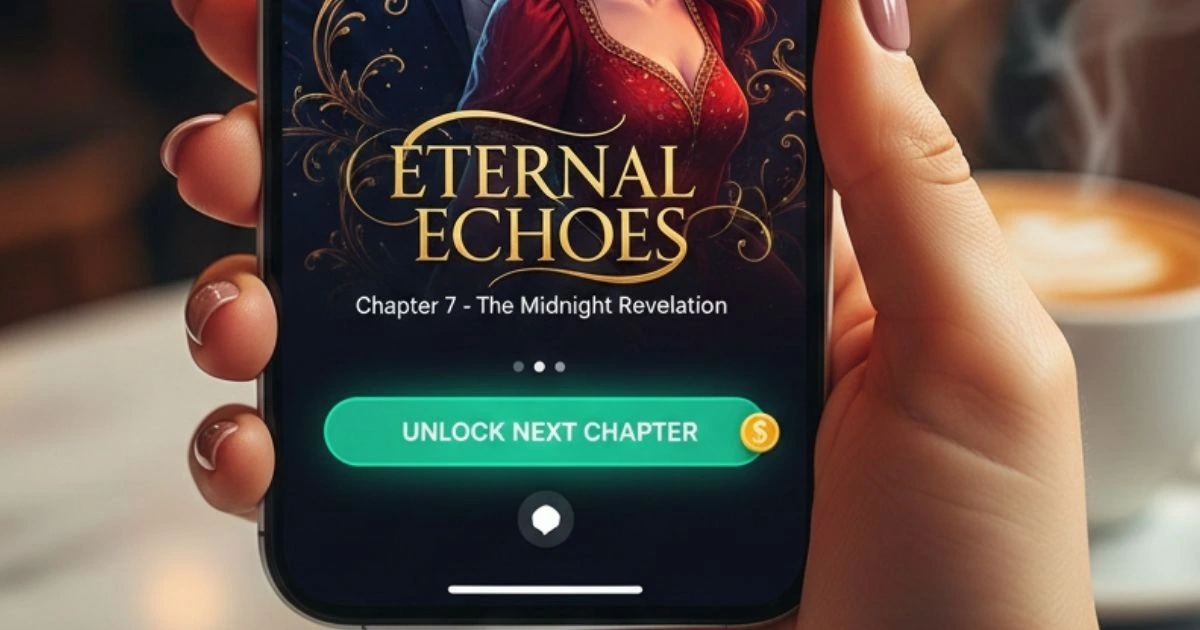
I was sitting in a dimly lit coffee shop last Tuesday, watching a teenager across from me scroll through her phone with a level of intensity usually reserved for high-stakes gaming or a messy breakup. She wasn’t on TikTok. She wasn’t on Instagram. She was reading. But she wasn’t reading a book, at least not in the sense that most of us in the publishing world traditionally define one. She was devouring a story in three-minute bursts, unlocking the next “episode” with a flick of her thumb and a micro-transaction that cost less than the foam on my latte. That moment stayed with me because it perfectly encapsulated a shift that many legacy publishers and even seasoned Amazon KDP veterans are still struggling to wrap their heads around. The titan of Seattle is no longer the only game in town, and for a specific breed of digital entrepreneur, the specialized world of Serial Fiction Apps has become a far more lucrative playground than the crowded shelves of the Kindle Store.
There is a certain irony in the fact that Amazon, the company that effectively invented the modern ebook market, is now the one playing catch-up. They launched Kindle Vella with a significant amount of fanfare, clearly aiming to capture the lightning in a bottle that platforms like Radish and Webnovel have been bottled for years. Yet, if you look at the engagement metrics and the sheer cultural velocity of the “mobile-first” reader, the gap is widening. It is not just about where the words are hosted. It is about the fundamental psychology of the consumer. The modern reader, especially the Gen Z and Millennial demographic that drives these apps, views reading as a social, gamified experience rather than a solitary, static one.
When we talk about the economics of this space, the conversation usually shifts to royalties and distribution. But that is looking at the problem through an old lens. The real magic of the serial format lies in the feedback loop. On a traditional platform, you publish a book, you wait for reviews, and you hope the algorithm smiles upon you. In the world of serial fiction, you are building a machine. You are testing tropes in real-time. If a character is getting “thumbs down” in episode five, you can pivot by episode seven. You are essentially running a continuous A/B test on your intellectual property while getting paid for the privilege. This level of agility is something that a standard Kindle release simply cannot offer. It is the difference between a static film release and a live television show that adapts to its audience’s cheers or boos.
The Hidden Economics of Radish vs Vella in the Mobile Era
The struggle between Radish vs Vella is more than just a battle of apps, it is a battle of ecosystems. Radish has spent years cultivating a specific “pay-to-wait” or “pay-to-play” culture that feels natural to a mobile user. Their readers are accustomed to buying coins or tokens to unlock the next cliffhanger. It is a psychological hook that mirrors the “one more turn” addictiveness of mobile gaming. Amazon tried to replicate this with Vella, but they hit a significant wall: the Kindle brand itself. For most people, Kindle means “book.” It means a one-time purchase or a subscription like Kindle Unlimited. Trying to retrain that massive user base to buy tokens for individual episodes has proven to be a heavy lift.
From a financial perspective, the “moat” around these specialized apps is their curation and their community. Radish, for instance, often acts more like a traditional publisher-lite, selecting stories that they know will fit their data-driven tropes. This might sound clinical to a purist, but for a creator looking to build a sustainable digital asset, it is incredibly powerful. You aren’t just shouting into the void of the millions of titles on Amazon. You are operating within a walled garden where the walls are made of engaged, high-intent buyers. The revenue per reader on these platforms can often dwarf what an author makes on a $2.99 ebook because the “tail” of a 100-episode serial is incredibly long. A single dedicated fan might spend $20 or $30 over the course of a story’s life, whereas that same reader would have only paid a few dollars for the completed novel.
I often think about the “lost” revenue of authors who dump their work into Kindle Unlimited and pray for page-turn crumbs. In the serial world, you aren’t selling a product; you’re selling a habit. The apps are designed to send push notifications the second a new chapter drops. They use streaks, rewards, and community comments to make the act of reading feel like a collective event. This is where the real disruption happens. While Amazon is busy trying to figure out how to make their interface look less like a spreadsheet and more like an app, the specialized platforms are already integrating AI-driven recommendations and social features that keep users locked in for hours.
Strategic Blueprints for Mastering Mobile Reading Habits
If you are looking at this from the outside, the question isn’t whether you should be on these platforms, but how you should launch to ensure you don’t just become background noise. Successful creators in the mobile reading space don’t just “write a book.” They architect an experience. This means understanding that the first three episodes are your only chance to hook a reader who is likely reading while standing on a bus or waiting for a meeting to start. The pacing has to be relentless. Every episode must end on a hook so sharp it draws blood. It is a different kind of craftsmanship, one that prioritizes momentum over flowery prose.
Launching a series effectively requires a multi-platform mindset. Many of the most successful serial entrepreneurs use a “breadcrumb” strategy. They might start a story on a free platform like Wattpad to build a massive, hungry audience, then migrate the “premium” version of that story or its sequel to a monetized app like Radish. This creates a funnel that moves casual browsers into high-value subscribers. It is a sophisticated way of managing a digital portfolio. You are essentially using different platforms as different stages of your marketing and sales funnel, rather than seeing them as competing entities.
The most fascinating trend I’ve seen lately is the rise of the “agency” model within this niche. Individual authors are often too overwhelmed by the demands of daily or bi-weekly posting schedules, so they are forming collectives or hiring specialists to help manage the production and marketing of these serials. They treat their stories like a startup. They have a content lead, a marketing lead, and a data analyst looking at drop-off rates in the middle of the story. This is the future of the fiction industry. It is no longer just about the “muse”; it is about the metrics. When you see a serial that has been running for 300 episodes and has a consistent 5-star rating, you aren’t just looking at a good story. You are looking at a masterclass in digital retention and audience management.
The shift toward these apps also highlights a broader change in how we value intellectual property. A successful serial isn’t just a series of episodes; it is a proof of concept. If a story can maintain a paying audience over six months on an app, it is a prime candidate for a traditional publishing deal, a film adaptation, or a webtoon conversion. The apps act as the ultimate vetting ground. They take the risk out of the equation for larger investors. We are moving toward a world where the “novel” is simply the final, static form of a living, breathing digital asset that began its life on a smartphone screen.
In the end, I suspect that the platforms that will truly “win” are those that realize they aren’t in the business of selling books. They are in the business of selling time. Amazon is a logistics company that happens to sell digital files. Radish and its ilk are entertainment companies that happen to use text. That distinction might seem subtle, but it is the reason why a teenager will spend her afternoon unlocking episodes on a colorful app while her Kindle gathers dust on a bedside table. The rules have changed, the players have changed, and the potential for profit has never been more fragmented—or more exciting.
I wonder, as we look toward the next five years, which of these digital “territories” will prove to be the most resilient? Will Amazon eventually use its massive weight to crush the competition, or will the nimble, niche-focused apps continue to peel away the most profitable demographics? One thing is certain: the era of the “one-click” purchase being the pinnacle of digital publishing is over. We are now in the era of the “one-swipe” relationship, and for those who know how to build those relationships, the rewards are waiting.