
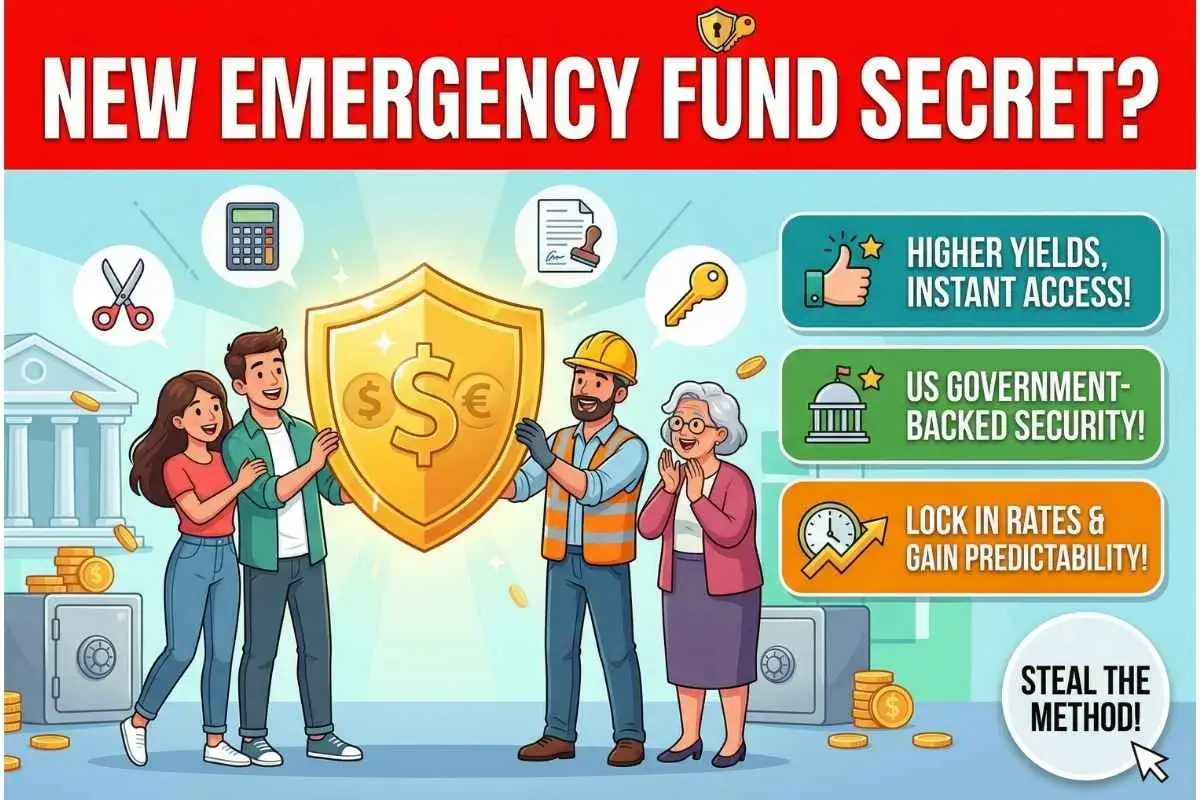
We all know that sinking feeling when the check engine light flashes, or an unexpected medical bill arrives. That is when a fully funded emergency stash becomes your financial lifesaver, transforming a potential disaster into a mere inconvenience. However, the financial landscape is constantly evolving, and strategies used recently might not be effective today. Now that we are well into 2026, the days of effortlessly scoring over five percent on any savings account are shifting in the rearview mirror. With central banks adjusting strategies and economic indicators fluctuating, you might wonder if your rainy-day money is still sitting in the best possible place. Finding the perfect balance between growth and accessibility has never been more incredibly important for your peace of mind.
The New Reality of Savings Rates in 2026
To truly understand where to park your hard-earned cash today, we must look at the broader economic picture shaping banking options. In March 2026, the Federal Reserve held its benchmark interest rate steady between 3.50% and 3.75%, navigating a complex maze of easing inflation and global uncertainties. Because savings rates are tied to these federal decisions, top-tier banks have gently lowered yields from previous peak highs. Right now, the most competitive high-yield accounts offer annual percentage yields between four and five percent. While this feels like a downgrade, it is crucial to remember that traditional savings accounts still languish with average rates around a dismal half a percent. If your money sits in a legacy account, inflation quietly erodes your purchasing power every single day.
High-Yield Savings Accounts: The Trusty Baseline
For the vast majority of savers, High-Yield Savings Accounts, commonly known as HYSAs, remain the absolute gold standard for storing an emergency fund. The defining feature of any emergency stash must always be liquidity—the ability to access your cash immediately and without penalty when life throws a curveball. Online banks typically offer these superior HYSA rates because they do not have the massive overhead costs associated with operating physical branch locations. Instead, they pass those operational savings directly on to you in the form of higher monthly interest payments. Furthermore, as long as you choose a bank fully insured by the Federal Deposit Insurance Corporation (FDIC), your money is protected up to $250,000 per depositor. This ironclad government backing means you can sleep peacefully at night, knowing your financial safety net is secure while simultaneously earning a highly respectable yield.
Money Market Accounts: The Hybrid Approach
If you prefer ultra-fast access to your funds without jumping through transfer hoops, a Money Market Account might be the perfect hybrid solution for your needs. Money market accounts essentially blend the best features of a traditional savings account with the practical functionality of a daily checking account. While they offer interest rates that are highly competitive and nearly identical to high-yield savings accounts, they frequently come with physical check-writing privileges and a dedicated debit card. This means if you are standing at the auto repair shop facing a massive bill, you can simply swipe your money market debit card instead of waiting days for an electronic transfer to clear from a separate account. However, it is deeply important to read the fine print carefully, as these accounts sometimes require a consistently higher minimum balance to avoid triggering pesky monthly maintenance fees.
Certificate of Deposit (CD) Ladders: Locking in Rates
As we look ahead to the possibility of further rate cuts later in 2026, savvy savers are actively turning to Certificate of Deposit (CD) ladders to intelligently lock in today’s favorable yields. A CD requires you to leave your money untouched for a specific period, ranging from a few months to several years, in exchange for a guaranteed interest rate. Because early withdrawal typically triggers a harsh financial penalty, CDs should never house your immediate, first-line emergency funds. However, if your robust emergency fund covers six months of expenses, you can keep the first three months in a highly liquid HYSA and use the remaining funds to build a rotating CD ladder. By staggering maturity dates, you ensure a portion of your cash becomes available regularly, providing a brilliant mix of locked-in growth and predictable access. Learn more about time deposits on Wikipedia.
Treasury Bills: The Government-Backed Shield
Another compelling avenue for parking a portion of your emergency savings involves looking directly to the United States government through the purchase of Treasury Bills, affectionately known as T-Bills. These are short-term debt obligations issued by the Treasury Department with maturities that typically range from just four weeks up to fifty-two weeks. In a shifting interest rate environment like the one we are experiencing in 2026, T-Bills are highly attractive because they often boast yields that can subtly outpace the best high-yield savings accounts. Beyond competitive returns, Treasury Bills carry a unique and incredibly valuable tax advantage: the interest you earn is completely exempt from state and local income taxes. If you reside in a state with a particularly high income tax burden, this vital exemption can significantly boost your actual, take-home yield without adding substantial underlying risk to your principal investment.
The Danger of Investing Emergency Funds
While discussing maximizing yields, it is absolutely vital to address a common, yet incredibly dangerous, temptation: the urge to invest your emergency fund directly into the stock market. When savings rates drop and the stock market appears to be booming, many people mistakenly believe they are leaving money on the table by keeping cash on the sidelines. However, the fundamental purpose of an emergency fund is immediate insurance, not aggressive wealth generation. The stock market is inherently volatile, and historical data consistently proves that economic downturns often happen simultaneously with widespread job losses. If your emergency fund is tied up in equities during a market crash and you suddenly lose your primary source of income, you could be forced to sell your investments at a massive loss just to keep the lights on. Protecting your principal balance from market volatility is the non-negotiable golden rule of true emergency preparedness.
Comparing Your Best Options
| Storage Vehicle | Current APY Range (2026) | Liquidity Level | Best Used For |
| High-Yield Savings | 4.00% – 5.00% | High | Primary emergency funds |
| Money Market | 4.00% – 4.80% | Very High | Funds needing debit access |
| Short-term CDs | 4.20% – 4.70% | Low | Secondary savings tiers |
| Treasury Bills | 4.30% – 4.80% | Medium | Tax-advantaged secondary savings |
Frequently Asked Questions
How much money should I actually keep in my emergency fund? Financial experts universally recommend saving enough cash to comfortably cover three to six months of your essential living expenses. However, the exact number highly depends on your personal circumstances, job stability, and household structure. If you are a single-income household, work as a freelance contractor, or have a highly specialized career where finding a new job might take considerable time, leaning toward a six-month or even nine-month safety net is a much wiser move. Conversely, if you are part of a dual-income household with incredibly stable jobs and low fixed expenses, a three-month buffer might be perfectly adequate to weather most unexpected financial storms.
Do high-yield savings account interest rates change automatically over time? Yes, the interest rates on high-yield savings accounts and money market accounts are inherently variable, meaning the bank has the authority to raise or lower your annual percentage yield at any given time without prior notice. These fluctuations are almost always a direct response to the monetary policy decisions made by the Federal Reserve. When the central bank raises its benchmark rate to cool down inflation, your savings rate goes up; when they signal economic stability or rate cuts, your savings yield will inevitably follow suit. Therefore, it is highly recommended to periodically review your account to ensure you are consistently receiving a strongly competitive market return on your hard-earned money.
Is it a good idea to split my emergency fund across multiple different banks? Splitting your emergency fund across multiple financial institutions can be a highly strategic move, especially if your savings ever exceed the strict federal insurance limit of $250,000. Beyond just navigating insurance limits, keeping a small portion of your emergency cash in a traditional checking account at a local, physical branch ensures you have instantaneous access to physical cash in the event of a severe technological outage or natural disaster. Meanwhile, the bulk of your funds can securely reside in a separate online high-yield savings account or CD ladder, maximizing your overall interest earnings while maintaining an appropriate and balanced level of overall liquidity for your household needs.
A Final Thought on the History of Emergency Savings
Did you know that the modern concept of the household emergency fund actually gained massive cultural traction during the devastating aftermath of the Great Depression? Before that era, everyday financial buffers were largely informal, but the severe economic shock of the 1930s permanently shifted how families viewed the stark necessity of having highly liquid cash on hand at all times. Today, while the specific banking products we use have evolved from literal mattresses to sophisticated digital accounts and Treasury ladders, the core psychological need for financial security remains exactly the same. Building and carefully maintaining this cash reserve is still the single most powerful and foundational step you can take toward achieving true, lasting financial independence.
