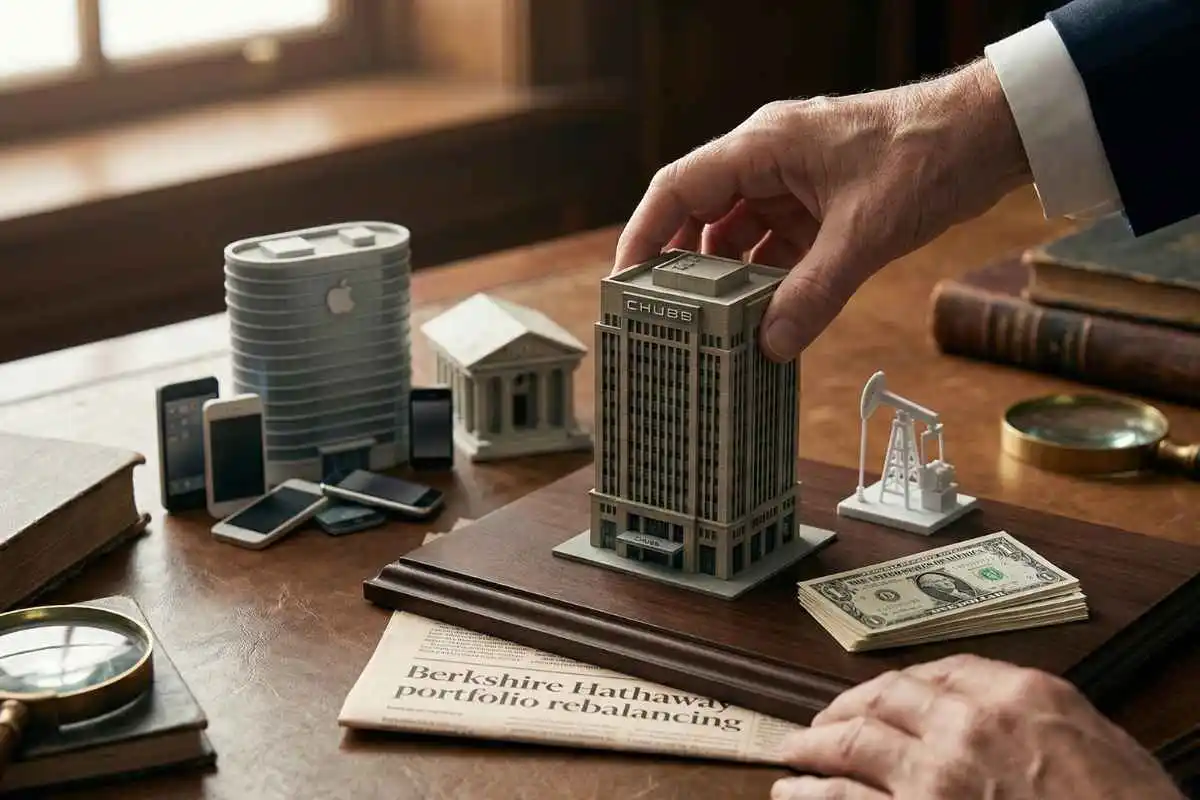
When the most famous investor in modern history starts moving billions of dollars, the financial world holds its breath. As we navigate the early months of 2026, the landscape at Berkshire Hathaway has officially entered a new era. With Warren Buffett stepping back and Greg Abel taking the reins as CEO, market watchers have been scrutinizing the conglomerate’s every move. Yet, while headlines have screamed about Berkshire’s staggering $373 billion cash pile and its massive sell-offs in beloved tech stocks, a much more intriguing story has been unfolding behind the scenes. For months, Berkshire Hathaway executed a highly guarded, silent portfolio shift, systematically channeling capital into a specific, traditionally unglamorous corner of the market. This wasn’t a flashy artificial intelligence startup or a trendy consumer app. Instead, it was a calculated retreat to a sector that Buffett has historically trusted more than any other during times of economic uncertainty. If you want to understand where the “Oracle of Omaha” sees the market heading, you must look past the loud sales and focus on the quiet acquisitions.
The Great Tech and Banking Exodus
To fully appreciate the magnitude of what Berkshire Hathaway is buying, you first have to understand what they have been frantically selling. For the better part of the last three years, Buffett was a net seller of equities, a trend that accelerated dramatically as 2025 drew to a close. The most shocking revelation in recent SEC filings was the drastic reduction of Berkshire’s stake in Apple. Once the undisputed crown jewel of the portfolio, the Apple position was slashed by nearly 74%, effectively removing tens of billions of dollars from the consumer technology sector. Traditional banking, another long-time Buffett favorite, also found itself on the chopping block. Berkshire significantly pared down its massive holdings in Bank of America, signaling deep caution regarding the macroeconomic environment and the future of traditional credit institutions. Why was the world’s most patient value investor suddenly rushing to the exits on companies that had generated historic wealth for his shareholders? The answer lay in a profound belief that better, safer value was quietly waiting elsewhere.
The Covert Operation in the Insurance Sector
The exact sector Berkshire has been quietly pouring billions into is the property and casualty insurance market. While insurance has always been the fundamental bedrock of Berkshire Hathaway’s business model, the recent scale and secrecy of their external acquisitions have been unprecedented. The centerpiece of this silent shift is Chubb Limited, one of the world’s largest publicly traded property and casualty insurers. To build this position without alerting the broader market and artificially inflating the stock price, Buffett utilized a rare “confidential treatment” exemption from the Securities and Exchange Commission (SEC). This regulatory provision allowed Berkshire to secretly accumulate shares over several quarters out of the public eye. By the time the curtain was finally pulled back in the late 2025 and early 2026 filings, the financial world realized Berkshire had amassed a staggering stake in Chubb worth over $11 billion. This wasn’t a casual purchase; it was a high-conviction mega-bet. By heavily increasing their exposure to the insurance sector right as they exited tech, Berkshire made a profound statement about risk, resilience, and where true value resides.
The Power of “Float” and Defensive Moats
Why is insurance the chosen safe haven for this silent portfolio shift? The secret lies in a financial concept that Buffett has masterfully exploited for decades: “float.” When an insurance company collects premiums from its policyholders, it holds onto that cash until it needs to pay out claims. This pool of available money essentially acts as a massive, zero-interest loan that Berkshire can invest for its own profit. In an era where interest rates remain a major variable and inflation constantly threatens purchasing power, holding companies that generate reliable streams of float is an ultimate defensive maneuver. Chubb, known for its highly disciplined underwriting and global reach, fits this perfectly. Furthermore, insurance is largely untethered from the hype cycles of the broader stock market. Whether there is an economic boom or a recession, businesses and individuals still require property, casualty, and liability coverage. By pivoting heavily into this sector, Berkshire is locking in predictable cash flow and fortifying its portfolio against high-growth volatility.
Broadening the Defensive Playbook
While the covert accumulation of Chubb headlines the shift, the broader pattern of Berkshire’s recent buys confirms a deep commitment to defensive, tangible assets. In the final quarters of 2025, alongside the insurance play, Berkshire quietly added to its positions in companies that provide absolute necessities or boast unbreakable consumer loyalty. They poured more capital into energy giant Chevron, banking on the enduring global demand for fossil fuels and the company’s robust dividend yield. They also built a substantial stake in Domino’s Pizza, recognizing the brand’s incredible pricing power and recession-resistant consumer base. Most tellingly, however, the largest “purchase” wasn’t a stock at all. Berkshire directed billions into short-term U.S. Treasury Bills. By taking advantage of the yield on government debt, management ensured that its record $373 billion cash pile wasn’t sitting idle, but actively generating risk-free returns. This combination—insurance float, tangible energy assets, inflation-resistant consumer staples, and government bonds—paints a clear picture of a masterclass in capital preservation, preparing Berkshire to weather any storm.
Berkshire Hathaway’s Strategic Shift (Late 2025 / Early 2026)
Here is a snapshot of the major moves that highlight the conglomerate’s transition away from tech and towards highly defensive sectors.
| Company / Asset | Sector | Action Taken | Strategic Rationale |
| Apple (AAPL) | Consumer Technology | Massive Sell (-74% of stake) | Taking profits, reducing exposure to hardware cycles. |
| Bank of America (BAC) | Traditional Banking | Significant Sell | Macroeconomic caution, shifting capital to safer yields. |
| Chubb Limited (CB) | Insurance (P&C) | Aggressive Buy (+$11B stake) | Capturing reliable float, defensive moat, recession resistance. |
| Chevron (CVX) | Energy | Steady Buy | Tangible assets, strong dividends, inflation hedge. |
| U.S. Treasury Bills | Government Debt | Massive Buy | Risk-free yield on $373 billion cash reserves. |
Frequently Asked Questions (FAQ)
- Why does Warren Buffett love the insurance sector so much? Insurance provides “float,” which is the money an insurer collects in premiums but has not yet paid out in claims. Buffett uses this float as free leverage to invest in other businesses, generating returns without having to borrow from banks or pay interest.
- Is Warren Buffett still the CEO of Berkshire Hathaway? No. Warren Buffett officially stepped down as CEO of Berkshire Hathaway at the end of 2025. Greg Abel, who previously managed the company’s non-insurance operations, succeeded him at the beginning of 2026. However, Buffett’s investment philosophies continue to guide the firm. You can read more about the company’s rich history on Wikipedia.
- What does it mean when a portfolio shift is “silent”? Institutional investors managing over $100 million must disclose their stock holdings quarterly. However, the SEC can grant “confidential treatment” to prevent market manipulation or copycat investing while a fund builds a large position. Berkshire used this legal avenue to buy Chubb secretly for months.
- Why hold so much cash instead of buying more stocks? Berkshire’s $373 billion cash pile indicates that management currently finds the broader stock market overvalued. They prefer earning a safe, guaranteed yield on Treasury Bills while patiently waiting for an undeniable bargain to appear.
The Curiosity Section: Full Circle to Geico
It is wonderfully poetic that as Warren Buffett transitioned leadership of his empire in late 2025, his final major strategic maneuver was a massive purchase in the insurance sector. In 1951, a 20-year-old Buffett took a train to Washington D.C. on a Saturday, banged on the doors of the GEICO headquarters until a janitor let him in, and spent hours learning about the insurance business from an executive. That serendipitous weekend sparked a lifelong obsession with the economics of underwriting and float. GEICO eventually became a wholly owned subsidiary of Berkshire Hathaway and the financial engine that powered Buffett’s historic rise.
Now, exactly 75 years later, the silent accumulation of Chubb proves that the foundational principles of his success remain entirely unchanged. For everyday investors, the lesson is profound: you don’t always need to chase the next technological revolution to build enduring wealth. Sometimes, the most brilliant investment you can make is in the quiet, predictable, and fundamentally vital businesses that keep the world running smoothly.