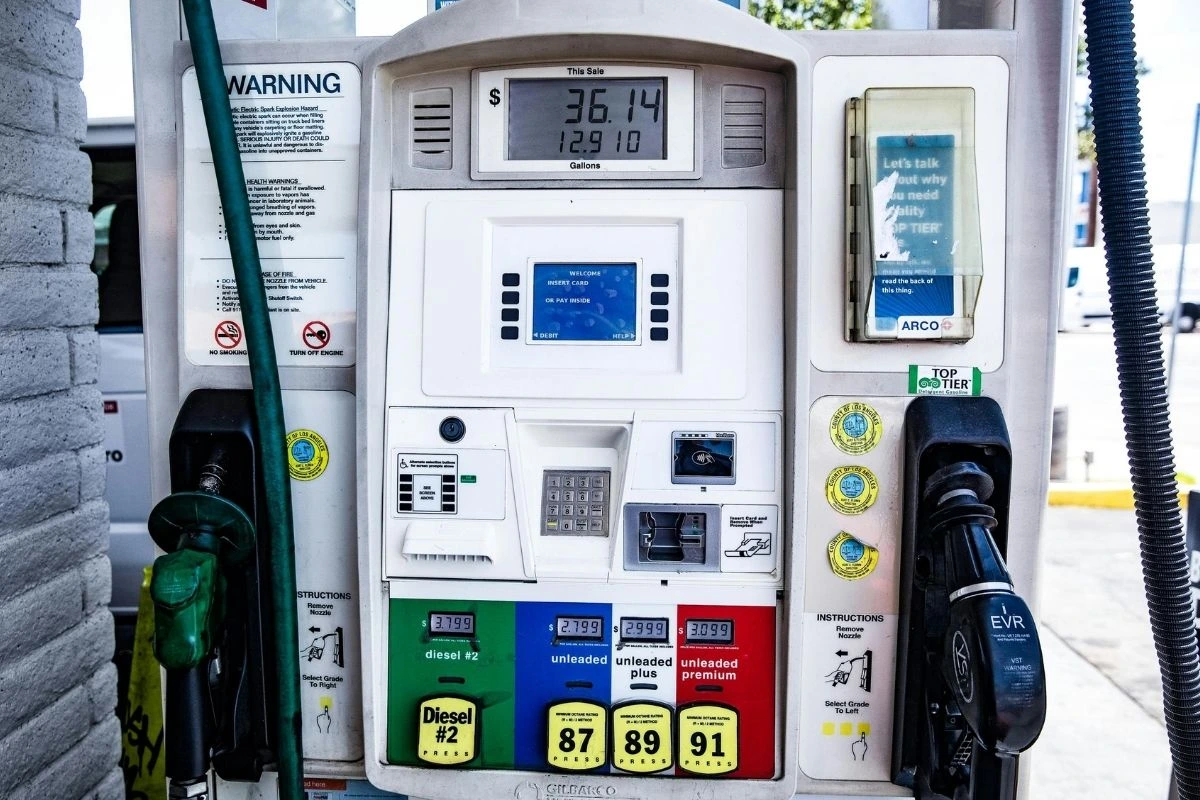
The financial tightrope walk underway in Washington regarding global energy policy has reached a level of absurdity that even the most seasoned market veterans struggle to interpret. Just weeks after touting the financial benefits of soaring oil prices, the administration is now attempting emergency maneuvers to soothe consumer panic over historically high \*\*gas\*\* prices. This sudden pivot reveals a deep fissure between the political desire to project global strength and the immediate, painful economic reality facing American drivers and businesses.
The core of the current market chaos stems from a rapid, unnerving escalation of geopolitical tension involving Iran and the critical Strait of Hormuz. This bottleneck, through which vast quantities of the world’s oil and natural gas flow daily, has become functionally paralyzed. The market reaction has been swift and brutal. Benchmark crude oil prices have violently swung, touching $100 a barrel. This volatility spills directly to the pump, where the national average for traditional fuel has reportedly shot up over 50 percent from the $2.30 a gallon bragged about during the State of the Union address to a troubling $3.60 average, according to data compiled by AAA.
The stunning official pronouncement from the current executive office suggests that higher oil prices are, in fact, a win for the nation because the United States reigns as the world’s largest oil producer. This statement frames international conflict not as a liability for the domestic economy but as a revenue generator for the national coffers. However, this perspective immediately crashes against the reality of everyday inflation. While production revenue might tick up for certain entities, the cost of literally everything else—from groceries transported by truck to utilities powered by natural gas—is set to follow crude upward, eroding the very wealth the administration claims to be accumulating.
The Historical Whiplash from Energy Stability to Chaos
To understand the significance of this dramatic shift, we must look back at previous energy crises. The 1970s oil embargo demonstrated the paralyzing effect sustained high commodity prices have on an entire industrial base. More recently, the 2008 peak, driven by global demand before the financial crisis, showed how quickly consumer confidence—the engine of recovery—can evaporate when discretionary spending is consumed by fuel bills. What we are observing now, however, is different. It is not purely a supply/demand imbalance driven by underlying robust economic growth, but rather a sharp, politically induced shockwave emanating from a specific geopolitical choke point.
When prices were relatively low just a month ago, the narrative was one of sovereign dominance and economic recovery under controlled conditions. The boast about $2.30 fuel was meant to underscore policy success and perhaps soften the political ground for a harder line abroad. The goal, it seems, was to achieve geopolitical leverage without imposing domestic costs. That strategy has demonstrably failed. The narrative has flipped from projecting strength to managing a domestic backlash that threatens critical midterm elections. This historical dissonance—the rapid shift from celebrating low prices to defending high prices—is rarely seen outside of wartime funding debates or immediate economic collapses.
The market remembers the whiplash. Investors and corporations thrive on predictability. When a leader suggests that volatility is economically beneficial one moment and then scrambles to deploy strategic petroleum reserves the next—as seen with the reported plan to draw down 172 million barrels—it signals that the underlying risk calculation has fundamentally changed. This incoherence breeds uncertainty, exacerbating the price swings above and beyond fundamental supply shortages by incorporating a massive risk premium demanded by traders pricing in policy instability.
The very concept of the United States being insulated as the largest producer only holds up if the disruption is mild or temporary. When essential trade routes like the Strait of Hormuz are effectively shut down, the sheer volume of barrels remaining in the global system shrinks dramatically, forcing even American-produced oil to trade at elevated international benchmark prices. The historical lesson is clear: no nation, regardless of its domestic output, is immune to the blockage of global arteries.
Deconstructing the Intervention: Strategy or Panic Pumping?
The current intervention strategy appears reactive and patchwork, a consequence of being caught off guard by the speed of the Iranian response to perceived aggression. The statements from energy officials acknowledging a “significant disruption” while simultaneously assuring a timeline for clearing the Strait “relatively soon” but “can’t happen now” highlight a critical gap: the necessary military and logistical readiness is simply not in place to immediately restore freedom of navigation.
Deploying strategic oil reserves, while a standard tool, is an acknowledgment by the administration that domestic pain cannot be allowed to fester politically. As economists note, such a move is more likely to slow the rise or temporarily stabilize the market rather than provide a decisive reversal of the upward trend. The market views reserve releases as a temporary fix, a pressure valve release, not a solution to a pipeline blockage challenge. The greater the volume released, the clearer the signal that the underlying problem—a dangerous, potentially escalating conflict—remains unaddressed.
Furthermore, the consideration of waiving Jones Act requirements to bring in crucial energy products via U.S.-flagged shipping points to emerging domestic bottlenecks far beyond the pump. If energy products and agricultural necessities cannot flow freely between U.S. ports due to infrastructure or shipping constraints exacerbated by the wider global crisis, the inflationary pressure becomes systemic, moving from energy into core consumer goods. This reveals a significant vulnerability in domestic logistics that the external conflict has managed to expose.
The conflicting messaging—from naval escorts being claimed and then deleted, to conflicting statements about the safety of the Strait—suggests internal communication failures or, perhaps more cynically, an attempt to manage market psychology through optimistic but unsubstantiated public relations pushes. For the market, actions speak louder than words. Until tankers are moving unimpeded through Hormuz, the $100 per barrel crude price remains the anchor, and the political narrative remains subservient to the reality of supply chain blockage.
Goldman Sachs’ Stark Warning on Stagflationary Risks
The influence of major investment banks on market perception cannot be overstated, and the prognosis offered by Goldman Sachs carries serious weight. Their forecast is chillingly straightforward: higher oil prices lead directly to inflation running hotter, economic growth slowing down, and the unemployment rate inching upward by year-end. This is the textbook definition of stagflation—a nightmare scenario for policymakers attempting to engineer a ‘soft landing.’
If the projection holds, the policy conflict intensifies. An administration eager to tout economic strength heading into an election cannot easily reconcile rising unemployment figures with rising consumer costs. This means the political calculus will shift toward even more aggressive—and potentially market-destabilizing—interventions to force prices down quickly, even if those interventions are economically suboptimal in the long run. The political imperative overrides the textbook economic advice.
The correlation noted between the geopolitical flares and the movement in Brent crude prices confirms that perception is now the dominant driver of price discovery, replacing pure supply/demand fundamentals. Every conflicting statement, every military threat, every rumor about mine clearing operations translates instantly into basis points on the price of crude. This level of sensitivity is dangerous because it means a miscalculation or an accidental escalation could lead the market far past the $100 mark with terrifying speed, locking in the stagflationary outcomes foreseen by the bank.
The underlying issue remains the strategic dependency on a transit route that acts as a single point of failure for global trade. The lesson echoing through financial history is that reliance on a single, volatile corridor for critical commodities is an invitation for geopolitical leverage and market instability. The current administration’s struggle to establish a consistent, forceful deterrent that also guarantees passage demonstrates the precise difficulty in managing an interdependent global energy architecture when confronting rogue actors.
Three Paths Forward for the Global Energy Stage
The near-term future hinges on whether the current administration can transition from tactical messaging to a strategic, verifiable guarantee of safe passage. We see three primary paths unfolding from this chaotic juncture. The most optimistic scenario, Scenario One, involves rapid, successful de-escalation supported by decisive naval action that results in the immediate, verifiable resumption of tanker traffic through the Strait of Hormuz within the next two weeks. In this case, the $100 crude price would collapse quickly, perhaps settling back toward $80 as the risk premium evaporates, easing inflation expectations.
Scenario Two, the protracted stalemate, seems increasingly likely given the political posturing. Under this path, traffic remains sporadic, requiring constant, costly naval escorts and shadow operations. Oil prices stabilize at a high plateau, likely between $95 and $110 per barrel, reflecting the persistent geopolitical tension and the high cost of insuring and moving cargo. This environment locks in slower domestic growth and sticky inflation, validating the Goldman Sachs forecast and placing immense pressure on consumers throughout the next reporting cycle.
The third and most alarming scenario is Escalation Failure. This occurs if the administration’s attempts to project strength fall flat, leading to a perceived weakness, or if a direct miscalculation causes a severe accident or confrontation within the Strait. If the conflict widens even marginally, significantly disrupting production in the Gulf region or blocking the Strait entirely for an extended period, the price of oil would rocket toward $130 to $150 per barrel, potentially triggering what economists term a severe global recession driven by energy shock. In this state, talk of domestic revenue generation becomes meaningless as the entire consumer economy seizes up.
Financial analysts watching this situation are in a state of high alert, recognizing that the current policy is built upon a foundation of immediate political necessity rather than long-term energy security planning. The rapid erosion of consumer confidence due to pain at the pump signals that the political dividend of being the world’s largest producer may be severely offset by the cost of being trapped in a volatile global energy system that requires constant, high-stakes management.
The market is now fully pricing in the risk that geopolitical flexing comes with an unbearable domestic price tag. Whether investors believe the administration can secure the global arteries soon or not, the current volatility ensures that the cost of energy—both crude and the resulting \*\*gas\*\*—remains the defining economic narrative for the foreseeable future, forcing a complex and contradictory political posture.
FAQ
What caused the sudden surge in national average gasoline prices mentioned in the article?
The surge is primarily driven by the rapid escalation of geopolitical tension involving Iran and the resulting functional paralysis of the Strait of Hormuz. This bottleneck, crucial for global oil and gas flow, caused benchmark crude oil prices to spike violently, directly impacting prices at the pump.
How much did the national average gas price reportedly increase according to the article’s data?
The national average for traditional fuel reportedly shot up from $2.30 a gallon, touted during the State of the Union address, to a troubling $3.60 a gallon. This represents a more than 50 percent increase from the previously boasted low price.
What is the administration’s initial argument for why higher oil prices could benefit the U.S.?
The argument suggests that since the U.S. is the world’s largest oil producer, soaring international prices generate increased revenue for the national coffers. However, the article counters this by emphasizing the accompanying domestic inflation eroding general wealth.
What specific geopolitical choke point is central to the current energy market chaos?
The core issue revolves around the critical Strait of Hormuz, a narrow passage through which vast quantities of the world’s oil and natural gas must flow daily. Its effective paralysis due to geopolitical tension is the immediate catalyst for price hikes.
What quantity of oil is reportedly being considered for release from the Strategic Petroleum Reserves (SPR)?
The article mentions a reported plan by the administration to draw down 172 million barrels from the Strategic Petroleum Reserves. Deploying these reserves signals an acknowledgment of domestic political pain rather than a fundamental solution to the supply blockage.
How does the perceived policy incoherence affect the behavior of oil traders and investors?
The shifting narrative—from celebrating low prices to scrambling to deploy reserves—breeds market uncertainty and signals policy instability. This forces traders to incorporate a significant risk premium into crude pricing, exacerbating price swings beyond fundamental supply issues.
What is the immediate economic consequence predicted by Goldman Sachs if higher oil prices persist?
Goldman Sachs forecasts a stagflationary outcome: inflation running hotter, economic growth slowing down, and the unemployment rate inching upward by year-end. This is a nightmare scenario for policymakers attempting to achieve a ‘soft landing.’
Why is the current energy crisis considered different from the 2008 peak?
Unlike 2008, which was driven by robust global demand, the current spike is caused by a sharp, politically induced shockwave emanating from a specific geopolitical choke point. This makes it a crisis of transit security, not pure underlying economic growth.
What is the significance of considering a Jones Act waiver in this context?
The consideration of waiving the Jones Act points to emerging domestic logistical bottlenecks, suggesting that constraints in U.S.-flagged shipping are complicating the movement of energy products and necessities between U.S. ports. This reveals a major domestic vulnerability exposed by the external conflict.
What is ‘stagflation’ and why does it pose a severe problem for the current administration?
Stagflation is the simultaneous occurrence of economic stagnation (slow growth/rising unemployment) and high inflation. An administration seeking to tout economic strength cannot reconcile rising consumer costs with rising unemployment figures.
What is Scenario Two in the article’s analysis, and what price point is projected?
Scenario Two is the protracted stalemate, where sporadic traffic continues under constant, costly naval escorts. Oil prices are projected to stabilize at a high plateau, likely between $95 and $110 per barrel, locking in sticky inflation.
What risk does the article highlight regarding the U.S. being the largest oil producer during a Strait of Hormuz blockage?
The risk is that no nation is truly immune; when essential global trade arteries are blocked, the sheer volume of available barrels shrinks dramatically. This forces even American-produced and refined oil to trade at elevated international benchmark prices.
What is the most alarming potential future outcome described in the analysis?
The most alarming outcome is Escalation Failure, where a miscalculation widens the conflict or the Strait remains blocked long-term. This could cause oil prices to rocket towards $130 to $150 per barrel, potentially triggering a severe global recession driven by energy shock.
What is the essential difference between tactical messaging and strategic action required of the administration?
Tactical messaging involves optimistic public relations pushes and assurances, while strategic action requires a verifiable guarantee of safe passage through the Strait. The market currently prioritizes verifiable actions over unsubstantiated political claims.
What historical event is referenced to show the paralyzing effect of sustained high commodity prices on industry?
The article points to the 1970s oil embargo as a historical precedent demonstrating the severe, paralyzing effect that sustained high commodity prices can have on an entire industrial base.
What must happen for the $100 per barrel crude price to quickly collapse, according to Scenario One?
Scenario One requires rapid, successful de-escalation supported by decisive naval action that leads to the immediate, verifiable resumption of unrestricted tanker traffic through the Strait of Hormuz. This would cause the risk premium to evaporate quickly.
How does the administration’s deployment of SPR differ from solving the root problem according to market analysts?
Economists view SPR deployment as a ‘pressure valve release’ used to slow the rise or temporarily stabilize the market in response to domestic pain. It is not a decisive reversal mechanism for a physical pipeline blockage challenge.
What is the core belief underpinning the previous administration’s low-price boast—that has now failed?
The prior belief was that the administration could successfully project global strength and achieve geopolitical leverage abroad without imposing significant domestic costs on consumers. This strategy failed when volatility erupted.
How does inflation caused by high energy prices affect the broader economy besides just fuel costs?
High crude prices cause inflation to ripple through the economy because the cost of transporting goods, like groceries, and utilities powered by natural gas will subsequently increase. This erodes the general wealth the administration claims to be accumulating through production revenue.
What key lesson does the current situation draw from the history of global energy dependency?
The lesson is that reliance on a single, volatile corridor like the Strait of Hormuz for critical commodities is an invitation for geopolitical leverage and market instability. No amount of domestic output can completely insulate a nation from such blockages.
What fundamental change in market driver is evident when comparing the $2.30 boast to the current volatility?
The fundamental change is that perception, driven by geopolitical flares and conflicting statements, is now the dominant driver of price discovery, replacing traditional supply/demand fundamentals. This sensitivity amplifies risk based on political rumor.