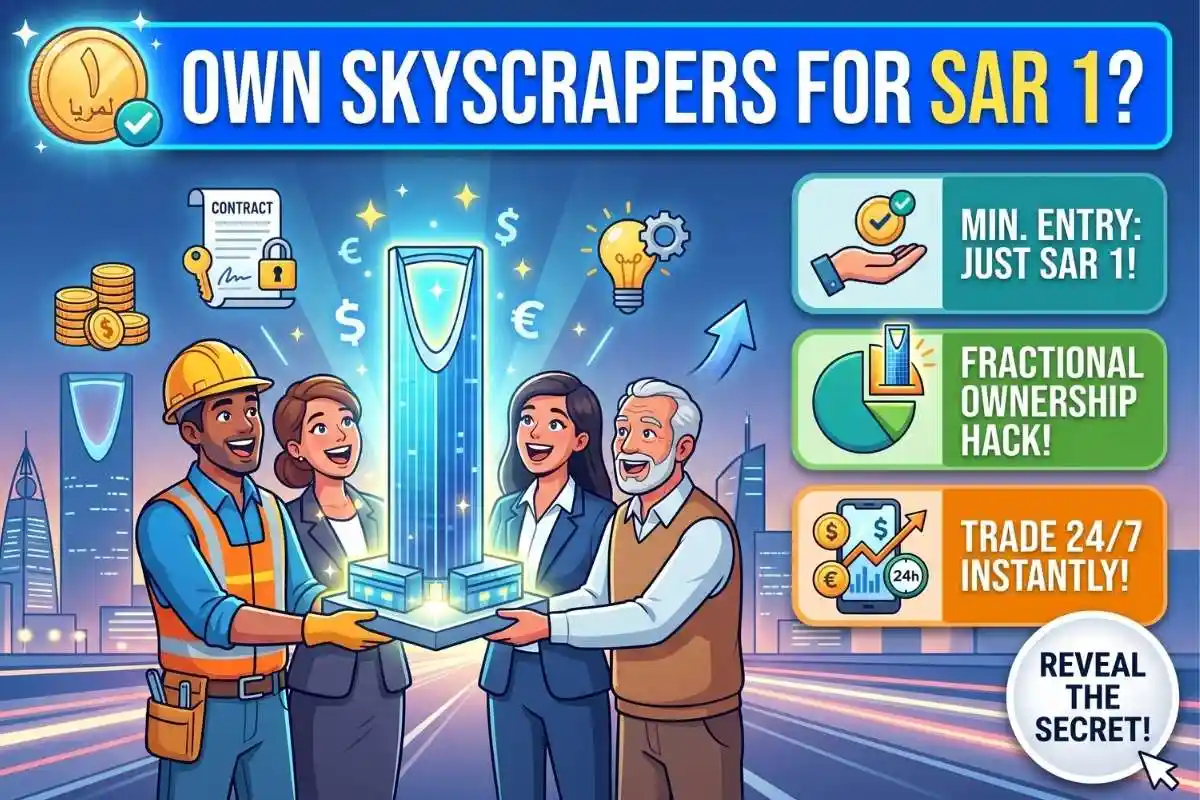
Imagine looking up at a gleaming skyscraper in Riyadh and knowing you own a genuine, legally documented piece of its steel, concrete, and rental cash flow. For decades, participating in lucrative real estate booms required immense upfront capital, privileged banking connections, and mountains of complex paperwork. Today, that entire paradigm is shifting. Across Saudi Arabia, digital innovation is dismantling the financial barriers that once locked everyday citizens out of premium property markets. Through real estate tokenization, commercial towers, luxury residential complexes, and retail hubs are being broken down into affordable digital shares. With new investment tranches closing weekly, everyday wealth builders have a unique window to claim their stake in the Kingdom’s expanding skyline before Friday’s market cutoff.
1. The Architectural Boom and Vision 2030
To understand why tokenized real estate is capturing global attention, you first must examine the sheer scale of physical construction happening across Saudi Arabia. The nation is undergoing the largest infrastructure transformation in modern history. Giga-projects, commercial centers, and sprawling residential communities are rising at an unprecedented pace.
This monumental growth is the physical manifestation of national economic diversification. A cornerstone of this evolution is the Saudi Vision 2030 Housing Program, an ambitious initiative that elevated national homeownership from under fifty percent to over sixty percent in just a few years. By streamlining regulations and injecting massive liquidity into the development sector, the program created a vibrant property market. However, building world-class cities requires continuous capital. By converting physical deeds into secure digital tokens on a blockchain, developers bypass slow banking bottlenecks and instantly connect with a global pool of retail and institutional investors. For the everyday person, this provides direct exposure to an economic renaissance previously reserved for sovereign conglomerates.
2. Democratizing the Skyline: From Millions to Riyals
In traditional real estate, purchasing prime commercial office space or a luxury apartment in Northern Riyadh demands hundreds of thousands—if not millions—of riyals. This steep entry cost inherently forces most individuals to sit on the sidelines while property values soar. Real estate tokenization solves this fundamental problem through fractional ownership.
Instead of selling an entire building to a single wealthy buyer, the property is divided into thousands of equal digital shares, known as tokens. Groundbreaking pilot projects in the Kingdom have demonstrated the power of this model by dropping the minimum investment entry point to as low as a single Saudi riyal. When you purchase one of these tokens, you are acquiring a legal stake in a tangible brick-and-mortar asset. Smart contracts automatically execute the agreement, permanently storing ownership records on an immutable ledger. Traditional intermediaries are largely removed from the operational equation, slashing administrative fees and accelerating settlement times from months to minutes.
Test different financial scenarios and see how fractional property shares accumulate over time using this interactive projection tool:
Key takeaway: Reinvesting monthly rental distributions back into new fractional property tokens activates compound yield, accelerating long-term wealth compared to holding static assets.
3. Legal Anchoring and Regulatory Protections
The single biggest question newcomers ask is whether their digital property shares are legally recognized under national law. Unlike early, unregulated global experiments in digital assets, Saudi Arabia has taken an institutional, highly compliant approach to real estate tokenization. The goal is to build a digital financial infrastructure where ownership rights are legally anchored to official state registries.
Oversight is rigorously maintained by the Capital Market Authority (CMA), which supervises financial innovation through specialized regulatory sandboxes. Proptech platforms operating within the Kingdom must complete exhaustive compliance audits, strict anti-money laundering protocols, and transparent identity verification procedures before issuing digital deeds. When a property is tokenized, the digital shares are explicitly tied to the physical real estate deed issued by the Real Estate Registry. Your digital tokens enjoy the exact same legal backing and judicial protections as traditional paper contracts. Furthermore, rental collection and physical maintenance are handled entirely by licensed professional operators.
4. Yields, Liquidity, and Global Market Appeal
Beyond absolute accessibility and regulatory safety, tokenized real estate alters the mechanics of property investing—most notably by solving the historical problem of illiquidity. Traditionally, real estate is a sluggish asset class. If you need urgent access to your capital, selling a physical house or office space can take six months to a year.
Tokenization transforms physical buildings into fluid assets. Because digital tokens exist on standardized blockchain networks, they can be traded on regulated secondary marketplaces twenty-four hours a day. If you own ten percent of an apartment complex and want to liquidate half of your holding to fund a business venture, you can execute that trade instantly from your smartphone. On the yield side, premium Saudi developments consistently target robust annual rental dividends between eight and ten percent, alongside expected capital appreciation exceeding thirty percent over a multi-year cycle. This combination of recurring cash flow, capital growth, and immediate liquidity makes the market highly attractive.
When evaluating property investment strategies in the Kingdom, the structural differences between legacy approaches and digital fractional models become immediately apparent:
| Investment Attribute | Traditional Real Estate | Tokenized Real Estate |
| Capital Required | SAR 500,000+ | Starts as low as SAR 1 |
| Transaction Speed | Weeks to months | Instant via smart contracts |
| Liquidity | Low (whole-property buyers) | High (trade fractions 24/7) |
| Management Burden | High (landlord duties) | Zero (licensed operators) |
| Market Access | Local or wealthy buyers | Open to global participants |
5. The Countdown to Friday: Securing Your Allocation
With multiple authorized proptech platforms rolling out premium offerings, market activity reaches a fever pitch toward the end of the working week. Newly minted property offerings—ranging from luxury boutique hotels to state-of-the-art logistics warehouses—are launched in scheduled funding tranches. Because entry minimums are so accessible, desirable properties frequently reach their funding caps within days.
Friday represents the standard weekly settlement cutoff for several major active issuance pools. Investors who complete account verification and reserve fractional shares before the Friday deadline secure their allocation in the current distribution cycle, ensuring their capital begins accruing rental profit immediately. Missing the weekly cutoff often means waiting weeks for the next vetted project to undergo feasibility studies and regulatory auditing. As the Kingdom’s physical skyline expands, taking action before the weekly window closes guarantees your spot in this financial frontier.
Frequently Asked Questions
What happens if the digital platform goes out of business?
Your ownership rights are legally secured and anchored to the physical real estate deed recorded with the official Real Estate Registry. Because your shares represent direct ownership of the underlying property, the insolvency of a technology provider does not erase your legal title. A newly appointed licensed operator would simply take over digital management and distribution.
Can international investors purchase tokenized Saudi real estate?
Yes. A primary strategic goal of the Kingdom’s financial modernization under Vision 2030 is attracting foreign capital. Qualified international investors can participate in tokenized real estate opportunities through licensed platforms, provided they complete standard international identity verification and regulatory compliance checks.
How do I receive my monthly rental income?
Rental yields are collected from tenants by the professional management company overseeing the building. These funds are automatically converted into scheduled dividend payouts and distributed directly into your secure platform wallet or connected bank account via smart contracts.
The Ultimate Curiosity: Skyscraper Ownership for a Single Riyal
Perhaps the most fascinating aspect of Saudi Arabia’s push into real estate tokenization is the profound psychological shift it introduces to society. Throughout history, skyscrapers and monumental architecture have stood as towering symbols of exclusive wealth and unreachable power. Everyday citizens could walk past these gleaming titans of glass and steel, but never dream of owning them.
By compressing the minimum investment entry point down to a single Saudi riyal, the Kingdom is rewriting the rules of economic engagement. It turns the city skyline into a shared public achievement where residents can literally own the ground they walk on and the towers they look up at. As blockchain technology merges with sovereign regulatory ambition, the dream of effortless, secure property ownership is no longer a distant luxury—it is an immediate reality at your fingertips.