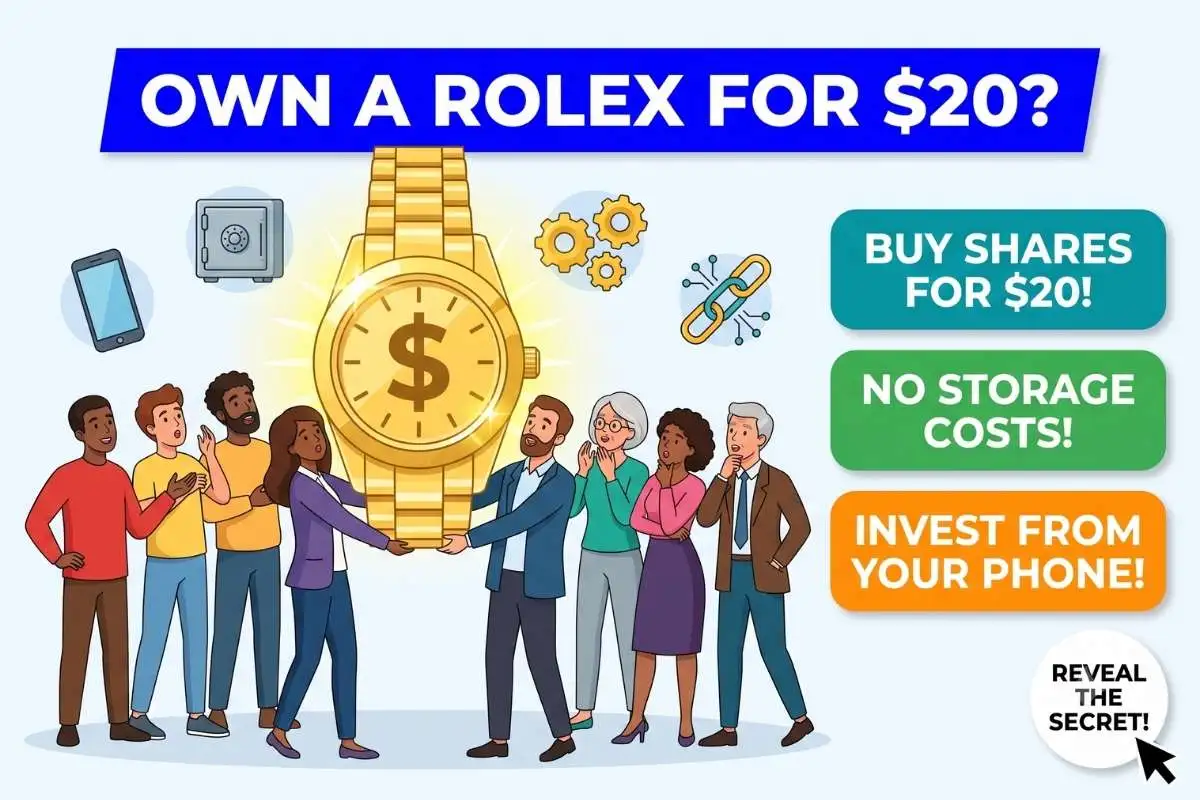
Imagine walking past a high-security vault in Zurich or London where pristine timepieces sit under climate-controlled glass, far out of reach for everyday budgets. For generations, owning an iconic grail watch like a Rolex Daytona or Patek Philippe Nautilus required tens of thousands of dollars in disposable capital, along with exclusive jeweler relationships that took decades to build. Today, financial technology is completely upending that velvet-roped tradition by dividing physical horological masterpieces into digital shares. For as little as a twenty-dollar bill, retail investors can now buy equity in a tangible, investment-grade wristwatch right from their smartphones, transforming elite collecting into an accessible hobby.
The Shattering of the Velvet Rope
For decades, luxury mechanical timepieces consistently outperformed traditional market indexes during inflationary periods, serving as stable stores of tangible wealth for global collectors. However, the secondary watch market operated with immense barriers to entry that actively excluded retail investors from capturing any of that potential upside. Buying a coveted sports watch demanded not just substantial cash, but deep insider status at authorized dealers or navigating volatile gray markets fraught with counterfeits and opaque pricing. This exclusive dynamic concentrated high-yield horology among elite high-net-worth individuals, leaving everyday watch enthusiasts to admire Swiss craftsmanship from afar without ever participating in the robust economic appreciation of the world’s rarest wristwatches.
The modern solution borrows directly from established corporate finance principles by utilizing asset fractionalization to divide a high-priced physical commodity into bite-sized, tradeable units. Instead of a single wealthy buyer writing a check for fifty thousand dollars to acquire a vintage timepiece, a specialized investment platform acquires the watch, authenticates its provenance, and splits its economic ownership into thousands of micro-shares. This shift means a college student, a young professional, or a retiree can purchase five or ten shares of a legendary reference over a weekend coffee, democratizing access to alternative asset classes that were once entirely off-limits to everyday consumers.
How Blockchain Vaults and Digital Shares Work
Behind the scenes, this democratization relies on digital ledger systems through a process known as tokenization, which creates immutable, blockchain-verified records of ownership. When an investment platform acquires a pristine Rolex Submariner or Audemars Piguet Royal Oak, independent third-party experts verify every internal gear, dial, and bracelet link before sealing the timepiece inside a fully insured, climate-controlled depository. Each fractional share corresponds to a cryptographic token or regulated security issued against that specific physical asset, ensuring complete transparency and provenance tracking without requiring the individual investor to store, insure, or service an expensive mechanical watch at home.
Because these fractional offerings represent legal equity in a shared physical asset, reputable platforms must operate under strict regulatory frameworks designed to protect everyday buyers. In the United States and Europe, issuers typically structure each watch as a standalone special purpose vehicle that undergoes comprehensive oversight before shares can be sold to the general public. For instance, platforms issuing digital securities in the American market must comply with guidelines and exemptions established by the U.S. Securities and Exchange Commission or equivalent international authorities, ensuring that fractional owners hold legitimate, legally enforceable claims to any future sale proceeds or asset liquidation value.
The Economics of Micro-Investing
Understanding the shift from traditional collecting to tokenized micro-investing requires evaluating the stark differences in upfront capital outlay, ongoing daily maintenance, and overall market accessibility. Traditional watch collectors enjoy the deeply emotional and tangible pleasure of wearing their timepieces on their wrists to dinner or social gatherings, but they must shoulder substantial ongoing costs for specialized insurance, periodic mechanical servicing, and secure home vault storage. Conversely, tokenized investors surrender physical possession entirely in exchange for frictionless, low-cost portfolio diversification across multiple luxury brands, transforming a hobby of pure passion into a structured, highly accessible financial strategy designed for modern digital portfolios.
Historically, elite horological brands like Rolex, Patek Philippe, and Audemars Piguet have demonstrated remarkable resilience during periods of macroeconomic volatility and fiat currency devaluation. Because renowned Swiss manufactures intentionally limit annual production numbers while global demand continues to surge among emerging market millionaires and collectors, scarcity naturally supports long-term price floors for sought-after stainless steel sports models. By participating through tokenized micro-shares, everyday investors can capture a slice of this structural supply-demand mismatch, building a sophisticated and diversified portfolio of tangible alternative assets that often exhibits low correlation to traditional equity market crashes and inflation shocks.
| Feature | Traditional Watch Collecting | Tokenized Watch Investing |
| Entry Cost | $10,000 to $100,000+ per piece | $20 to $50 per fractional share |
| Physical Possession | Worn on wrist and stored at home | Secured in institutional vaults |
| Ongoing Expenses | High insurance and servicing fees | Managed entirely by platform |
| Portfolio Diversification | Low due to high unit costs | High across numerous brands |
| Liquidity & Exit | Slow private sales or auction houses | Secondary digital marketplaces |
JSON
{
  "widgetSpec": {
    "id": "watch-investment-simulator",
    "height": "650px",
    "prompt": "Objective: Compare traditional watch purchasing versus fractional tokenized investing over a multi-year holding period.\nData State: initialValues: { investmentAmount: 1000, holdingPeriodYears: 5, annualAppreciationRate: 8, traditionalStorageCostAnnual: 150, platformFeePercent: 2 }\nStrategy: Form Layout.\nLibraries: Chart.js or D3.js.\nInputs:\n- Investment Budget ($20 to $50,000 Slider)\n- Expected Annual Market Appreciation (Slider)\n- Holding Period in Years (Slider)\nBehavior: Calculate and visually chart net returns over time for both strategies. Show how fractional investing eliminates high annual insurance/servicing fixed costs on smaller budgets while factoring in platform fees."
  }
}
Navigating Liquidity and Market Realities
While buying twenty-dollar shares of a Rolex sounds effortless and exciting, prospective investors must approach this alternative asset class with realistic expectations regarding liquidity, market cycles, and holding timelines. Unlike public equities that trade continuously on global exchanges with instant cash-out capabilities, alternative collectibles often require extended holding periods before the platform decides to sell the underlying timepiece at auction or to a private collector. Although many platforms offer secondary trading windows where users can sell tokens to peer investors, daily trading volume can be thin, reinforcing the reality that fractional ownership in luxury goods should be treated as a medium-to-long-term wealth preservation strategy rather than a get-rich-quick day-trading vehicle.
Frequently Asked Questions About Tokenized Watches
Can I ever wear the watch if I own fractional shares?
No, individual shareholders do not get to wear the physical timepiece, as doing so would expose the delicate asset to accidental scratches, mechanical damage, or potential theft that would immediately erode its market value. To preserve pristine museum condition and ensure maximum resale valuation, tokenized watches remain permanently locked inside secure, climate-controlled, and independently audited vault facilities located in financial hubs like Zurich or Delaware. This institutional-grade custody guarantees that when the watch is eventually liquidated through a major global auction house or private sale, it commands top market dollar without any depreciation caused by everyday wear and tear.
How do investors make money from twenty-dollar shares?
Investors generate financial returns primarily through long-term capital appreciation when the underlying luxury watch increases in secondary market value over a structured holding period spanning three to seven years. Once the platform’s specialized asset management committee determines that market conditions are optimal for an exit, the physical watch is sold to a vetted private collector or through a major international auction house. After deducting standard administrative fees and historical storage costs, net proceeds are automatically distributed to share owners in exact proportion to their token holdings, depositing the realized profits straight into their linked digital wallets or bank accounts.
What happens if the platform company goes out of business?
Investor capital remains safeguarded from potential platform bankruptcy because legitimate fractional platforms establish robust legal entities known as special purpose vehicles for each individual luxury asset. This rigorous regulatory separation ensures that the physical watch belongs strictly to the collective group of token shareholders rather than appearing on the operating startup’s corporate balance sheet. If the technology company managing the application were to face sudden financial insolvency, an independent legal custodian or appointed trustee would immediately step in to either transfer asset administration to a new servicer or orderly liquidate the timepiece and return capital directly to shareholders.
The Clockwork Future of Finance
At the crossroads of centuries-old Swiss horology and cutting-edge financial engineering lies a profound shift in how society perceives value, ownership, and accessibility. The idea that a twenty-dollar bill can grant an everyday enthusiast a genuine financial stake in a Rolex Submariner proves that the walls surrounding elite alternative investments are steadily crumbling. While fractional watches will never replace the deeply personal joy of strapping a mechanical masterpiece to one’s wrist, they offer an exciting, narrative-rich avenue for portfolio diversification. As blockchain infrastructure matures and regulatory frameworks evolve, the democratization of luxury assets reminds us that time truly is money—and now, owning a piece of horological history is just a few screen taps away.