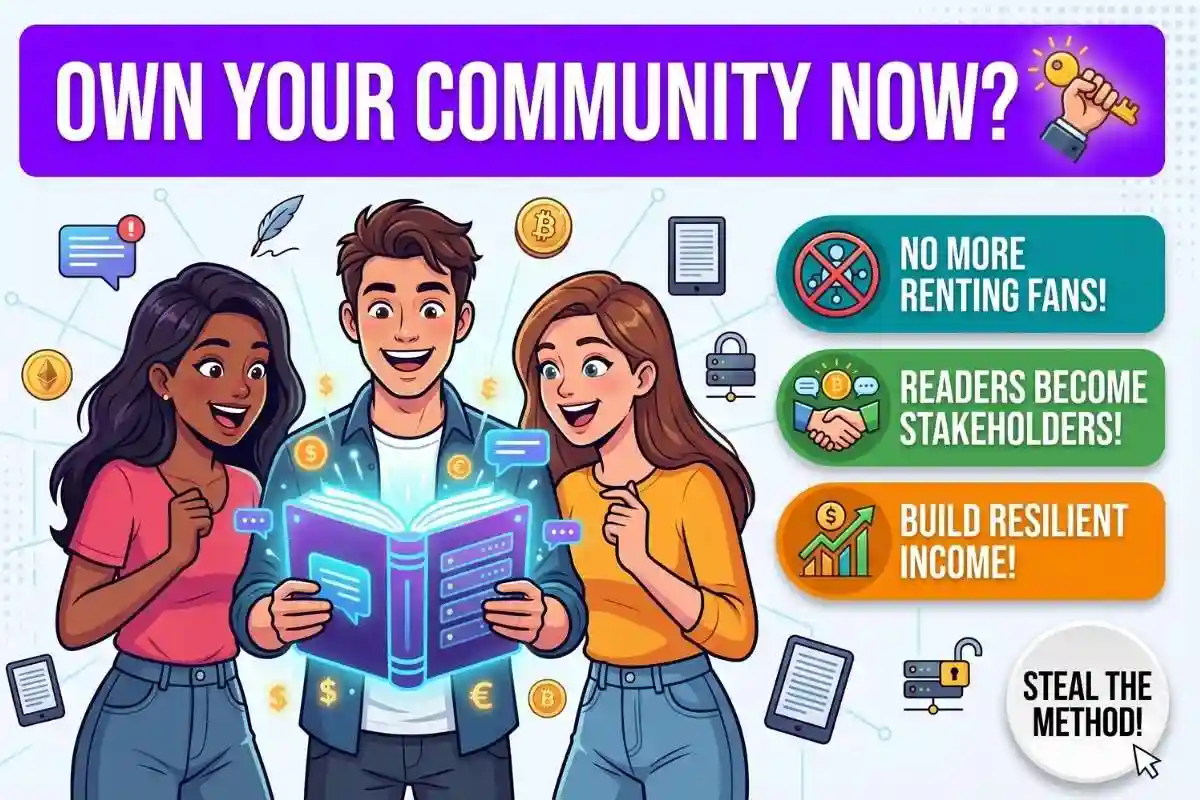
The traditional publishing model has long relied on strict gatekeepers and massive centralized platforms. Whether through prestigious publishing houses or dominant digital storefronts, authors have historically surrendered a significant percentage of their royalties—and, more importantly, direct access to their readers—in exchange for global distribution. However, a quiet but powerful revolution is currently brewing on the fringes of the modern creator economy. Smart writers are increasingly pivoting away from algorithmic social media feeds and rigid Web2 platforms. Instead, they are launching token-gated Discord servers, effectively building private digital enclaves where their biggest super-fans can interact directly with their favorite storytellers. By utilizing blockchain technology to issue social tokens, digital passes, or collectible non-fungible tokens (NFTs), authors are no longer just selling static books; they are actively monetizing direct community access. This transition marks a profound shift in how creative work is valued on the internet today, fundamentally transforming passive readers into active stakeholders in an author’s long-term success.
The Evolution of Digital Ownership and Author Independence
For decades, the internet operated on a foundational model of infinite reproducibility. If an author posted a short story, a poem, or a serialized novel online, it was easily copied, shared, and distributed across the web without any financial benefit ever returning to the original creator. The advent of Web3 and blockchain technology has fundamentally altered this dynamic by introducing the concept of verifiable digital scarcity. As researchers have noted, these technologies are increasingly being utilized to construct and transform digital things into valuable, ownable assets, which directly challenges and mitigates the historical issues of early internet culture that was largely dominated by piracy and copyright infringement (Miroshnichenko & Birch, 2024).
For authors, this technological leap means they can now mint a limited, exclusive series of digital library cards, character artworks, or lifetime access passes. When a devoted reader purchases one of these tokens, they aren’t merely buying a standard digital file; they are acquiring a verifiable, tradable asset that grants them exclusive rights and privileges. This techno-economic configuration shifts the balance of power back to the creator, empowering writers to construct a sustainable, independent micro-economy around their intellectual property without relying on a publisher’s marketing budget or a social media platform’s unpredictable algorithms.
The Discord Ecosystem as the Modern Writer’s Salon
While the underlying mechanics of digital ownership rely heavily on the blockchain, the actual community building and day-to-day engagement happen on communication platforms designed for real-time interaction. The platform of choice for the vast majority of these decentralized creator communities is Discord, a highly customizable voice, video, and text chat application. Discord allows authors to create sprawling, meticulously organized servers with distinct channels dedicated to chapter discussions, beta reading, fan art, and direct author Q&A sessions.
The integration of specialized token-gating bots acts as an automated digital bouncer for the community. These bots verify a user’s cryptocurrency wallet, check if they legitimately hold the required author token, and automatically assign them a digital role that seamlessly unlocks hidden sections of the server. This sophisticated setup allows authors to effortlessly segment their audience based on commitment levels. Casual fans can join the public channels for general news and updates, while token-holding super-fans gain entry to the exclusive “writer’s room” where they can brainstorm plot ideas, read early drafts, or attend private voice chats. It operates as a modern reincarnation of the classic literary salon.
Security, Privacy, and Building a Trustless Community
Operating a token-gated community is not a frictionless endeavor; it comes with significant technical and administrative responsibilities. When authors transition into the realm of managing digital assets and private, monetized servers, they inherit a complex new set of challenges regarding cybersecurity and data privacy. The Web3 paradigm introduces a fundamentally different data architecture compared to traditional web platforms, relying heavily on decentralized systems, digital identity, and verifiable credentials rather than centralized databases (Yaga, 2025).
To adequately protect their communities, authors must understand the security implications of smart contracts and wallet integrations. Because real financial assets are involved, token-gated servers are frequently targeted by bad actors employing sophisticated phishing scams, malicious links, or compromised automated bots designed to drain unsuspecting users’ wallets. Smart writers combat these persistent threats by prioritizing continuous education within their communities, implementing rigorous moderation protocols, and utilizing trusted third-party security tools and guidelines, such as those recommended by authoritative government bodies like the National Institute of Standards and Technology (.gov). By establishing a secure and transparent environment, authors can successfully foster a safe space where readers feel fully confident investing their time.
Redefining the Value of Fandom and Financial Sustainability
The innovative financial mechanics of token-gated servers offer a highly compelling alternative to traditional, centralized subscription models. In a standard Web2 subscription setup, readers pay a recurring monthly fee, and if they ever decide to cancel, they leave the platform with nothing but the memory of the content they consumed. Conversely, in a token-gated model, the community access pass is an underlying asset. If a reader decides they no longer have the time or desire to participate in the community, they can seamlessly sell their access token on a secondary digital market to another eager fan.
Crucially, the underlying smart contracts can be permanently programmed to ensure that the original author receives a set royalty percentage every single time the token is resold on the open market. This programmatic feature creates a perpetual, passive revenue stream that organically scales in tandem with the author’s popularity. As the writer’s fame grows and the demand to enter their private Discord server inevitably increases, the financial value of the limited access tokens theoretically rises. This dynamic completely redefines the very concept of fandom, incentivizing readers to actively champion the author’s work, share their books, and help the community thrive.
Comparing Community Monetization Models
Understanding this shift requires looking at how traditional platforms compare directly to token-gated ecosystems.
| Feature | Traditional Platforms (Web2) | Token-Gated Discord (Web3) |
| Access Model | Monthly recurring subscription | One-time token purchase (asset ownership) |
| Platform Fees | High (often 10% to 30% of total revenue) | Low (minimal transaction/gas fees) |
| Secondary Market | None; subscriptions cannot be resold | Yes; readers can sell passes, author earns royalties |
| Creator Control | Low; subject to algorithm changes and sudden bans | High; true ownership over the community structure |
Frequently Asked Questions
What exactly is a token-gated Discord server?
A token-gated Discord server is a private online community where access to specific channels, voice rooms, or the entire server is restricted by a digital asset. Users must connect a digital wallet containing a specific social token or NFT created by the author. An automated bot verifies ownership and grants the user access to the premium areas of the server.
Do readers need to buy cryptocurrency to join these communities?
In early iterations, readers needed to purchase cryptocurrency to buy the author’s token. However, modern Web3 onboarding platforms have heavily streamlined this process. Today, many authors use services that allow fans to purchase access tokens directly using standard credit cards, making the underlying blockchain technology entirely invisible to the average reader while preserving the benefits of digital ownership.
How does this benefit the author compared to a traditional subscription?
Traditional subscriptions require authors to constantly churn out new content every single month to justify the recurring fee, which frequently leads to severe creative burnout. A token-gated model often relies on a one-time purchase or an annual pass that acts as a VIP club membership. Furthermore, authors earn secondary royalties every time a fan sells their pass to someone else, creating long-term, passive income.
Are token-gated communities difficult to set up for non-technical writers?
While it sounds incredibly complex, the barrier to entry has plummeted over the last few years. There are now numerous “no-code” platforms specifically designed to help creators easily mint tokens and integrate them seamlessly with Discord. If you can set up a traditional email newsletter or a basic author website, you can likely navigate the modern tools required to launch a token-gated community today.
A Glimpse Into the Future of Digital Communities
We are witnessing the early stages of a profound evolution in how creators and audiences interact on the internet. By utilizing token-gated Discord servers, authors are effectively turning their readership into decentralized publishing houses. Fans are no longer just passive consumers; they are enthusiastic beta readers, grassroots marketers, and financial stakeholders all rolled into one cohesive group. As digital identity continues to merge seamlessly with online community access, the writers who embrace these direct, ownership-based models today will build the most resilient, dedicated, and financially sustainable fanbases of tomorrow. The days of simply renting access to your own audience are coming to an end; the era of owning your community has officially begun.