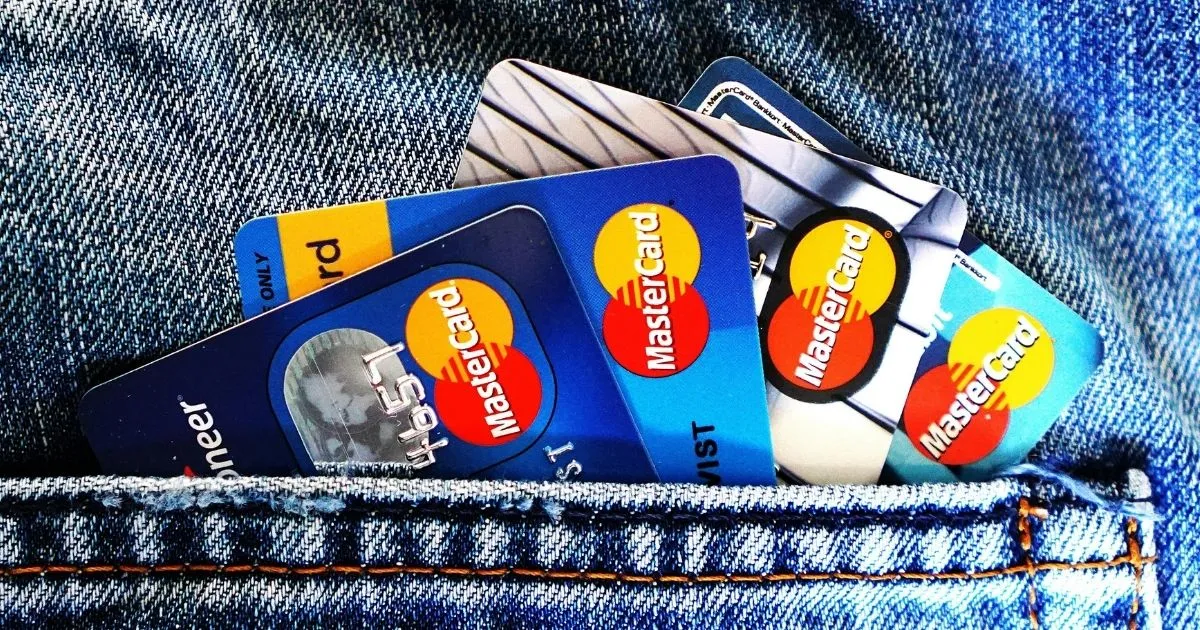
You never really think about the invisible tether attached to your financial identity until you try to move and feel it snap back against your neck. It sits there in the background of your life like a dormant virus waiting for a moment of weakness to flare up. We are told from a young age that money is the currency of freedom but the truth is slightly more complicated and far less romantic. Access is the real currency. The ability to walk into a bank or log onto a lending platform and demand capital is what separates the players from the spectators in this economy. And the gatekeeper to that access is a three-digit number that allegedly defines your trustworthiness.
The obsession with the credit score is a uniquely modern neurosis. It reduces the complexity of a human life and its myriad financial decisions into a cold integer that algorithms digest in milliseconds. I remember the first time I realized that my financial character was being judged not by my handshake or my actual cash flow but by a proprietary formula owned by three massive data conglomerates. It felt insulting. It felt like being reduced to a barcode. But getting angry at the system is a waste of energy that could be better spent exploiting it. The system does not care about your moral standing or your hard work. It cares about patterns and it rewards those who understand the rules of engagement.
Reading the fine print of your credit report
Most people treat their financial data like a medical diagnosis they are afraid to look at. They walk around with a vague sense of dread hoping that nothing is wrong but never actually confirming it. This is a mistake. Ignoring the details is how you lose leverage. When you finally sit down to study the raw data you often find a landscape that is messy and filled with inaccuracies. Errors happen more often than the bureaus would like to admit. A stray late payment that never happened or an old account that should have aged off years ago can anchor you down without you ever knowing why.
You have to look at this document not as a judgment of your past but as a map of your current leverage. It is surprising how many people believe that paying cash for everything is the ultimate sign of wealth. It is certainly a sign of safety but it is not necessarily a sign of growth. Real growth requires leverage and leverage requires a clean history. You need to verify every line item. You need to dispute the inaccuracies with the tenacity of a lawyer fighting for a client on death row. When you clear the debris you often find that your score jumps simply because you stopped accepting the errors as facts. It is a tedious process but it is the unglamorous work that builds the foundation for everything else you want to do.
The difference between a score of 650 and 750 is not just a hundred points. It is the difference between asking for permission and dictating terms. When you have the higher ground you stop looking at interest rates as a punishment and start seeing them as the cost of doing business. Cheap capital is the fuel for every major asset acquisition. Whether you are looking to buy a house or acquire a digital business that generates passive income the bank needs to see that number before they even look at your face. It is the first filter. If you do not pass it nothing else matters.
When you finally check credit report data for leverage
There comes a moment when you stop playing defense and start playing offense. This mental shift usually happens when you realize that credit is not just for buying consumer goods that depreciate the second you drive them off the lot. It is for acquiring assets. The wealthy do not use their own money if they can avoid it. They use the bank’s money. They use other people’s money. And they get access to that money because they have proven they can handle the debt.
I have seen countless people frozen by the fear of debt because they equate it with poverty. They have been taught that all debt is bad. That is a simplistic view for people who plan to work for a salary until they die. Good debt buys you time. Good debt buys you cash flow. But you cannot access good debt if you are terrified to check credit report details or if you have neglected your score out of apathy. You have to monitor it like a hawk. You have to nurture it.
Once you have mastered this game the world opens up in strange ways. You start looking for opportunities to deploy that credit. You stop looking at the price of a television and start looking at the price of a revenue stream. You might see a website for sale or a small service agency that needs a new owner and realize you can finance the acquisition and let the cash flow cover the debt service. That is the moment the game changes. You are no longer working for the score. The score is working for you. It becomes a tool in your belt rather than a shackle on your ankle.
The irony is that the people who need credit the most are often the ones who are most afraid to engage with the system. They hide from it. They use debit cards for everything and leave no digital footprint. In the eyes of the algorithm they are ghosts. And ghosts do not get loans. You have to exist. You have to participate. You have to borrow small amounts and pay them back religiously just to prove you are real. It feels artificial because it is artificial. It is a dance performed for a machine.
But if you dance well the machine rewards you. It grants you the keys to the next level where the stakes are higher and the rewards are exponential. You stop worrying about surviving the month and start strategizing how to build a portfolio. It all starts with that boring three-digit number and the discipline to keep it polished. It is not fair and it is not romantic but it is the reality of the economic engine we live in. You can stand outside and complain about the rain or you can buy an umbrella and walk into the bank like you own the place. The choice is always yours.