


The world of publishing has undergone a massive, silent revolution over the past decade. Gone are the days when writers had to wait years for a traditional publisher to anoint their manuscript with a lucrative contract. Today, independent authors are running six and seven-figure businesses straight from their living rooms, acting as both the creative talent and the savvy marketing executive. But in a digital marketplace flooded with millions of titles, how does a self-published writer stand out from the overwhelming crowd? The answer isn’t always writing a better book; sometimes, it is simply about understanding human behavior and outsmarting the digital systems designed to gatekeep success. Enter the weekend marketing phenomenon that is quietly taking the self-publishing community by storm. By utilizing a brilliantly simple, yet devastatingly effective pricing strategy, these modern digital storytellers are turning lazy weekend mornings into their most profitable days of the month. This is the story of how a temporary discount is manipulating algorithms, creating viral visibility, and fundamentally changing the economics of the digital bookshelf.
The Sunday Morning Surge
Imagine waking up on a quiet Sunday morning. The house is still, the coffee is brewing, and you finally have a moment to yourself. For millions of readers around the world, this specific window of time is sacred—it is the dedicated moment to scroll through their e-readers and find a new adventure to dive into before the busy workweek begins again. Independent authors, those savvy entrepreneurs who write and publish their own books without the backing of traditional publishing houses, have keenly observed this universal weekend ritual. Instead of hoping readers randomly stumble upon their novels, these authors are actively orchestrating highly targeted “flash sales” that coincide perfectly with this Sunday morning reading surge. By strategically dropping the price of a novel to a mere ninety-nine cents for a strictly limited twelve to twenty-four-hour window, they are essentially setting a digital trap. They know that a reader browsing with a fresh cup of coffee is highly susceptible to a good deal, and the results of this seemingly simple timing hack are nothing short of extraordinary for the author’s bottom line.
Decoding the Retailer Algorithms
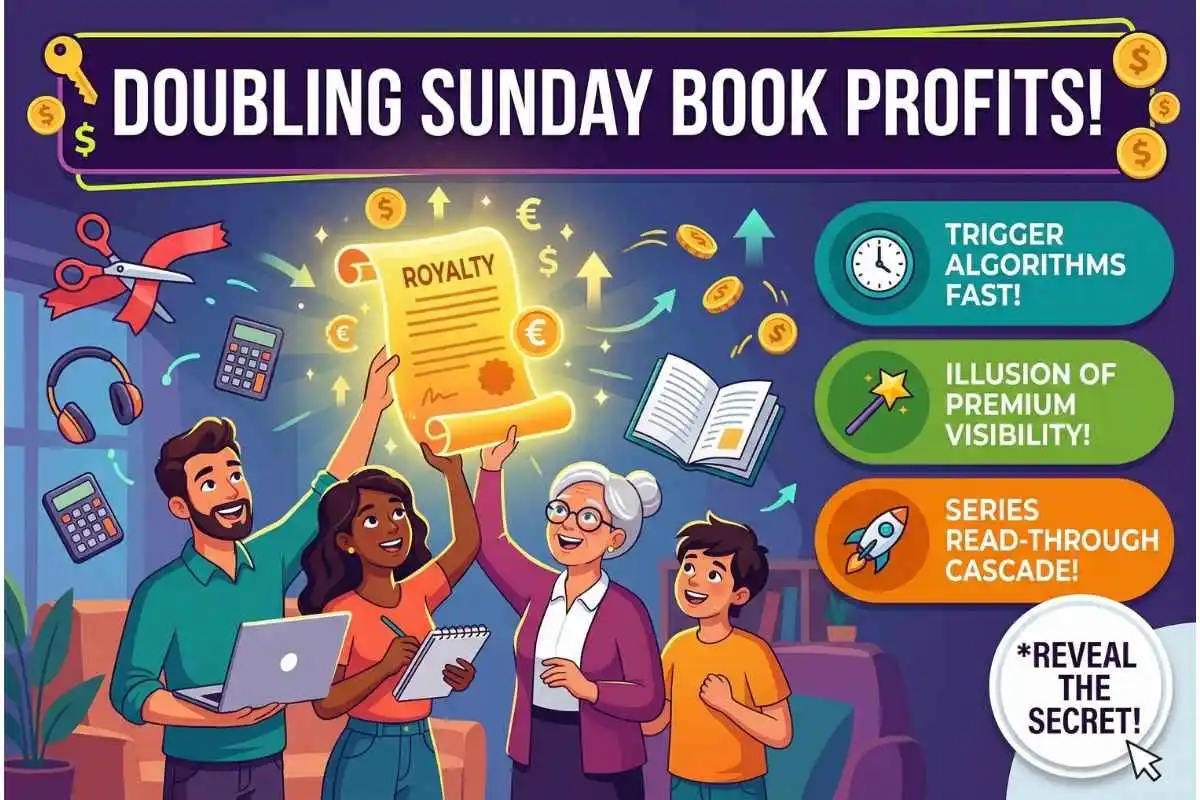
To truly understand why this Sunday flash sale is so devastatingly effective, we must pull back the curtain and examine the complex algorithms that govern major online book retailers. Platforms like the Amazon Kindle store do not rank books based solely on the total number of copies sold over a lifetime. Instead, their automated systems heavily favor a metric known in the industry as “sales velocity.” Sales velocity measures how many copies a book is selling within a very short, specific timeframe. When our savvy indie author drops their book price on a Sunday morning and promotes it heavily to eager weekend readers, a sudden, massive spike in downloads occurs. The retailer’s algorithm immediately notices this flurry of rapid activity. Believing the book is suddenly going viral or trending in a major way, the automated system rewards the author by pushing the book higher up the bestseller charts and prominently displaying it in the highly coveted “Hot New Releases” or “Also Bought” recommendation sections.
The Illusion of Premium Visibility
This algorithmic manipulation is where the true genius of the Sunday flash sale becomes apparent, shifting the strategy from a simple discount into a massive profit multiplier. You might be wondering how selling a digital book for under a dollar can possibly double an author’s overall profits. The secret lies in what happens after the flash sale officially ends. Once that artificial spike in Sunday sales pushes the book into the top visibility slots on the retailer’s homepage, the author abruptly raises the price back to its normal, profitable retail rate—usually around $4.99 or $5.99. Because the book is now riding high on the charts due to the Sunday morning frenzy, it remains highly visible to thousands of everyday shoppers logging on during Monday and Tuesday. These new weekday shoppers, completely unaware of the weekend discount, see a highly-ranked, popular book and purchase it at full price. The author sacrifices immediate profit margins on Sunday to buy premium algorithmic real estate, which then generates a wave of full-price royalties throughout the week.
The Multiplier Effect of Author Coalitions
Furthermore, no successful independent author executes this digital hack entirely alone in a vacuum. The modern self-publishing landscape is a highly collaborative environment where networking is just as crucial as writing a compelling story. To ensure the Sunday flash sale has enough initial momentum to trigger the algorithms, authors form strategic alliances and cross-promotion groups. Imagine a collective of ten science fiction writers who all agree to promote one specific author’s flash sale to their respective mailing lists on the exact same Sunday morning. This coordinated strike, leveraging the incredible power of direct email marketing, guarantees that tens of thousands of targeted readers receive a discount notification simultaneously. Of course, authors engaging in these promotional swaps must be careful to follow advertising regulations, such as those outlined by the Federal Trade Commission regarding consumer endorsements and transparency, but when done correctly, this unified approach creates a tidal wave of instant downloads.
The Long-Tail Profit of Series Read-Through
Finally, the ultimate power of the flash sale hack rests upon a foundational concept of indie publishing known as “read-through.” Independent authors rarely write standalone novels; instead, they focus heavily on writing long, interconnected series featuring the same beloved characters. When an author discounts the very first book in a sprawling five-book series on a Sunday, they view that initial ninety-nine-cent sale not as a profit center, but as an incredibly cheap lead generation tool. They are essentially paying to acquire a new, loyal customer. The reader buys the discounted first book, spends Sunday afternoon devouring the thrilling story, and is left desperate to know what happens next. By Sunday evening or Monday morning, that hooked reader immediately clicks over to buy book two, book three, and book four at their full retail price. The massive surge of discounted sales on the first book creates a cascading waterfall of full-price purchases across the entire series, easily doubling or even tripling the author’s overall monthly profits from a single day’s effort.
By the Numbers: Regular Pricing vs. The Flash Sale Hack
To illustrate how drastically this strategy changes an author’s income, consider this hypothetical scenario of an author with a three-book series. By taking a temporary hit on Book 1, the subsequent visibility and series read-through completely transform their weekly earnings.
| Metric | Standard Pricing Week | Sunday “Flash Sale” Week |
| Book 1 Price | $4.99 | $0.99 (Sunday) / $4.99 (Mon-Sat) |
| Book 1 Units Sold | 50 units | 500 units (mostly on Sunday) |
| Algorithmic Rank | #45,000 | #1,200 |
| Book 2 & 3 Sales | 30 units total | 250 units total (Read-through) |
| Total Estimated Profit | $275 | $1,100+ |
(Note: Data is illustrative of typical indie author conversion rates during promotional periods.)
Frequently Asked Questions (FAQ)
Can traditional publishing houses use this exact same strategy? While traditional publishers do occasionally put digital books on sale, they are generally much slower to react to market trends and rarely utilize hyper-targeted, 12-hour flash sales. Traditional publishers also have higher overhead costs and complex royalty contracts, making it difficult to aggressively discount front-list titles. Indie authors have total control over their digital dashboards, allowing them to change a price on a Saturday night and revert it by Sunday evening with just a few clicks.
Do authors actually lose money on a 99-cent book sale? It depends on the platform’s royalty structure, but generally, no. On most major retailers, a 99-cent book still yields a 35% royalty (roughly $0.35 per sale). While the profit margin is tiny compared to a $4.99 book, the author is not technically losing money on the digital delivery. The goal is volume over margin. If they sell thousands of copies, those 35-cent royalties add up, completely covering the cost of any advertising they purchased for the Sunday event.
Why does this happen specifically on Sunday, and not Saturday? Consumer data in the digital publishing space consistently shows that Saturday is often a day for errands, outdoor activities, and socializing. Sunday, particularly Sunday morning and evening, represents a downtime when people are preparing for the week ahead and looking for escapism. Newsletter open rates are traditionally highest on Sunday mornings, making it the mathematically perfect time to deploy a timed discount directly to a reader’s inbox.
The Curiosity: A Retail Trick Reborn
Did you know that the concept behind the indie author flash sale is actually over a century old? In traditional brick-and-mortar retail, this strategy is known as a “loss leader.” Grocery stores have used it for decades by pricing essential items like milk or bread at or below cost. The goal isn’t to make money on the milk; the goal is to get you into the store so you will impulsively buy high-margin items like premium cheeses, snacks, and magazines. Indie authors have brilliantly adapted this analog grocery store tactic for the digital age. By using their first book as the digital “milk,” they draw thousands of readers into their virtual store, knowing that human nature and a good cliffhanger will inevitably lead them to buy the rest of the series at full price.

