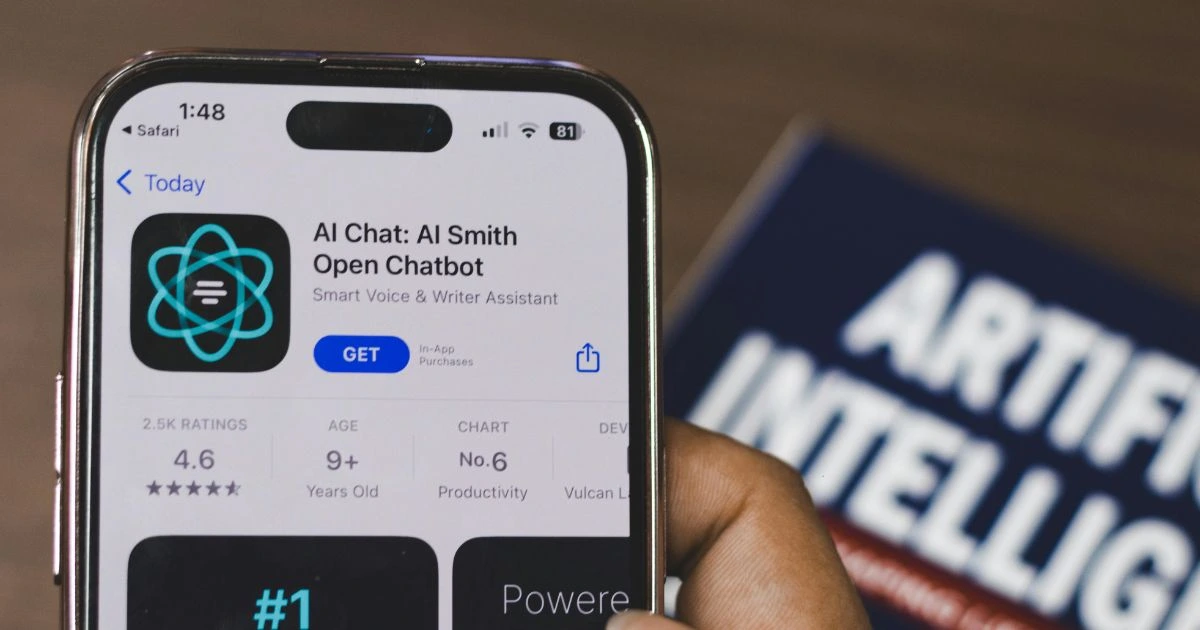
I spent three hours yesterday walking through a rainy park in Portland, Oregon, talking to a machine. It sounds like the punchline to a bad joke about the future, but it is actually the most productive writing session I have had in a decade. My throat is a little sore and my boots are ruined, but I have twelve thousand words of a new novel sitting in a cloud folder. These are not the jagged, stuttering transcripts of five years ago. This is something else entirely. We have finally hit the point where the distance between a thought and a written sentence has collapsed into a single exhale.
For anyone in the self-publishing world, the old way of doing things feels increasingly like hand-cranking a car engine. We were told that writing is an act of friction, a physical battle with a keyboard where you sit until your lower back screams. I used to believe that too. I believed that if I wasn’t staring at a blinking cursor until my eyes watered, I wasn’t really a writer. But the arrival of sophisticated Voice-to-Prose AI has turned that martyrdom into a choice rather than a requirement.
The shift isn’t just about speed. It is about the texture of the storytelling itself. When you speak a story, you inhabit a different part of your brain. You aren’t worried about the spelling of a word or the precise placement of a comma in the middle of a paragraph. You are chasing a feeling. You are trying to capture the way a character’s voice cracks when they lie. Using your voice allows for a rhythm that feels more like a heartbeat and less like a metronome. It is messy and loud and deeply personal.
The unexpected rise of the audio-first author
Most people still think of dictation as a tool for the disabled or the incredibly lazy. They imagine a robotic voice-to-text program that turns “she went to the store” into “sea went toothy star.” That world is gone. The modern audio-first author is looking for something far more nuanced. We are looking for a system that understands subtext and cadence. We need a partner that can take the rambling, emotional discharge of a verbal brain dump and recognize that when I pause for five seconds, I am looking for a specific transition that I haven’t quite found yet.
Being an audio-first author means accepting that the first draft is essentially a performance. You are the actor, the director, and the screenwriter all at once. There is a specific kind of liberation in knowing that you can pace around your living room and describe a sunset without the paralyzing fear of a blank white screen. The screen is a judge. The air is a canvas. I find that my descriptions are far more sensory when I am actually moving my body. If I am walking uphill while describing a character’s exhaustion, that physical reality bleeds into the prose in a way that my mechanical keyboard could never replicate.
This isn’t to say it’s easy. Learning to think in scenes while speaking requires a rewiring of the ego. You have to be okay with hearing yourself sound ridiculous. You have to trust that the Voice-to-Prose AI is catching the internal logic of your story even when your syntax gets tangled. It is a leap of faith. But for those of us in the self-publishing trenches, where the pressure to produce is constant, this shift is the only way to stay sane. It turns the labor of drafting into something that feels like play again.
Why rapid book drafting has become the new survival skill
The marketplace doesn’t care about your writer’s block. That is a hard truth that most of us learn after our first release sinks into the abyss of the algorithm. To stay visible, you have to stay active. This is why rapid book drafting has moved from being a niche “hack” to a fundamental survival skill for the modern independent creator. If you can produce a coherent, emotionally resonant draft in two weeks instead of six months, your entire career trajectory changes.
However, the speed isn’t the most interesting part. The most interesting part is the lack of “filter” fatigue. When I write by hand or on a laptop, I am constantly editing the sentence I just finished. I am looking back. I am doubting. When you are using your voice, you are forced to move forward. You are caught in the flow of the narrative. Rapid book drafting via voice is essentially an extended exercise in stream of consciousness that the AI then organizes into a structure that humans can actually read. It bypasses the inner critic that usually kills a book before it reaches chapter three.
I have spoken to writers who claim this is “cheating.” I find that perspective fascinating and slightly elitist. Was the move from quills to typewriters cheating? Was the move from typewriters to word processors a betrayal of the craft? The story is the soul of the work. The method of delivery is just plumbing. If I can tell a better story because I am not tethered to a desk, then the desk was the problem all along. We are entering an era where the barrier to entry for storytelling is no longer your typing speed or your ability to sit still for eight hours. It is simply the quality of your imagination and your willingness to speak your truth into the void.
There is a strange intimacy in this process. By the time I finish a session, I feel as though I’ve had a deep, exhausting conversation with myself. The AI doesn’t judge the cliches I drop or the way I repeat certain adjectives when I’m tired. It just waits. It absorbs. And then, when I open the file later that evening, I see a version of my thoughts that is cleaner and sharper than I remember them being. It feels like magic, or perhaps just a very efficient mirror.
I don’t think every book should be written this way. Some stories require the slow, agonizing precision of a pen on paper. Some ideas need to be looked at, not heard. But for the vast majority of the stories we tell, the ones that are meant to move people and entertain them and keep them turning pages late into the night, the voice is the most direct path. It is the oldest way we have of sharing who we are. Before there were books, there were voices around a fire. We are just returning to that circle, only now the fire is digital and it remembers everything we say.
I wonder what happens next. As the technology gets even better at mimicking the specific tics and styles of individual authors, the line between “written” and “spoken” will probably disappear entirely. We will just “create” books. We will live them into existence. For now, I am happy with my rainy walks and my sore throat. There is a pile of pages waiting for me that didn’t exist this morning, and for a writer, there is no better feeling than that. Whether those words came from my fingers or my lungs doesn’t seem to matter much when the story finally starts to breathe on its own.
FAQ
The technology has evolved to a point where it can be calibrated to your specific vocabulary and stylistic preferences. Rather than stripping away your personality, it often captures the natural cadences of your speech which can make the prose feel more authentic and less “clinical” than traditional typing.
It requires a bit more prep work. Most writers find success by speaking from a detailed outline. While the AI handles the prose generation, the author remains the architect of the logic. It is less about letting the AI invent the plot and more about using it to flesh out the bones you have already built.
Initially, there is a learning curve. However, because the current generation of tools is so adept at producing “clean” prose, the editing process often shifts from fixing typos to refining the emotional beats. You might spend more time on structural edits but significantly less time on basic line editing.
The latest models are trained on incredibly diverse datasets. They are much better at navigating regional dialects and idiosyncratic speech patterns than the dictation software of the past. The goal is to capture the intent of the speaker rather than just the literal phonetic sounds.
If done well, the only difference a reader might notice is a more conversational and fluid rhythm. Many of the world’s most successful thriller and romance authors have been using dictation for decades. The AI simply makes that process more accessible and the output higher in quality from the very first draft.