


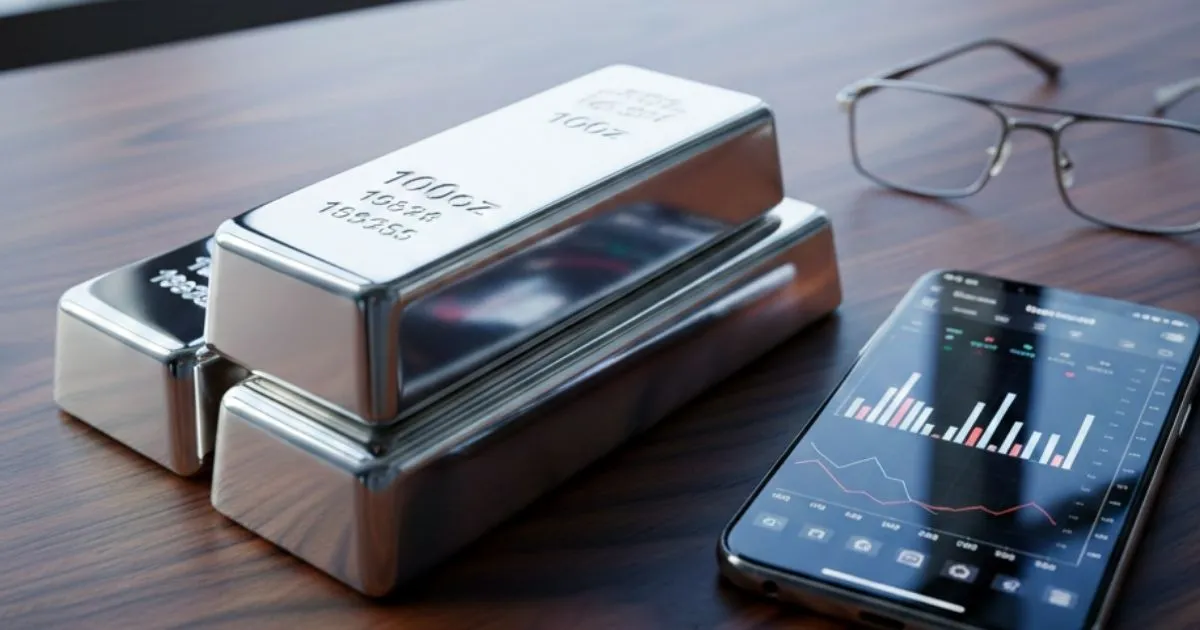
Walking through the floor of a major industrial metals exchange these days feels less like a place of business and more like a scene of quiet, controlled panic. The air is thick with the realization that the Silver Squeeze 2026 isn’t just a catchy headline on a message board anymore, it is a structural reality that has finally broken the back of the paper markets. For years, we heard the warnings about the yawning chasm between how much silver we dig out of the ground and how much the world actually needs to keep the lights on and the cars moving. Most of us ignored it, thinking that the supply would always magically appear when the price got high enough. But as the first quarter of this year has shown us, price can’t always conjure physical atoms out of thin air when the warehouses are empty.
I remember sitting in a boardroom late last year, listening to a procurement officer for a major photovoltaics firm describe their silver requirements. He wasn’t talking about ounces or even tons, he was talking about survival. When you realize that the solar industry alone is now consuming a massive chunk of the annual mine supply, the math for the rest of the world stops adding up. We have entered an era where silver is no longer just gold’s volatile little brother. It has become a strategic industrial asset, as essential to the modern world as oil was in the twentieth century. The current squeeze is the result of a multi-year deficit that has finally exhausted the hidden stockpiles.
The Industrial Silver Deficit and the Breaking of the Paper Market
The primary reason this cycle feels so much more visceral than previous rallies is the sheer weight of industrial silver demand. We are looking at a world where nearly sixty percent of all silver produced goes directly into industrial applications, from the high-conductivity pastes in solar panels to the intricate circuitry of electric vehicles and the massive infrastructure required for artificial intelligence hardware. In the past, when silver prices spiked, jewelers would sell their scrap or investors would liquidate their coins, providing a buffer. That buffer is gone. You cannot recycle the silver out of a million circuit boards or solar panels quickly or cheaply enough to meet a sudden supply shock.
The numbers coming out of the major exchanges tell a story of depletion. COMEX inventories have been hemorrhaging metal at a rate that suggests institutional buyers are no longer trusting the paper settlement system. They want the bars in their own vaults. This shift from “unallocated” paper holdings to physical delivery is the real engine behind the Silver Squeeze 2026. It is a fundamental repricing of risk. When a manufacturer realizes that a lack of silver could shut down a billion-dollar production line, they don’t care if the price is thirty dollars or a hundred dollars. They just need the metal. This inelastic demand creates a floor for the market that we haven’t seen in our lifetimes, making the old technical charts look like relics of a simpler time.
The geopolitical layer adds even more fuel to this fire. With major producers like Mexico and Peru facing operational hurdles and China tightening its grip on refined exports to satisfy its own massive internal demand, the Western world is finding itself in a precarious position. We spent decades outsourcing our refining and ignoring our mining sectors, and now the bill is coming due. It isn’t just about a shortage of ore, it is about a shortage of the capacity to turn that ore into the ultra-pure silver required for high-tech manufacturing. The scramble for supply is global, and it is intense.
How a Commodity Hedge Can Protect Your Capital in Volatile Times
In this environment, the traditional sixty-forty portfolio feels increasingly like a relic. When inflation lingers and industrial inputs become scarce, the most effective move is often to look toward a robust commodity hedge. Silver occupies a unique space here because it reacts to both monetary debasement and industrial scarcity. It is a double-sided hedge. If the economy stays hot, industrial demand keeps the price elevated. If the economy falters and central banks start printing again to stave off a recession, silver’s role as a monetary metal takes over. It is one of the few assets that thrives on both growth and chaos.
Managing a portfolio through this squeeze requires a shift in mindset. Many investors are used to treating commodities as a speculative side-bet, something to be traded for a quick profit. But when you look at the structural deficit, silver looks more like a core holding for anyone trying to preserve purchasing power. The volatility is breathtaking, of course. We see fifty-cent moves in seconds and multi-dollar swings in a single afternoon. But for those who understand the underlying mechanics, this volatility is just the sound of the market trying to find a price that will finally balance the books.
I often talk to people who are worried they missed the boat because the price has already moved so significantly from the lows. They look at the charts and see a vertical line, and their instinct is to wait for a “normal” correction. The problem is that in a true physical squeeze, normal rules don’t apply. The corrections tend to be shallow and violent, followed by even higher highs as the shorts are forced to cover. The strategy that seems to be working for the most disciplined players isn’t trying to time the exact bottom of a dip, but rather building a position steadily. They are treating it as a strategic allocation, recognizing that the era of cheap, abundant silver is likely over for good.
The beauty of this asset class is its accessibility. While institutional investors are fighting over thousand-ounce bars, the individual can still participate in ways that provide real security. But it isn’t just about owning the metal itself. It is about understanding the entire ecosystem that supports it. From the mining companies that are struggling to increase output to the secondary markets where physical metal actually changes hands, there is a whole world of opportunity for those who are willing to look beyond the surface level of the spot price.
We are witnessing a historic transfer of value. For years, the financial world was built on a mountain of digital promises and paper contracts. But as the Silver Squeeze 2026 intensifies, we are seeing a return to the tangible. The industries that define our future are built on physical foundations, and silver is the glue that holds much of it together. Whether you are looking at it through the lens of a technologist or a financier, the conclusion is becoming unavoidable. The market is finally waking up to the reality that we cannot build a high-tech utopia on a deficit of the very materials required to create it.
As we look toward the back half of the year, the questions remain more interesting than the answers. How high does the price have to go before industrial users actually start to slow down? At what point do central banks decide that silver is once again a necessary part of their reserves? There are no easy definitions for where we are headed, only the observation that the trend is firmly entrenched. The wise move has always been to be positioned before the rest of the world realizes they need to be. In the world of silver, that window of opportunity is closing faster than most people think. It is a fascinating, terrifying, and ultimately rewarding time to be paying attention to the metals market.

