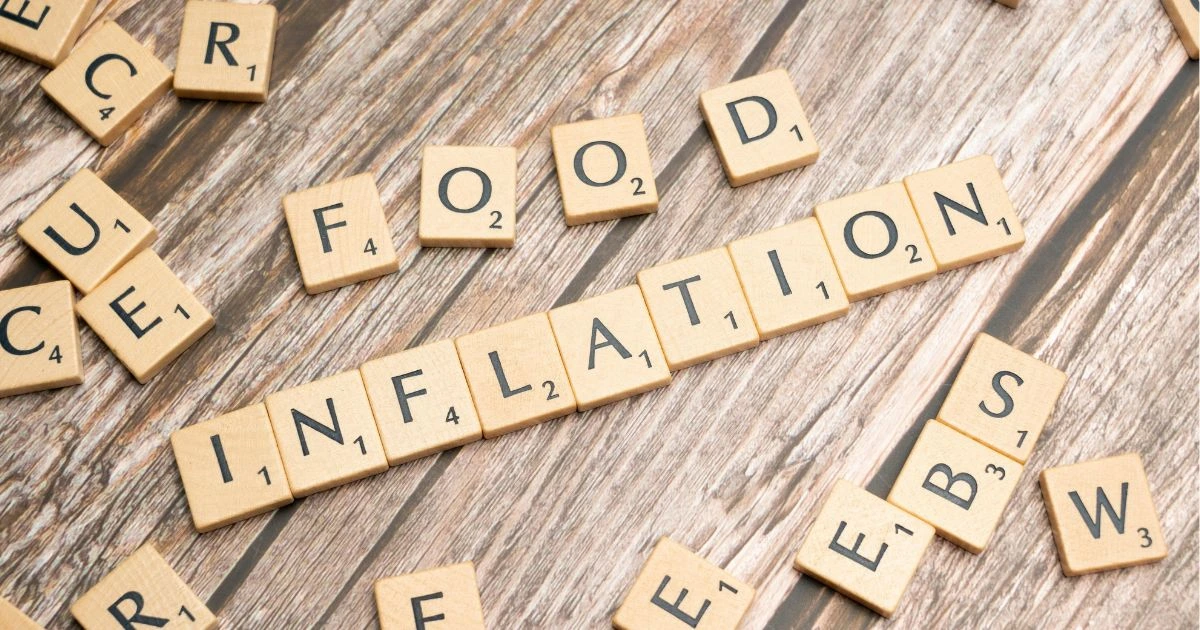
I was sitting in a diner in Chicago last week, watching the waitress swap out the printed inserts on the menus. It is a quiet, rhythmic ritual of the mid-2020s. The price of an omelet doesn’t just go up anymore; it vibrates. We have entered an era where the cost of calories is no longer a slow-moving tectonic plate but a volatile, high-frequency signal. For those of us trying to keep a portfolio from dissolving under the weight of this persistent heat, the old methods feel a bit like bringing a pocket knife to a drone fight. You can buy gold, sure. You can hunker down in Treasury bills and hope the real yield doesn’t turn into a ghost. But if you are watching the price of soft commodities—wheat, corn, soy—climb while supply chains remain brittle, you start looking for something more surgical.
This is where the conversation usually turns toward synthetic assets. The term itself sounds cold, like something cooked up in a lab, but the reality is much more grounded in the necessity of the moment. We are moving away from a world where you had to own a silo in Kansas to benefit from the price action of grain. Now, we are looking at digital mirrors of value. These instruments allow a level of granularity that the old-guard ETFs never quite mastered. When I talk about synthetic assets, I am talking about the ability to decouple the price of an asset from its physical, clunky constraints. It is about capturing the essence of a commodity’s move without the storage costs or the mess of the futures market’s roll yield.
Most people still think of hedging as a defensive crouch. They think it’s about not losing. But in 2026, hedging is actually about maintaining the ability to participate in the real economy. If your wealth is decoupled from the cost of living, you aren’t really wealthy; you are just holding a different kind of paper. The shift toward these synthetic structures is really just an admission that the physical world has become too unpredictable to navigate with 20th-century tools.
The quiet evolution of commodity hedging in a volatile decade
There was a time, perhaps ten years ago, when commodity hedging was the exclusive playground of industrial giants and guys in fleece vests shouting on trading floors. You did it to lock in the price of jet fuel or to make sure your bread factory didn’t go bust if a drought hit the Midwest. Today, that wall has crumbled. The average investor is staring down the barrel of a grocery bill that looks like a car payment, and the realization is sinking in: we are all commodity traders now, whether we want to be or not.
The problem with traditional hedging is the friction. If you try to buy futures, you get eaten alive by the “contango”—that expensive gap between the price today and the price tomorrow. It’s a tax on the unwary. Synthetic assets change the math by using collateralized debt positions or blockchain-based derivatives to track the price of corn or cattle with terrifying precision. You aren’t buying the cow; you are buying a mathematical shadow of the cow. It sounds abstract until you realize that your bank account is also just a collection of digital shadows.
I remember talking to a trader who told me that the only way to survive this decade was to stop thinking about “investing” and start thinking about “mapping.” You map your liabilities—your food, your energy, your rent—and then you find the synthetic mirror that offsets them. If the price of wheat is going to double, you need to be on the side of the equation that benefits from that doubling, even if you never intend to touch a stalk of grain. It’s a cold way to look at the world, but the alternative is watching your purchasing power evaporate in a diner in the United States while someone changes the price of your breakfast in real-time.
There is a certain irony in using high-tech financial engineering to protect yourself against the most primitive of needs. We use code to protect ourselves from the weather. We use synthetic assets to hedge against the fact that there might not be enough fertilizer to go around this year. It feels like a glitch in the Matrix, but it is the only logical response to a global supply chain that feels like it’s held together by duct tape and prayers.
Building inflation protection that actually breathes with the market
We spent a long time believing that inflation was a single number, a CPI print that came out once a month and told us how to feel. We know better now. Inflation is local, it’s specific, and it’s deeply personal. If you are worried about the cost of feeding a family, a general “inflation-protected” bond isn’t going to help you when the price of protein spikes thirty percent in a quarter. This is why the move toward specific, synthetic representations of commodities is gaining such traction.
Real inflation protection requires a bit of soul-searching about where your specific vulnerabilities lie. For some, it’s the energy grid; for others, it’s the global grain supply. The beauty of the current financial landscape is that we can now target these risks without the systemic baggage of the broader stock market. When the S&P 500 is wobbling because of tech valuations, your synthetic corn position doesn’t care. It only cares about the rain in Brazil and the nitrogen levels in the soil. It’s a different kind of diversification, one that feels much more honest than just owning a basket of different colored stocks.
I often wonder if we are reaching a point where the “synthetic” version of the world becomes more stable than the “real” one. In the physical market, you have strikes, shipping delays, and geopolitical posturing. In the synthetic market, you have pure price discovery. Of course, that’s a simplification. Nothing is ever truly pure. There are always counterparty risks, always the chance that the “mirror” cracks and stops reflecting the reality it was designed to follow. But compared to the risk of holding cash while the world gets more expensive, it’s a gamble many are finally willing to take.
The hesitation usually comes from a place of tradition. We like to think that “real” assets are safer. We like the idea of gold bars in a vault or land you can walk on. But you can’t eat your land if the crops won’t grow, and you can’t pay for your groceries with a gold flake at the checkout counter. The synthetic asset is a bridge. It’s a way to translate the chaos of the physical world into the language of your brokerage account. It is messy, it involves layers of complexity that would make a 1950s banker faint, and it requires a constant, weary vigilance.
There is no “set it and forget it” anymore. The 2026 portfolio is a living organism. It requires pruning and grafting. It requires an understanding that the commodities driving the world are no longer just things you find in the ground, but things you define through contracts and code. We are all just trying to find a way to stay level while the ground shifts. Whether we use synthetic assets or old-fashioned grit, the goal remains the same: to wake up tomorrow and find that the world hasn’t become more expensive than we can afford.
The diner in Chicago was crowded when I left. People were paying those new prices without much complaint, mostly because they had no choice. That is the ultimate driver of this new financial frontier—the lack of an alternative. We innovate because we have to. We build these synthetic mirrors because the original image has become too distorted to trust. Where it goes from here is anyone’s guess. Perhaps we will find a new equilibrium, or perhaps we will just keep building more complex layers of protection until the underlying reality is buried deep beneath the code. It’s an open question, and I’m not sure I want to know the answer yet.
FAQ
It is a financial instrument that mimics the price of a real-world asset, like wheat or oil, using a combination of derivatives and collateral rather than physical ownership.
While many ETFs hold physical goods or futures contracts, synthetics often use decentralized protocols or complex swaps to track prices more accurately with less overhead.
Food is a non-discretionary expense; unlike a new car, you cannot opt-out of eating, making its price volatility a direct threat to your living standards.
They carry unique risks, including smart contract vulnerabilities or counterparty failure, and should be handled with more caution than a standard savings account.
It suggests that high-frequency price adjustments are becoming a structural part of the economy rather than a temporary spike.