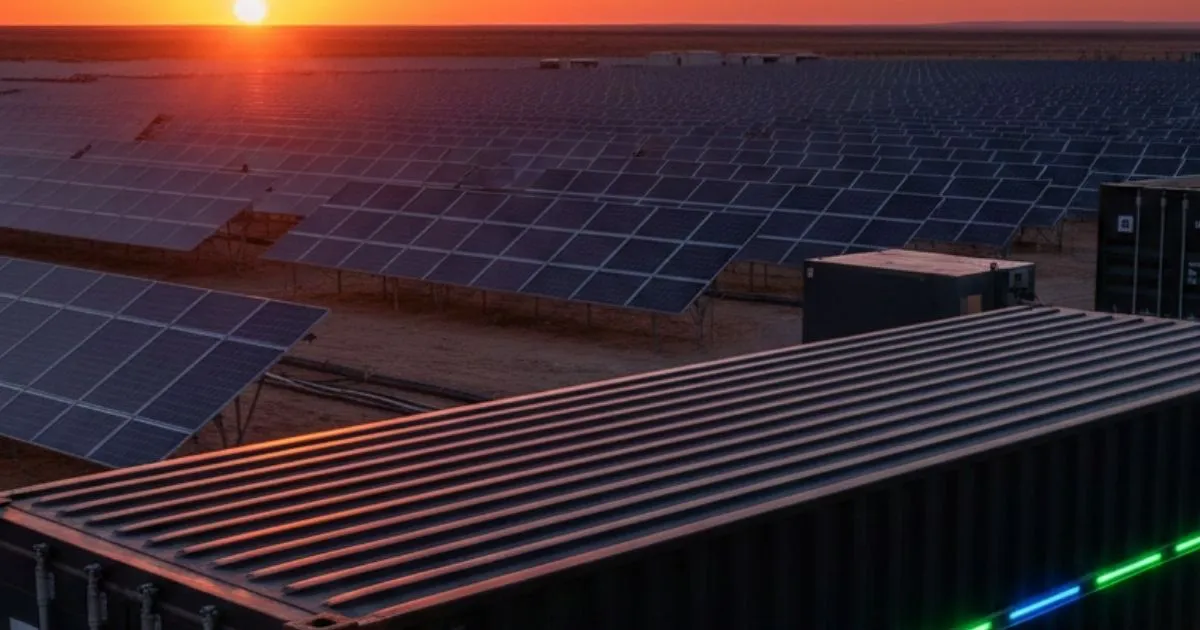
I remember standing on a hill in West Texas a few years back, looking at a sea of solar panels that stretched toward the horizon until the heat shimmer made them look like a restless blue ocean. The engineer next to me was swearing under his breath. He was looking at a monitor showing a massive spike in generation that the local grid simply couldn’t swallow. They were literally throwing away electrons, dumping perfectly good energy into the ground because there was nowhere else for it to go. It felt like watching a baker throw fresh bread into a furnace because the town was already full. Fast forward to the early weeks of 2026, and that particular flavor of frustration is becoming a relic of the past. The marriage between solar-powered mining and the financial sector has moved from a fringe experiment to a pillar of enterprise strategy.
There is a specific kind of poetic justice in using the sun to secure the world’s hardest money. For a long time, the narrative around digital assets was dominated by the “energy footprint” debate, a conversation often lacking the nuance of how power grids actually function. But the reality on the ground has shifted. We aren’t just talking about green mining anymore. We are talking about the complete vertical integration of energy production and capital generation. Large firms are no longer content with being mere consumers of power or passive investors in the space. They are becoming the infrastructure.
Solar Crypto Mining and the Art of the Invisible Battery
When you look at the balance sheets of modern energy firms, the line items for curtailment—the forced reduction of output—used to be a painful necessity. Now, that excess capacity is being redirected. Solar crypto mining acts as a synthetic battery. Instead of storing energy in expensive, chemically volatile lithium-ion stacks that degrade over time, companies are storing that value in an immutable ledger. It is a transformation of physical surplus into digital equity. This isn’t just a win for the environment, it is a radical shift in how we perceive the ROI of a solar farm.
The math for a green energy business has changed. In the old model, you built for peak demand and accepted losses during the long, sunny afternoons when the grid was saturated. In 2026, those long afternoons are the most profitable hours of the day. By running high-efficiency ASIC fleets behind the meter, these enterprises are floor-pricing their own energy. They have created a world where the cost of production is virtually zero during peak solar hours, allowing them to mine through difficulty adjustments that would crush a traditional data center reliant on the spot market. It is a beautiful, self-reinforcing loop. The more they mine, the more they can justify expanding their solar arrays, which in turn provides more stability to the local grid.
Enterprise Bitcoin as the New Corporate Treasury Standard
We are seeing a quiet but profound migration of capital. It is no longer just about the “moon” shots or the speculative fever of years past. The conversation has moved into the boardroom, where enterprise Bitcoin is being discussed with the same sobriety as gold reserves or Tier 1 capital. For a green energy business, holding the asset they produce is the ultimate hedge. It is a way to diversify away from the fluctuations of fiat-denominated electricity PPA (Power Purchase Agreement) rates. When the dollar wobbles or inflation eating into operational margins becomes a concern, having a treasury backed by the very energy you harvested from the sky offers a level of sovereignty that was previously unavailable to the private sector.
The sophistication of the hardware has kept pace with this institutional appetite. We are seeing deployments of liquid-cooled units that can handle the intense ambient temperatures of desert solar parks without blinking. These aren’t hobbyist rigs in a basement. These are industrial-scale operations integrated into the heart of the power plant. The result is a more resilient network and a more profitable energy sector. By removing the middleman—the aging, congested transmission lines—and consuming power at the source, these firms are proving that the most efficient way to transport energy is often to not transport it at all, but to convert it into value right where it is born.
The skepticism that once defined the intersection of finance and mining is evaporating. It has been replaced by a pragmatic realization: energy is the ultimate currency. If you can produce it cleanly and convert it into a global, liquid asset without asking for permission, you have bypassed several centuries of financial friction. The firms leading this charge in 2026 aren’t just miners and they aren’t just power companies. They are the new architects of a more honest, physics-based economy.
Looking at the current trajectory, one has to wonder how long the traditional models of “buy and hold” can compete with “produce and hold.” The edge belongs to those who own the means of generation. As the sun rises over those blue panels tomorrow, it won’t just be creating light. It will be minting the future, one block at a time, and the ledger has never looked brighter.