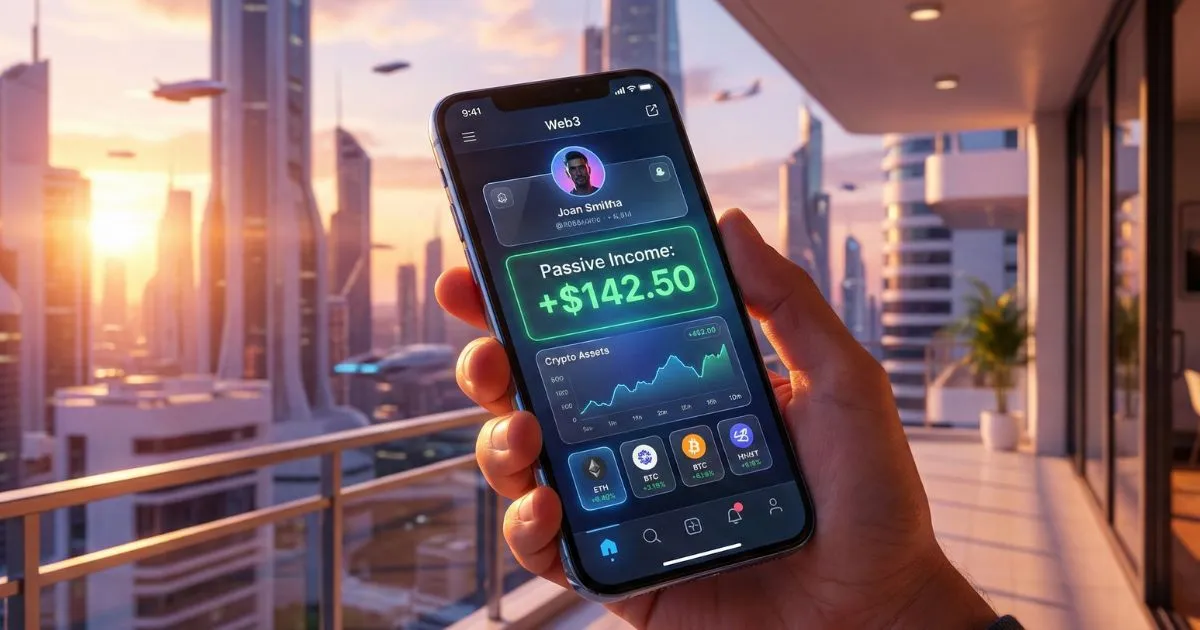
The digital landscape of 2026 has become a place where the simple act of scrolling is no longer a one-way street of data harvesting. We have spent over a decade feeding the machinery of traditional social networks with our attention and our private lives, receiving little more than targeted advertisements in return. Now, the rise of SocialFi 2026 is quietly shifting that dynamic. It is a transition that feels less like a sudden explosion and more like a slow, steady migration of value back toward the people who actually generate it. For anyone who has watched the finance world merge with the social sphere, the concept of earning while posting has moved from a fringe crypto experiment to a legitimate avenue for wealth distribution.
I remember sitting in a coffee shop early last year, watching a friend freak out over a sudden spike in her personal token value on a decentralized platform. She wasn’t a celebrity or a massive influencer, just someone who shared high-quality analysis on emerging tech trends. That was the moment it clicked for me. SocialFi isn’t just about putting a price tag on a “like,” it is about the structural change of how we own our digital footprint. We are seeing a world where your social graph is a portable asset, not something locked inside a corporate silo. This isn’t just about making a few dollars here and there, it is about the broader evolution of creator monetization and how it integrates with the daily habits of billions of users.
The Evolution of Creator Monetization in a Decentralized Era
The friction of the old world was always the middleman. You created, they hosted, and then they took the lion’s share of the profit while controlling exactly who got to see your work. In the current ecosystem, Web3 social media has largely dismantled that gatekeeping. We now have protocols that treat every post as a potential transaction, but in a way that feels surprisingly organic. When you look at platforms like Lens Protocol or Farcaster, the experience isn’t about constant financial prompts. Instead, the monetization happens in the background. You might post a photograph or a deep-dive thread, and because you own the underlying NFT of that content, every share or “re-cast” can trigger a tiny, fractional reward.
What makes this different in 2026 is the maturity of the user experience. Two years ago, you needed a PhD in blockchain architecture just to set up a profile. Today, the wallets are invisible, tucked away behind biometric logins and familiar interfaces. This ease of use has brought in a different class of creators. We are no longer just seeing “crypto people” talking to other “crypto people.” We are seeing chefs, historians, and local journalists finding that their audience is willing to pay a few cents of a native token to support their work directly. It is a more honest form of commerce. There is a specific kind of satisfaction in knowing that when you spend time on a platform, you are participating in a circular economy rather than just being the product.
The shift toward this model has also changed how we think about passive income. In the past, you needed to be an active seller or a relentless advertiser to see a return. Now, the mere act of holding a stake in a community you help build can yield results. If you were an early participant in a specific niche community, your reputation score alone might qualify you for governance rewards or a share of the platform’s protocol fees. It turns the idea of “social capital” into something that can actually pay the rent. I’ve seen small communities form around everything from vintage watch collecting to regenerative farming, where the most helpful members are rewarded by the protocol itself. It creates a much healthier incentive to be useful rather than just being loud.
Diversifying Your Portfolio with SocialFi 2026 Opportunities
If you are looking at this from a financial perspective, the landscape is incredibly varied. You have the direct earners who treat these platforms like a full-time job, but then there is the growing group of strategic participants who treat their social presence as a diversified asset class. By engaging with multiple SocialFi 2026 ecosystems, you aren’t just betting on one company. You are betting on the growth of decentralized attention as a whole. Some platforms focus on “keys” or “access tokens,” where the value is tied to the exclusivity of the conversation. Others are more egalitarian, distributing rewards based on a transparent algorithm that measures genuine engagement rather than raw clickbait.
The beauty of this is that it doesn’t require a massive upfront investment to start seeing a return. It requires time and a willingness to contribute something of value. I often tell people that the most valuable thing they own is their data, and for the first time, we have the tools to refuse to give it away for free. When you post on a Web3 platform, you are essentially minting a piece of history that stays in your control. Even if the platform itself were to disappear tomorrow, your followers and your content history could be ported to a new interface because they exist on an open ledger. That kind of security is something we never had with the giants of the past decade.
Of course, it isn’t all sunshine and effortless gains. There is a learning curve to understanding which communities have long-term staying power and which ones are just chasing the latest trend. But that is exactly where the opportunity lies. Those who take the time to understand the nuances of tokenomics and community governance are the ones who find the most sustainable paths to income. We are moving away from the era of the “viral hit” and toward the era of the “loyal micro-community.” For a finance-minded individual, this is a dream scenario. It allows for the kind of granular targeting and value creation that traditional advertising could only pretend to offer.
Looking ahead, I suspect we will see even deeper integrations between our social lives and our financial portfolios. Imagine a world where your reputation on a professional social network acts as collateral for a decentralized loan, or where your support for a burgeoning artist gives you a literal stake in their future earnings. These aren’t science fiction concepts anymore, they are the building blocks of the current digital economy. The lines between being a consumer, a creator, and an investor have blurred to the point of being indistinguishable.
The real question isn’t whether these platforms will replace the old guard, but how quickly you can adapt to the new rules. The infrastructure is here, the users are arriving in waves, and the rewards are being distributed every second. It’s a strange, exciting time to be online, and for those who are paying attention, the rewards for simply being ourselves have never been more tangible. We are finally moving past the age of “free” and into the age of ownership. It makes you wonder why we ever settled for anything less.