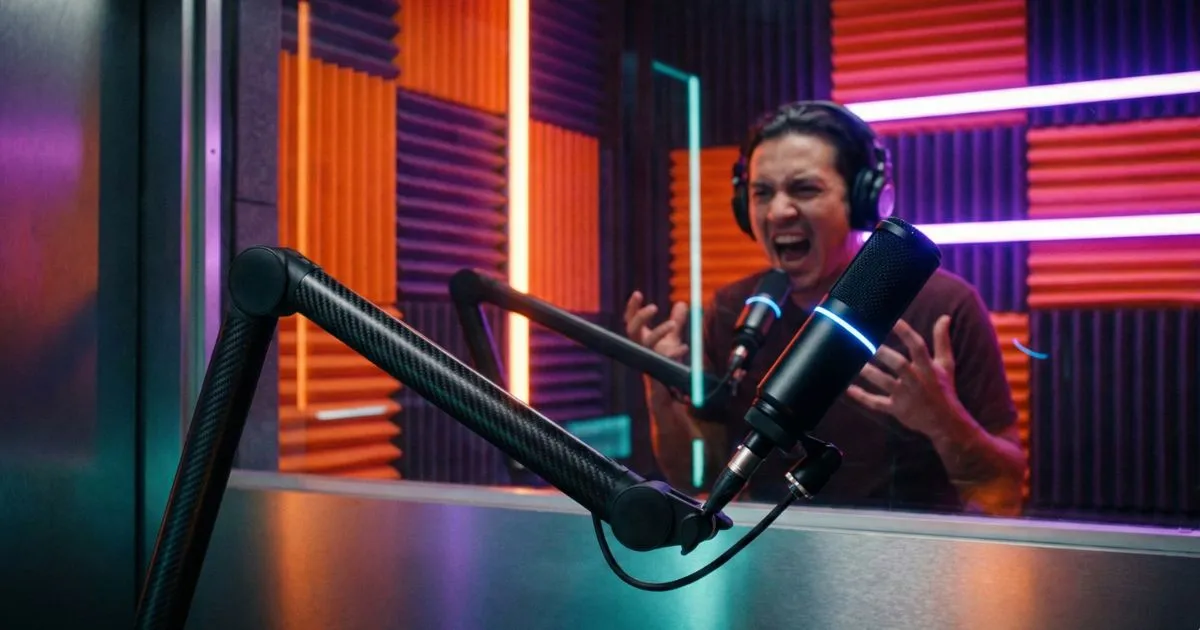
I stood in a dimly lit studio last Tuesday, watching a voice actor lose their absolute mind. They weren’t having a breakdown, at least not a real one, but they were screaming into a high-end condenser microphone as if the world were ending. In the manuscript, it was a simple line of description about a character’s despair. In the booth, it became a visceral, haunting soundscape that made the hair on my arms stand up. This is the shift we are seeing in 2026. The static page is no longer the final destination for a story. If you are sitting on a manuscript right now, you aren’t just holding a book, you are holding the blueprint for a multi-sensory experience that can bypass the crowded digital shelves of Amazon and go straight into the ears of a global audience.
The transition from a silent text to a loud, living serialized audio drama is not just about reading aloud. We have moved past the era of the dry audiobook where a single narrator drones through “he said” and “she said” for ten hours. Listeners today want immersion. They want to hear the rain hitting the window while the protagonist whispers a secret. They want the punch of a closing door and the low hum of a city in the background. For an author, this is the ultimate play for Author IP growth because it transforms your intellectual property into something that feels like a Netflix series without the eight-figure production budget.
I remember talking to a novelist friend who was terrified of this process. She thought she would lose the “literary soul” of her work if she let sound effects take over. But the truth is quite the opposite. When you strip away the heavy internal monologues and the dense descriptions of scenery, you are left with the raw emotional pulse of your characters. That is where the magic happens. You realize that your story has legs in a way you never imagined. You start to see your work not as a finished product, but as a living ecosystem of content that can be sliced, diced, and projected across platforms.
The creative leap from page to sound through podcast publishing
Moving a story into the realm of podcast publishing requires a specific kind of surgical precision. You cannot simply hand a 90,000-word thriller to a producer and expect a hit. The first thing that has to go is the fluff. In a serialized audio drama, every second of silence must be intentional, and every word must move the needle. You are writing for the ear, which means the rhythm of your sentences has to change. You start to value the short, punchy dialogue that defines modern prestige audio. It is a process of “killing your darlings” on a massive scale, yet it is incredibly liberating. You find that the core of your narrative survives even without the three-page description of the Victorian wallpaper.
The beauty of the 2026 landscape is that the barriers to entry have crumbled. We have tools now that allow an independent creator to achieve cinematic sound quality from a home setup that doesn’t cost a fortune. But the real secret isn’t in the hardware. It is in the casting. When you find that one voice that perfectly captures the internal grit of your hero, the story takes on a life of its own. I have seen manuscripts that were “dead on arrival” in the traditional publishing world suddenly find a second life as a top-ten fiction podcast because the performance brought out a nuance the text alone couldn’t convey.
There is a certain thrill in watching your download numbers climb not because you ran a discount promotion, but because people are genuinely hooked on the cliffhanger you planted at the end of episode three. This is how you build a tribe. In a world where everyone is screaming for attention, a serialized story that someone chooses to listen to while they are driving or doing the dishes creates a level of intimacy that a social media post can never match. You are literally inside their head. That kind of real estate is priceless for any creator looking to expand their footprint.
Strategic expansion and the long game of Author IP growth
When we talk about Author IP growth, we are really talking about the longevity of your ideas. A book can be forgotten in a week, but a brand is forever. By turning your manuscript into an audio drama, you are essentially creating a pilot for every other medium. Producers are lazy, or rather, they are risk-averse. They would much rather option a story that already has a verified, engaged listening audience than a cold manuscript from a slush pile. Your podcast becomes your proof of concept. It shows that your world is “sticky” and that people are willing to invest their time in it.
I have watched authors leverage their audio shows into lucrative licensing deals, specialized merchandise, and even consulting roles for bigger production houses. But even if you never head to Hollywood, the growth of your own platform is the real prize. You start to see a strange phenomenon where your podcast listeners go back and buy the original book, and then they sign up for your newsletter, and then they become the street team for your next project. It is a virtuous cycle of engagement. The audio drama is the gateway drug to the rest of your creative universe.
The most successful creators I know in 2026 aren’t the ones who are just “writing books.” They are the ones who are thinking like architects. They build a world, and then they find every possible way to let people inhabit it. Sometimes that means a hardback with gold foil, and sometimes it means a binaural audio experience that makes the listener feel like they are standing in the middle of a medieval battlefield. The goal is to be everywhere your audience is. If they are in the car, be the voice in their speakers. If they are on the train, be the text on their screen.
As I look at the stack of manuscripts on my desk, I don’t see paper. I see sound waves. I see potential. The fear of “doing too much” is real, but the risk of doing too little in this economy is even greater. Your story deserves to be heard, not just read. It deserves to vibrate through a pair of headphones and make someone miss their subway stop because they were too caught up in the world you built. That is the true power of the serialized format. It isn’t just a trend. It is the new standard for how stories are told and, more importantly, how they are remembered.
The road from a 2026 manuscript to a viral podcast is paved with creative compromises and technical hurdles, but the destination is a level of relevance that most authors only dream of. You have to be willing to let the story evolve. You have to trust that the essence of your work is strong enough to survive the translation. And when you finally hear those opening notes of your theme music and the first line of dialogue drops, you’ll realize that you haven’t just made a podcast. You’ve built a legacy.