I remember walking into a flagship department store in Manhattan back in 2019. It was a cathedral of static geometry. The mannequins stood in frozen poses, the perfume counters were bolted to the floor, and the fluorescent lights hummed with a predictable, monotonous indifference. You navigated that space like a map reader in a pre-GPS era. You adjusted to the store, because the store certainly wasn’t going to adjust to you. If you couldn’t find the linen blazers, that was your trek to make.
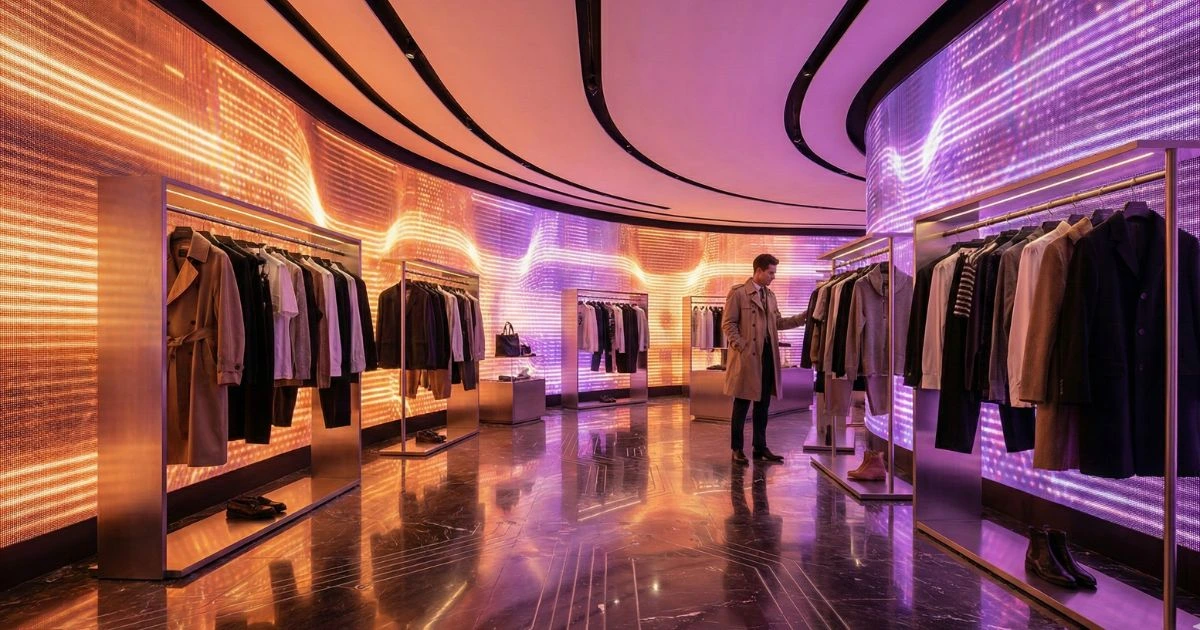
Fast forward to a rainy Tuesday in early 2026. I stepped into a mid-sized boutique in Chicago, and the air felt different. It wasn’t just the climate control. As I crossed the threshold, the digital signage near the entrance didn’t blast a generic “Spring Sale” at me. Instead, it softened, shifting its hue to a warm amber that happens to be my visual preference for browsing. The aisle to my left, usually crowded with high-top sneakers, seemed to widen, almost guiding my eye toward a display of weather-resistant trench coats. It wasn’t magic. It was a store that had already recognized my digital twin through my opted-in loyalty app and was reconfiguring its physical presence in real-time.
This is the dawn of Hyper-personalized Retail. We are moving away from the era of “one size fits all” floor plans and entering a period where the very walls of commerce are becoming liquid. For anyone holding a portfolio in retail real estate or looking at the next decade of consumer discretionary spending, this isn’t just a cool tech trick. It is a fundamental revaluation of what a physical asset actually is. A store is no longer a container for inventory. It is a high-frequency data processor that just happens to have a roof.
The Algorithmic Floor Plan and the New AI Customer Journey
The traditional logic of retail was built on “dwell time” and “path to purchase,” concepts that were often measured by hand-drawn heat maps and gut instinct. In 2026, the AI customer journey has turned those old textbooks into scrap paper. Today, the store layout is a living organism. Using a combination of overhead LiDAR, computer vision, and IoT-enabled modular shelving, retailers are now able to perform A/B testing on a physical environment as easily as a web developer tests a landing page.
I watched a manager at a high-end electronics hub use a tablet to trigger a “flow shift.” Within minutes, motorized display islands repositioned themselves to clear a path for a predicted surge of foot traffic expected after a nearby theater performance ended. The store literally opened its lungs to breathe in the crowd. But the personalization goes deeper than just crowd control. When a “high-intent” shopper—someone the system identifies as having spent the last three nights researching specific mirrorless cameras—approaches the photography section, the lighting narrows and intensifies on the exact models they were eyeing online. The digital price tags shift to show a bundle deal that mirrors their recent search history.
This level of synchronization between the digital and physical worlds is what we mean by the modernized AI customer journey. It removes the friction of discovery. We used to think that making a customer hunt for milk at the back of the grocery store was clever marketing. In 2026, that feels like an insult. The modern shopper values “intelligence-led convenience.” If the store knows I am in a rush because my calendar shows a meeting in twenty minutes, the layout should technically “shorten” for me. The endcaps should feature exactly what I need to grab-and-go. This isn’t just about selling a product. It is about selling the feeling that the world is finally curated for the individual.
From a financial perspective, this shift is massive. We are seeing a divergence in the market between “dumb” square footage and “intelligent” assets. The former is a liability, a sinking ship of overhead and stagnant stock. The latter is a high-margin media channel. When the layout changes for every user, the store itself becomes a billboard with a 100% relevance rate. That is where the alpha is hidden in today’s retail landscape.
Investing in the Physics of Dynamic Retail and Adaptive Spaces
If you look at the balance sheets of the most successful retail plays this year, you see a strange trend. Capex is no longer going into marble floors or expensive wood paneling. It is going into “kinetic infrastructure.” The smart money is flowing into companies that provide the backbone for Dynamic Retail, the invisible layer of sensors and robotics that allow a store to pivot its purpose by the hour.
A storefront in a prime urban location might function as a high-touch showroom from 10:00 AM to 4:00 PM, with wide aisles and immersive brand storytelling zones. But as the sun sets and the local demographic shifts toward commuters and locals looking for quick pickups, the space can reconfigure. Modular walls slide into place to expand the fulfillment “backroom,” turning the front of the house into a streamlined, automated kiosk. The store effectively changes its business model twice a day without a single construction crew ever showing up.
This adaptability is the ultimate hedge against market volatility. In the old world, if a fashion trend died, you were stuck with a store layout designed for that specific aesthetic for the duration of your lease. In the world of Dynamic Retail, you simply update the software. You swap the magnetic shelving skins, reprogram the haptic displays, and recalibrate the AI sensors. Your physical asset stays relevant because it is no longer static.
I often think about the skepticism that surrounded “smart homes” a decade ago. People thought it was a gimmick to turn on lights with a voice command. Retail is going through that same transition, but the stakes are much higher. A store that cannot recognize a VIP customer and adjust its “vibe”—from the background music to the product height—is a store that is essentially invisible to the modern consumer. We are seeing a massive consolidation where the mid-tier retailers who failed to invest in this “liquidity of space” are being hollowed out. Meanwhile, the ones who treated their floor plan as a dynamic UI are seeing conversion rates that would have been unthinkable in the 2010s.
The real question for the investor or the agency lead isn’t whether this technology works. It clearly does. The question is how quickly the remaining 70% of the market can be retrofitted. We are currently in a “land grab” phase for retail technology services. The demand for agencies that can bridge the gap between architectural design and machine learning is through the roof. It is no longer enough to be a good merchant. You have to be a good orchestrator of experiences.
As I left that Chicago boutique, I noticed a woman walking in behind me. She was a different age, wearing a different style, and likely carrying a vastly different digital history. As the door closed, I saw the amber glow of the entrance sign flicker and fade, replaced by a crisp, energetic blue. The coats I had just been looking at were no longer the focal point. For her, the store had already become something entirely different. It was a perfect, fleeting performance, staged for an audience of one.
What happens to the value of a street corner when the building on it can become a thousand different stores in a single day?