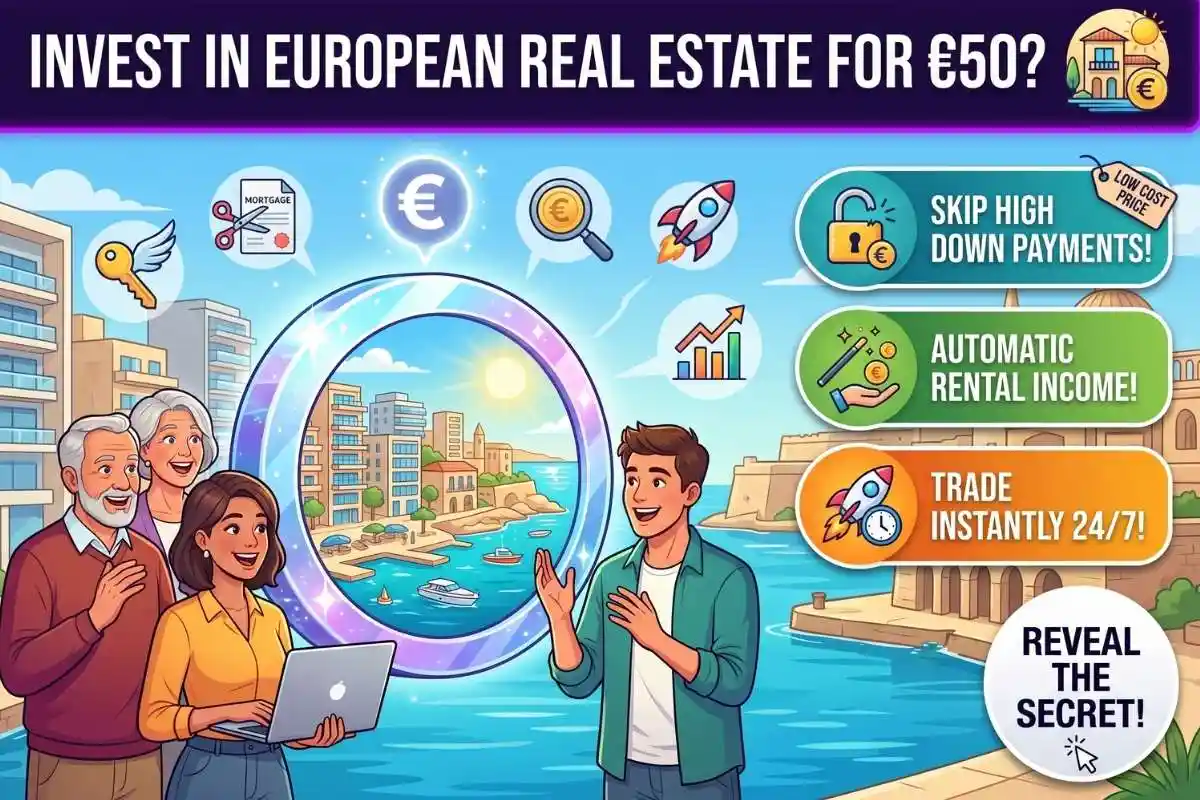
Imagine waking up this Thursday and officially becoming a European real estate investor for the price of a modest dinner. For decades, the European property market has been characterized by towering barriers to entry: massive down payments, cross-border tax implications, and exhaustive paperwork. It was an exclusive club designed almost entirely for the wealthy. Today, that historical narrative is being rewritten by a technological and financial breakthrough known as Real-World Asset (RWA) tokenization. At the forefront of this digital renaissance is the island nation of Malta. Known historically for its strategic Mediterranean ports, Malta has transformed itself into a pioneer of blockchain regulation and digital finance. By merging physical brick-and-mortar investments with the speed and transparency of blockchain technology, Malta is unlocking a new era of fractional ownership. This article explores exactly how RWA tokenization works, why Malta’s regulatory environment makes it the ideal launchpad, and how everyday individuals can confidently acquire a piece of European real estate for as little as €50.
The Concept of RWA Tokenization
Real-world asset (RWA) tokenization is fundamentally reshaping the way we think about property ownership, turning historically illiquid assets into highly accessible digital investments. In traditional real estate, purchasing a European property requires significant upfront capital, excellent credit, and a willingness to navigate complex international property laws. Through RWA tokenization, a physical property is securely placed into a legally recognized corporate entity, most commonly a Special Purpose Vehicle (SPV). The ownership or economic rights to this SPV are then systematically divided into thousands of digital tokens, which are recorded on an immutable blockchain network. Because these tokens represent fractional shares of the underlying real estate, an investor can acquire a legitimate stake in a lucrative commercial building or a Mediterranean villa for a mere €50. This innovative approach democratizes access to wealth-building opportunities that were previously reserved for institutional investors, creating a borderless marketplace where property rights can be transferred instantly and transparently.
Malta’s Regulatory Advantage
Malta has intentionally positioned itself at the epicenter of this financial revolution, earning a well-deserved global reputation as a forward-thinking hub for digital assets. The Malta Financial Services Authority (MFSA) has established a comprehensive regulatory framework that explicitly addresses the tokenization of financial instruments and real-world assets. By launching strategic public consultations and actively aligning its domestic policies with the European Union’s Markets in Crypto-Assets (MiCA) regulation, Malta ensures that consumer protection and market integrity remain paramount. This robust legal foundation means that tokenized real estate structures in Malta are not unregulated, speculative experiments; they are carefully supervised financial products. Issuers must adhere to strict governance, transparency, and prudential requirements. For investors, this translates directly to peace of mind. Knowing that the digital tokens they purchase are backed by legally enforceable rights and overseen by a highly respected European regulator significantly mitigates the technical and legal risks often associated with early blockchain technology.
The Mechanics of the €50 Investment
Understanding the actual mechanics of buying tokenized real estate is essential for anyone looking to participate in this highly modernized market. To invest €50 in a Maltese or European property, an individual must first register on a fully compliant tokenization platform or digital asset exchange that lists real estate tokens. Because these platforms operate under stringent European financial regulations, new users are required to complete standard Know Your Customer (KYC) and Anti-Money Laundering (AML) identity verification processes. Once approved, the investor can link a traditional bank account or a compatible digital wallet to fund their account. When the €50 transaction is executed, a smart contract on the blockchain automatically verifies the user’s eligibility, processes the payment, and instantly deposits the real estate tokens into the investor’s secure wallet. These smart contracts are pre-programmed with all legal stipulations, meaning that future rental yields or profit distributions are automatically calculated and deposited without the need for traditional middlemen.
Economic Benefits, Liquidity, and Risk
The economic implications of real estate tokenization extend far beyond the low entry price, introducing unprecedented liquidity into a notoriously rigid asset class. Historically, selling a physical property could take months or even years, hampered by property appraisals, lengthy buyer negotiations, and endless administrative paperwork. In stark contrast, tokenized real estate can be traded on secondary digital marketplaces twenty-four hours a day, allowing investors to liquidate their €50 position almost instantly if they suddenly need access to cash. Furthermore, fractional ownership enables everyday individuals to safely diversify their portfolios across multiple properties or cities, rather than tying up all their net worth in a single home. However, it is deeply crucial to recognize that tokenization does not magically eliminate all risks. The underlying property is still completely subject to real estate market fluctuations, unexpected tenant vacancies, and routine maintenance costs. Investors must remain continuously mindful of technical vulnerabilities and ensure they utilize reputable platforms.
Traditional Real Estate vs. Tokenized Real Estate
| Feature | Traditional Real Estate | Tokenized Real Estate (RWA) |
| Barrier to Entry | High (Large down payments, strict credit checks) | Low (Fractional investments starting at just €50) |
| Market Liquidity | Low (Takes months or even years to legally sell) | High (Trade instantly on digital secondary markets 24/7) |
| Transaction Speed | Slow (Delayed by notaries, lawyers, and banks) | Instant (Immediate blockchain smart contract settlement) |
| Geographic Reach | Limited (Cross-border purchases face legal hurdles) | Global (Investors worldwide can participate subject to KYC) |
| Management | High (Requires direct involvement or property managers) | Low (Passive income distributed via smart contracts) |
Frequently Asked Questions (FAQ)
What exactly is a token in the context of real estate?
A real estate token is a highly secure digital certificate that lives on a blockchain network. It represents a specific fractional share of the economic rights or equity in a legal entity that officially owns a physical property. Think of it as owning a digital stock in a company whose sole purpose is to own and manage a specific building.
Do I actually own the physical brick-and-mortar property?
Technically, you do not directly own the bricks, the roof, or the land in your own name. The physical property is owned by a legally established corporate entity. By purchasing tokens, you own a legal stake in that entity, which grants you the right to participate in the economic benefits of the property, such as monthly rental income and long-term capital appreciation.
How do I earn money from a €50 real estate token?
You can earn money in two primary ways. First, if the tokenized property generates rental income, the net profits are periodically distributed to token holders relative to their ownership share. Second, if the underlying property increases in overall value, the market price of your digital tokens will theoretically rise, allowing you to sell them to other investors for a profit.
Is tokenized real estate regulated and safe?
In progressive jurisdictions like Malta, tokenized real estate is heavily regulated under stringent financial laws, including the overarching European MiCA framework. While the regulatory oversight ensures that the token issuance is legally sound and legitimate, no investment is entirely without risk. You are still fully exposed to real estate market dynamics, potential smart contract vulnerabilities, and general economic fluctuations.
Curiosity: A Legacy of Innovation
As you prepare to make your €50 investment this Thursday, it is genuinely fascinating to reflect on Malta’s unique historical trajectory. For centuries, the Knights of St. John transformed this tiny Mediterranean archipelago into an impenetrable fortress of stone, building architectural marvels that still dominate the stunning European coastline today. They built physical infrastructure meant to endure the test of time and protect vast wealth from external threats. Today, modern Maltese legislators and technologists are building a very different kind of fortress: an impenetrable digital architecture composed of cryptographic hashes, automated smart contracts, and forward-thinking financial regulations.
Just as the island once served as the crucial physical bridge between ancient empires, it now serves as the vital digital bridge between traditional European finance and the decentralized future. By enthusiastically embracing Real-World Asset tokenization, Malta is actively writing the regulatory rules for the modern world. When you purchase that small digital fraction of a sun-drenched European villa or a bustling commercial office, you are not merely diversifying your investment portfolio. You are claiming your very own piece of an ongoing financial revolution that promises to make the wealth of the world securely accessible to absolutely everyone.