
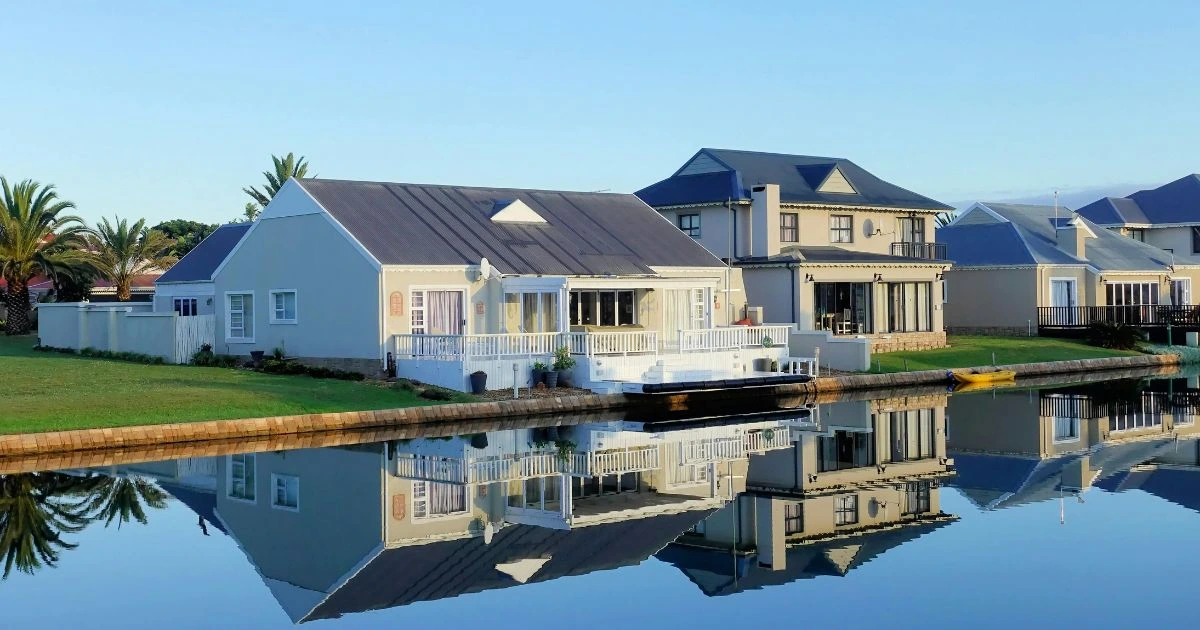
I spent last Tuesday watching a sunset in Miami, wondering how much of the sand beneath my feet was actually owned by people who live there. The truth is usually depressing. Most of the skyline is a playground for institutional capital, a series of glass towers held by entities with names that sound like generic medications. But something shifted recently. I found myself looking at a digital interface on my phone that claimed I could own a sliver of a luxury development for less than the price of a mediocre airport sandwich. It felt wrong, or at least too easy, until I started digging into the mechanics of how we are finally breaking down the walls of the gated community known as high finance.
The barrier to entry for property has always been its greatest flaw. To play the game, you needed a massive down payment, a flawless credit score, and the patience to deal with a mountain of paperwork that seems designed to kill trees and souls simultaneously. If you didn’t have $50,000 sitting in a high-yield savings account, you were a spectator. But the landscape of 2026 looks different. We are seeing the rise of a model where a single resort can be chopped into a million digital pieces. This isn’t just a clever way to crowdfund; it is the practical application of tokenized real estate, a concept that sounded like science fiction three years ago but now feels like the only logical path forward for a generation priced out of the traditional market.
There is a specific kind of magic in the idea of fractional ownership that bypasses the bank. When you buy into a project today, you aren’t just sending money into a void. You are holding a digital representation of a physical asset. A beach resort in a prime location has inherent value that doesn’t evaporate because a billionaire had a bad day on Wall Street. It is tangible. It has plumbing. It has a view. And now, it has a entry price of ten dollars.
Navigating the shift toward RWA investing
The industry types love their acronyms, and right now, the loudest one is RWA. It stands for real world assets, but that feels like a cold way to describe a building where people will actually spend their honeymoons. This shift toward RWA investing is essentially an admission that the purely digital experiments of the last decade needed an anchor. We realized that while code is great, you can’t live in it. By tethering digital tokens to physical property, the market has found a way to bridge the gap between the speed of the internet and the stability of brick and mortar.
I remember talking to a developer in Austin who was frustrated by the traditional lending cycle. He had a vision for a sustainable housing complex but was being squeezed by interest rates and rigid bank mandates. He turned to the crowd. Not for charity, but for partnership. By offering smaller stakes to a wider net of people, he funded his project faster than any bank would have allowed. The people who invested weren’t just looking at a balance sheet; they were looking at a project they wanted to see exist in their own neighborhood.
This isn’t about getting rich overnight. That is a tired narrative that usually ends in a scam. This is about the slow, methodical accumulation of value. When you remove the middlemen—the brokers, the heavy legal fees, the predatory lending structures—the math starts to favor the individual. You are essentially cutting out the person who used to charge you a fee just for the privilege of letting you invest your own money.
Finding passive cash flow in a digital economy
The dream has always been to make money while you sleep. Most people try to do this through stocks, which are volatile, or REITs, which often feel disconnected from the actual properties they manage. The beauty of the current model is the directness of it. When a guest pays for a room at that beach resort, a portion of that revenue can be distributed directly to the token holders. This creates a stream of passive cash flow that feels more honest than a dividend check from a massive conglomerate.
I’ve watched friends obsess over their portfolios, jumping every time a headline hits the news. There is a different kind of psychology at play when your investment is tied to a physical structure. You understand why it’s valuable. You can see the tourism trends. You can visit the location if you really want to. There is a groundedness to it that the stock market lacks. In a world that feels increasingly simulated, there is a profound comfort in knowing your ten dollars is helping maintain a roof somewhere.
Of course, there are risks. There are always risks. A hurricane doesn’t care about your digital tokens. A shift in local zoning laws can change a project’s trajectory in an afternoon. But the transparency offered by the ledger system means you can see exactly what is happening with the asset in real time. You aren’t waiting for a quarterly report that has been polished by a PR firm. You are seeing the data as it exists.
The move toward this decentralized model is also a move toward a more democratic form of urban development. For the first time, the people who use a city can actually own the city. We are moving away from the era of the absentee landlord and toward a future where the community has a financial stake in the infrastructure around them. It changes how you look at a new development. Instead of seeing a symbol of gentrification, you might see a project that you and three thousand other regular people helped bring to life.
I don’t think the old way of doing things will disappear entirely. The big banks will always want their cut. But the door has been kicked open. The idea that you need to be a millionaire to participate in the most reliable wealth-building asset in history is a lie that is finally being exposed. Whether you are putting in ten dollars or ten thousand, the mechanism is the same.
The beach resort I saw on my phone isn’t finished yet. It’s still a skeleton of concrete and rebar against a blue horizon. But by the time the first guest checks in, it will be owned by a global network of individuals who decided they were tired of watching from the sidelines. It is a quiet revolution, one that doesn’t require shouting in the streets, just a fundamental shift in how we perceive ownership. We are no longer just consumers of the places we love; we are the architects of their capital.
Where this leads is still a bit blurry. We might see a world where your entire net worth is distributed across hundreds of small stakes in different cities, a hyper-diversified portfolio that moves with the rhythm of the global economy. Or we might just see a slightly fairer version of what we have now. Either way, the friction is melting away. The sand is still there, the sun is still setting, but the fence around the beach is starting to look a lot more like a gate with a wide-open welcome sign.
FAQ
It is a digital asset that represents a specific share or fractional interest in a physical property, recorded on a distributed ledger to ensure ownership is clear and verifiable.
Improved technology and clearer regulations have finally made it simple and safe enough for the average person to participate without a tech degree.
The property management company is responsible for maintaining insurance, and the cost of that insurance is factored into the property’s expenses.
Some self-directed IRAs allow for this type of investment, but you would need to check with your specific provider.
Usually, a legal entity like an LLC owns the building, and the tokens represent shares in that specific LLC.
Some high-end projects are restricted to wealthy investors, but many new platforms are designed specifically for the general public.
Just like traditional real estate, the value of your tokens can fluctuate based on the market and the condition of the property.
Reputable platforms provide third-party appraisals and detailed financial documents before any tokens are sold.
It is a more advanced version of crowdfunding that provides actual ownership titles and easier ways to sell your stake later.
Some projects offer “owner perks” like discounted stays, but generally, owning a token doesn’t grant you the right to occupy the property.
Most platforms charge a small management or transaction fee, but these are usually much lower than traditional real estate closing costs.
Yes, income from real estate tokens is generally treated as taxable income, similar to rental income or capital gains.
Platforms use technology to split the total value of a property into thousands of small tokens, allowing people to purchase as many or as few as they want without needing a massive down payment.
Many platforms are global, though specific regulations depend on your home country and where the property is located.
The ownership record is often stored on a decentralized ledger that exists independently of the platform, though the specific legal structure varies by project.
Typically, a professional property management company is hired to handle maintenance, guests, and repairs, so the token holders don’t have to be landlords.
Construction carries risk, but many platforms use smart contracts to hold funds in escrow until specific building milestones are reached.
Usually yes, as these tokens can be traded on secondary markets, providing much more liquidity than trying to sell a whole physical house.
RWA stands for Real World Assets, referring to the process of bringing physical items like buildings, gold, or art into the digital investment space.
Most projects distribute a share of the rental income or operating profits directly to token holders based on the percentage of the property they own.
Not quite, as REITs usually involve shares in a company that owns many properties, whereas tokenization often lets you pick a specific, individual building to invest in.
