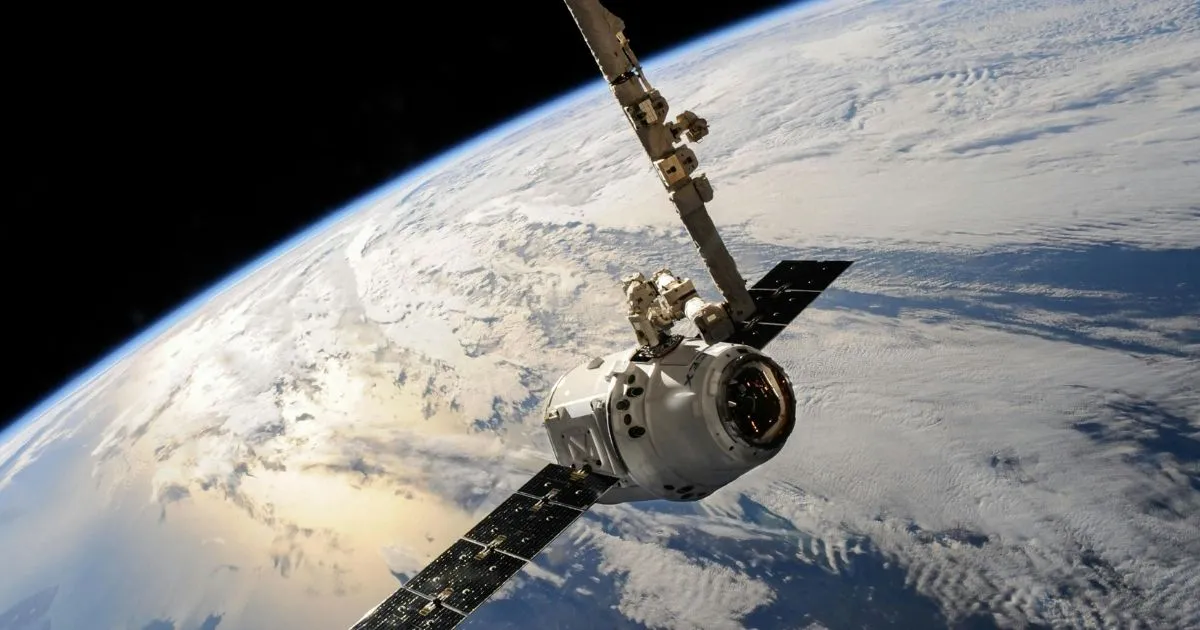
The sky used to be a place for dreaming or navigation, but by the time we hit the mid-2020s, it turned into an invisible gold mine. If you are sitting in a room right now with a satellite dish strapped to your roof, you aren’t just consuming data, you are sitting on a dormant node of a global infrastructure project. We have moved past the era where the internet was a one way pipe. The current landscape of 2026 has transformed bandwidth into a liquid asset, something that can be traded, sold, and harvested with the same cold efficiency as a stock portfolio. It is a strange time to be alive when your unused pings to a Low Earth Orbit constellation can actually pay for your morning espresso.
The shift happened quietly. While everyone was arguing about the aesthetics of satellite dishes in rural neighborhoods, the actual architecture of the web was decentralizing. Large scale enterprises, research firms, and even hedge funds realized that they didn’t just need fast internet, they needed diverse, geolocated entry points. They needed to know what the web looked like from a farm in Nebraska, a research station in the Andes, or a suburban home in Munich. This created a vacuum, a massive demand for residential IP footprints. This is where Bandwidth Trading evolved from a niche hobby for tech geeks into a legitimate pillar of the modern digital economy.
The Quiet Evolution of Bandwidth Trading in the New Space Age
The mechanics of this are elegantly simple, yet most people still treat their internet connection like a utility rather than an inventory. When you are sleeping, or even when you are just streaming a movie, your connection is rarely at its ceiling. In the 2026 economy, that overhead is a waste. By installing a lightweight client on a gateway device, you effectively lease out that excess capacity to a peer-to-peer network. These networks act as wholesalers, taking your small slice of bandwidth and bundling it with thousands of others to create a massive, decentralized proxy network. It is the ultimate expression of the sharing economy, but without the awkward small talk of a ride-share or the cleaning fees of a short-term rental.
What makes this particularly lucrative right now is the explosion of Satellite internet providers. In the past, satellite connections were the pariahs of the internet world, plagued by latency that made them useless for anything beyond basic email. But the new LEO constellations have flipped the script. We are seeing latencies that rival fiber optics, but with one massive advantage: global ubiquity. A satellite node is a precious commodity because it exists outside the traditional terrestrial grid. For a data scientist training an AI model or a firm conducting global price scraping, a residential satellite IP is a clean, untainted source of truth. They are willing to pay a premium for that authenticity.
I remember talking to a guy last year who had three different satellite dishes set up on a property in the high desert. He wasn’t some doomsday prepper trying to stay connected during the apocalypse. He was a yield farmer, but not the kind you find in decentralized finance. He was farming pings. By strategically placing nodes in areas where satellite density was high but residential density was low, he was capturing a disproportionate share of the market demand. It was a visceral reminder that the physical world still dictates the digital one. Even in 2026, geography is destiny, especially when it comes to the path a packet takes to reach a star.
Maximizing Passive Income 2026 Through Orbital Connectivity
If you are looking at your monthly expenses and not seeing your router as a profit center, you are essentially leaving money on the table. The trick to making this work isn’t just about having a fast connection, it is about reliability and uptime. The market for data doesn’t just want volume, it wants consistency. The highest payouts go to the nodes that stay green for weeks at a time. This is the heart of Passive income 2026, a world where your hardware does the heavy lifting while you focus on higher level strategies. It is about building a system that requires zero maintenance once the initial handshake is established.
We have reached a point where the hardware itself is becoming an investment class. People are no longer just buying a dish to get online, they are buying it as a revenue-generating asset. There is a certain poetic irony in the fact that the very technology that was supposed to bridge the digital divide is now being used by rural residents to subsidize their cost of living. You see it in the data logs: a surge in traffic during the middle of the night when the household is asleep, as some corporation on the other side of the planet uses that connection to verify ad placements or test localized software. It is a silent, frictionless transaction that happens millions of times a day.
Of course, there is a learning curve. You have to understand which platforms are ethical and which are just using your connection for the digital equivalent of a chop shop. But for those who have been paying attention to the finance niche for a while, the signs were all there. The commoditization of everything was always going to reach the signals in the air. The barrier to entry has never been lower, and the potential for scaling is limited only by how many nodes you can manage. It is a far cry from the days of clicking on ads for pennies. This is infrastructure-level earning.
Looking forward, the integration of these bandwidth markets with broader digital asset portfolios is inevitable. We are already seeing the first signs of specialized agencies that manage these nodes for high net worth individuals who want exposure to the bandwidth market without having to configure a router. It is a professionalization of a space that was once the Wild West. If you can control the flow of data, you can control a piece of the future. The sky is no longer the limit, it is the primary source of revenue.
The most fascinating part of this whole transition is how it changes our relationship with the devices in our homes. Your router is no longer just a box with blinking lights; it is a gateway to a global marketplace. Every time those lights flicker, it could be a fraction of a cent landing in your digital wallet. In a world where every other form of income seems to require more and more of our time and emotional labor, there is something deeply satisfying about making a profit from something as ethereal as a radio wave. It makes you wonder what else we are currently wasting, simply because we haven’t found a way to trade it yet. The next few years will likely bring even more creative ways to monetize our digital footprint, but for now, the path to the stars is paved with bandwidth.