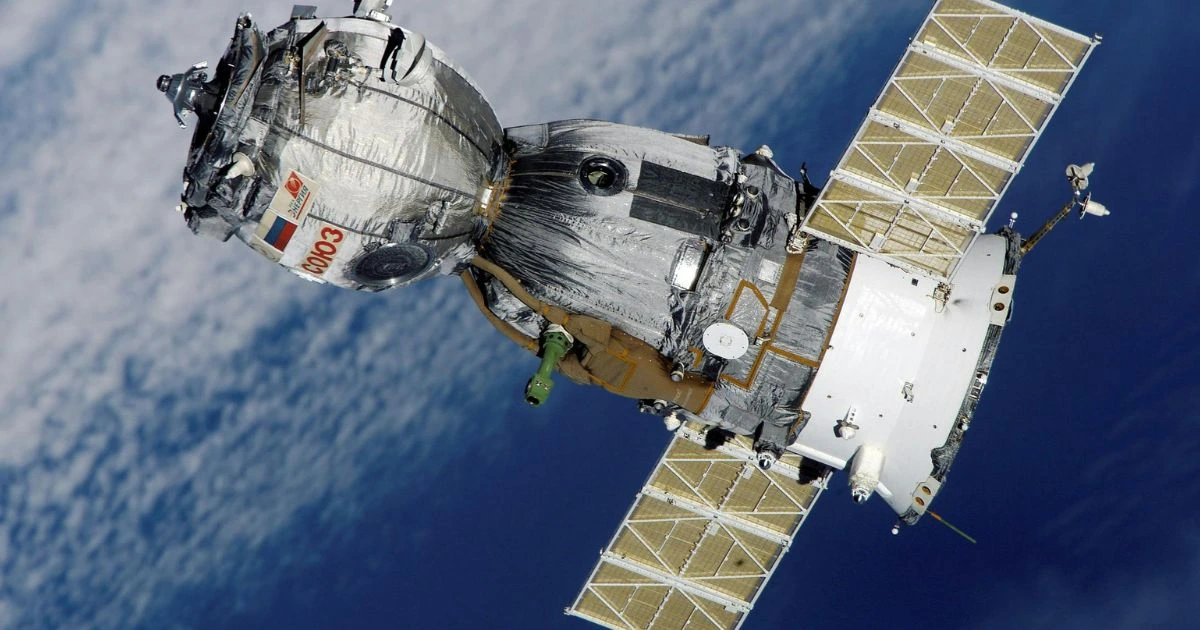
Standing on a rooftop in Austin, Texas, looking up at a twilight sky streaked with the fast-moving glints of low-earth orbit constellations, you realize the horizon isn’t where the world ends anymore. It is where the new land grab begins. For decades, we treated the void above us as a scientific playground or a military high ground, but the conversation has shifted. If you follow the money moving through private equity circles lately, you’ll notice a distinct, almost feverish obsession with what people are calling space real estate. It sounds like science fiction, the kind of thing sold to dreamers in the seventies, yet the ledgers tell a much more grounded story about bandwidth, latency, and the physical limitations of a crowded sky.
The vacuum is no longer empty. It is becoming a crowded neighborhood of invisible plots. We used to value land by its soil quality or its proximity to a harbor. Now, a new class of investors is valuing segments of the sky based on their line-of-sight to major terrestrial data hubs. They aren’t buying stars. They are securing the right to exist in a specific coordinate at a specific altitude. It is a strange, intangible sort of property, but the returns are starting to look more solid than traditional commercial developments in decaying city centers.
The quiet maturation of the orbital economy
Money is rarely sentimental. It doesn’t care about the majesty of the cosmos or the “giant leap for mankind.” It cares about throughput. We have reached a tipping point where the infrastructure on the ground can no longer keep up with our hunger for instant connectivity. This has forced a migration of value upward. The orbital economy is moving past its experimental phase, shed of its reliance on government grants, and is now being driven by the cold, hard necessity of data transmission.
When you look at the sheer volume of hardware being launched, it becomes clear that we are witnessing the industrialization of the thermosphere. It isn’t just about launching a rocket; it’s about what that rocket leaves behind. A slot in orbit is a finite resource. Physics dictates that you can only fit so many active transceivers in a particular shell before the risk of collision or signal interference makes the space unusable. This scarcity is what drives the market. I spoke with a fund manager recently who compared it to the early days of the radio spectrum auctions, only with the added complexity of orbital mechanics and international maritime law.
There is a certain grit to this market that outsiders miss. It is messy. There are overlapping claims, debris risks that can wipe out an investment in a microsecond, and a regulatory environment that feels like the Wild West. Yet, the capital keeps flowing. The shift from “exploration” to “utilization” is complete. We are no longer visiting space; we are using it as a backbone for the global financial system. If a millisecond of latency can be shaved off a high-frequency trade by routing it through a vacuum instead of a fiber optic cable under the Atlantic, that “space” becomes the most valuable real estate on or off the planet.
Navigating the risks of the emerging satellite business
Investing in the satellite business in 2026 requires a stomach for volatility that would make a crypto miner blush. You are essentially betting on the longevity of hardware that you can never repair, floating in a graveyard of 20th-century junk. But the sophistication of the financial instruments being built around these assets is breathtaking. We see “slot-swaps” and “spectrum-leases” being traded with the same fluidity as midtown office space.
The physical reality of the satellite business is that it is becoming a game of logistics and insurance. The winners aren’t necessarily the ones with the most advanced sensors, but the ones who have secured the most advantageous orbital shells. It is about positioning. If you own the right to operate at 550 kilometers, you own a piece of the highway. Everyone else has to drive around you. This realization has sparked a quiet rush to lock down permissions before the window closes.
I often wonder if we are repeating the mistakes of our ancestors, carving up a frontier before we even fully understand its ecology. There is a palpable tension between the “move fast and break things” ethos of the tech world and the “leave no trace” philosophy of traditional astronomers. As an investor, you have to navigate these ethical and practical minefields. A project can be derailed not just by a technical failure, but by a sudden change in international debris mitigation standards. The landscape changes every time a new treaty is signed or a new launch provider lowers the price per kilogram to orbit.
The allure of space real estate lies in its detachment from terrestrial borders. It offers a kind of sovereignty that traditional assets lack. In a world of shifting geopolitical alliances and fluctuating currencies, a data-routing asset five hundred miles up feels remarkably resilient. It is a hedge against the gravity of earthbound politics. Of course, that’s only true until someone figures out how to weaponize the vacuum, a shadow that hangs over every boardroom meeting in this sector.
We are seeing the birth of a new asset class that doesn’t fit into our old boxes. Is it infrastructure? Is it technology? Or is it truly real estate? The answer probably depends on which day of the week you look at the markets. There is a rawness to it all, a sense that we are building the scaffolding for a future we haven’t quite mapped out yet.
Some people look up and see the end of the night sky, a tragedy of the commons played out in glittering lights. Others look up and see a gold mine. The truth is likely somewhere in the middle, hidden in the telemetry data of a thousand small satellites buzzing overhead. The 2026 market isn’t waiting for a consensus. It is moving, as it always does, toward the highest concentration of utility. Whether this ends in a sustainable new frontier or a catastrophic Kessler syndrome mess is a question that keeps the braver investors awake at night.
The sky is getting smaller every day. The slots are filling up. The paperwork is piling high in offices from DC to Beijing. If you aren’t looking up, you’re missing the largest land rush in human history, one where the land doesn’t even exist. We are buying the emptiness, and somehow, that has become the most valuable thing we can own.
FAQ
It refers to the commercial value of specific orbital slots and the rights to operate satellites within those coordinates.
Lunar real estate is a separate, more speculative category often called “Cislunar” investment, focused on long-term resource extraction.
Beyond debris, the atmospheric impact of frequent rocket launches is a growing concern for ESG-focused investors.
Potentially; large constellations are visible to the naked eye, which has sparked significant debate among astronomers.
You can insure the satellite occupying it, but insuring the “right” to the slot itself is a more experimental insurance product.
It’s a specific altitude range where satellites are deployed; some shells are much more crowded and valuable than others.
In high-frequency trading, a few milliseconds’ advantage in data transmission can equal millions of dollars in profit.
Taxation usually applies to the company’s headquarters on Earth, though “space jurisdiction” for tax purposes is a hot topic for future debate.
Ownership is less about physical deeds and more about regulatory licenses and frequency allocations granted by international and national bodies.
AI is used to manage traffic in crowded orbits, preventing collisions and optimizing data routing between satellites.
It doesn’t directly, but it provides a new way to diversify portfolios away from terrestrial assets.
It is emerging; companies often acquire other firms primarily to take over their existing orbital filings and licenses.
Usually, licenses are granted for a set number of years, after which the operator must prove the slot is still being used responsibly.
Austin has become a major hub for aerospace startups and venture capital focusing on the commercialization of LEO (Low Earth Orbit).
The cost of launching has dropped significantly, making small-satellite constellations a viable business model rather than a government experiment.
Orbital debris, often called Kessler Syndrome, where a collision creates a chain reaction of junk that makes an orbit unusable.
Mostly through specialized ETFs, private equity funds, or by purchasing shares in publicly traded aerospace and telecommunications companies.
It’s a term for the specific combination of an orbital position and the radio frequency spectrum required to move data.
Yes, though they are a complex mix of the Outer Space Treaty and individual national regulations like those from the FCC in the US.
Proximity to Earth (for low latency) and its “view” of high-demand data regions on the ground are primary value drivers.
Yes, buying a star is a novelty gift; space real estate involves actual infrastructure, data transmission, and revenue-generating assets.