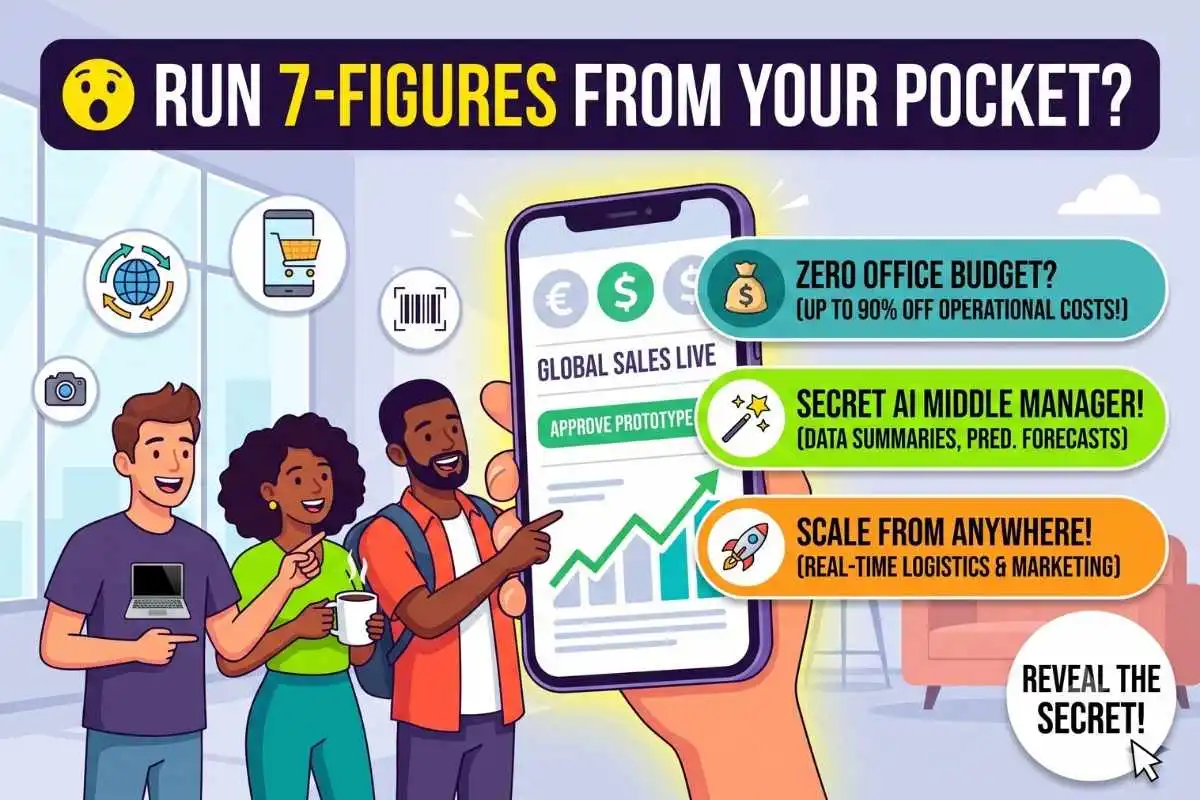
Imagine waking up, grabbing your morning coffee, and checking your smartphone—not for social media notifications, but to review overnight global sales and approve a new product prototype from a supplier across the world. Just five years ago, building a seven-figure retail enterprise required a dedicated office, multiple monitors, and a massive desktop setup. Today, the landscape of global commerce has fundamentally shifted. Welcome to the era of mobile-first e-commerce management, where your entire operational ecosystem fits comfortably inside your front pocket. Whether you are navigating logistics or managing international customer relationships, the modern entrepreneur no longer relies on a physical desk to build wealth. Let us explore how you can scale and maintain a massive online brand without ever opening a laptop.
The Shift to Pocket-Sized Operations
The transition from desktop-bound operations to mobile business management did not happen overnight, but by 2026, the technology has finally matured to match the ambition of agile entrepreneurs. For decades, traditional retail relied heavily on cumbersome software that demanded high computing power and desktop interfaces. However, with the deployment of global cloud infrastructure and advanced mobile processors, smartphones now handle complex data visualization and high-definition media editing seamlessly. According to foundational concepts outlined in the history of E-commerce, the relentless push toward reducing friction in online buying has naturally evolved to reduce friction in online selling as well.
Furthermore, the rise of artificial intelligence has democratized complex business operations, allowing solo founders or lean teams to compete directly with legacy corporations from their smartphones. When you operate a business natively from a mobile device, AI assistants act as your middle management, filtering out data noise and serving up only critical decisions. Instead of spending hours staring at spreadsheet cells on a widescreen monitor, mobile-first managers receive intelligent summaries and predictive forecasts directly through specialized dashboards. This streamlined workflow eliminates administrative bloat and allows founders to focus entirely on growth strategy, brand identity, and long-term customer retention.
Building the Essential Mobile-First Tech Stack
To successfully run a seven-figure brand from a smartphone, you must curate a suite of cloud-based applications designed specifically for mobile efficiency rather than desktop adaptation. The foundation of this architecture begins with a robust mobile content management system and a headless commerce platform that seamlessly adapts to any display size. Your financial operations must be anchored by modern fintech apps that offer automated accounting and real-time cash flow monitoring without requiring desktop downloads. Guidance from organizations like the U.S. Small Business Administration emphasizes keeping overhead low during growth phases, which API-driven mobile tools accomplish effortlessly for modern digital enterprises.
Beyond financial tracking and store maintenance, supply chain management has undergone a radical transformation thanks to mobile-first logistics software that connects directly to warehouse floors. In the modern 2026 landscape, inventory tracking apps utilize barcode scanning via your smartphone camera, push notifications for stock shortages, and automated reordering algorithms. You can communicate directly with factory floor managers in real time using integrated translation chat tools, review high-resolution product inspection videos, and authorize shipping manifests while waiting for a flight. This seamless integration ensures supply chain bottlenecks are addressed immediately, preserving consistent product availability for your global customer base.
Mastering Real-Time Marketing and Customer Experience
In an era where consumer attention spans are measured in seconds, the ability to create, deploy, and adjust marketing campaigns natively from a smartphone provides a massive competitive advantage. Mobile-first brand managers do not need an expensive studio setup to produce high-converting content; modern smartphones possess cinema-grade cameras and intuitive AI-powered video editing suites that rival traditional desktop software. By capturing authentic content and publishing it directly to social commerce channels, founders build a genuine connection with their audience. This immediacy allows brands to jump on trending cultural moments within minutes, capturing market share while larger competitors await corporate approvals.
The Financial Advantage: Traditional vs. Mobile-First Overhead
One of the most compelling reasons entrepreneurs are abandoning traditional operational models in favor of mobile-first e-commerce management is the dramatic reduction in fixed overhead costs. When your primary business infrastructure fits inside your pocket, the need for expensive commercial office leases, enterprise desktop setups, and on-premise IT servers completely evaporates. This lean approach frees up significant capital that can be aggressively reinvested into product innovation, paid customer acquisition, and elevated customer experiences. The financial efficiency of a mobile-first brand fundamentally alters unit economics, allowing lean teams to achieve exceptional profit margins as illustrated in the comparison table below.
| Cost Category | Traditional E-commerce Setup (Monthly) | Mobile-First E-commerce Setup (Monthly) | Key Efficiency Advantage |
| Office & Real Estate | $3,500 – $7,000 | $0 (Remote / Anywhere) | Eliminates commercial lease and utility liabilities entirely |
| Hardware & Equipment | $800 – $1,500 | $150 – $250 | Replaces workstation desktops with a single flagship smartphone |
| Software Infrastructure | $1,200 – $2,500 | $400 – $800 | Utilizes agile, cloud-native mobile applications and scalable APIs |
| IT Support & Maintenance | $1,000 – $2,000 | $0 – $150 | Zero on-premise hardware troubleshooting or server maintenance required |
| Total Estimated Overhead | $6,500 – $13,000 | $550 – $1,200 | Up to a 90% reduction in baseline operational costs |
Leading Remote Teams from the Palm of Your Hand
Scaling an e-commerce brand to seven figures inevitably requires building a team of talented specialists, from media buyers and customer service agents to supply chain managers and graphic designers. Managing a distributed workforce entirely from a smartphone might seem daunting at first, but modern collaboration tools have turned remote leadership into a highly engaging process. By utilizing asynchronous messaging channels, voice-note updates, and mobile project management boards, founders maintain clear communication without drowning in endless video meetings. This communication style respects team autonomy, fostering a culture of accountability and results-focused execution where employees are evaluated entirely by their measurable output.
Frequently Asked Questions
Can you handle complex data spreadsheets and financial reporting on a mobile screen?
Yes, absolutely. In 2026, mobile spreadsheet applications and financial dashboards offer full-featured editing capabilities optimized for touchscreens and voice commands. Modern fintech applications use artificial intelligence to automatically visualize complex datasets into easily digestible charts, graphs, and summary cards right on your smartphone. Instead of manually pinching and zooming across thousands of rows on a tiny screen, you can ask your mobile AI assistant to generate custom reports, forecast quarterly cash flows, or highlight profitability anomalies instantly, making financial management faster and more intuitive than legacy desktop methods.
What happens if your smartphone is lost, stolen, or damaged while traveling?
Because a true mobile-first e-commerce architecture relies entirely on cloud-based infrastructure and decentralized software as a service, your business data is never stored locally on the physical device itself. If your phone is lost or destroyed, you can immediately revoke device access remotely from any browser and restore your entire operational command center onto a replacement smartphone within minutes using encrypted cloud backups. By utilizing robust biometric authentication and enterprise-grade mobile security protocols, your business remains entirely safe from unauthorized access, ensuring zero operational downtime or data loss.
Is a mobile-first approach suitable for businesses with large, physical inventories?
Yes, it is especially advantageous for brands managing physical products and complex logistics networks. Modern warehouse management systems now offer dedicated mobile applications that integrate directly into your e-commerce storefront. This connectivity allows you to monitor stock levels, track international freight shipments via GPS, and authorize purchase orders using your smartphone’s secure digital signature capabilities. By decentralizing inventory management to a mobile device, founders can respond immediately to supply chain disruptions and coordinate with warehouse floor managers in real time, regardless of physical distance or geographical location.
The Future in Your Pocket: Why Mobile-First is the Ultimate Freedom
As we navigate the business landscape of 2026, the distinction between digital life and physical work continues to dissolve, revealing exciting new possibilities for entrepreneurship. The concept of running a seven-figure e-commerce empire from a smartphone is no longer just a triumph of software engineering; it is a profound shift toward lifestyle autonomy and operational resilience. When your business is entirely untethered from a desk, your capacity for exploration and creativity expands exponentially, allowing you to design a life that seamlessly integrates work and play. The ultimate curiosity of this revolution is what untapped potential you will unlock within yourself when the barriers to global commerce are removed. The future of brand building is already here, waiting quietly in your pocket for you to swipe, tap, and lead.