


Lithium Futures Rebound: How to trade the 2026 EV battery market recovery today
The quiet on the trading floor is often louder than the noise. For two years, anyone holding lithium positions felt like they were shouting into a void. The metal that was supposed to be the white gold of our century became a cautionary tale of oversupply and cooling enthusiasm for electric vehicles. But walking through the financial district in Chicago lately, there is a different kind of energy in the air. It is subtle, a slight shift in the conversation among people who actually watch the order books rather than the headlines. The bottom didn’t just fall out; it solidified. We are now standing on a foundation that feels significantly more stable than the speculative frenzy of a few years ago. Lithium futures are finally showing signs of life that aren’t just dead-cat bounces, and for those of us who have been patient, the landscape looks remarkably different than it did in the dark days of 2024.
I remember talking to a colleague about how the supply glut would never end. The argument was that enough mines had opened to flood the world for a decade. Yet, here we are in early 2026, and the narrative is fraying at the edges. Mining is hard. It is expensive, messy, and prone to delays that no spreadsheet can accurately predict. Many of the projects that were supposed to be online by now are stalled or stuck in permitting purgatory. Meanwhile, the demand side hasn’t stopped growing; it just slowed down its rate of acceleration. People still want the cars. Governments still want the grid storage. The disconnect between the current price and the future necessity is becoming a canyon that traders are starting to eye with a mix of hunger and hesitation.
The grit behind the shift in EV battery stocks
When we look at the companies actually putting these minerals to work, the situation feels visceral. The stock prices of the major players in the electric vehicle supply chain have been through a meat grinder. But there is a certain beauty in the wreckage. The companies that survived the downturn are leaner and far more disciplined. They aren’t chasing growth at any cost anymore. Instead, they are focused on chemistry and efficiency. I’ve noticed that the market is starting to reward the innovators again, the ones who didn’t just sit on their hands while prices were low but instead figured out how to make a kilowatt-hour of storage cheaper and more durable.
It is easy to get lost in the macro-level noise of global trade disputes and subsidy shifts. However, the ground-level reality is that the transition is no longer a choice for the automotive industry. It is an existential requirement. Watching the way EV battery stocks are moving lately, it’s clear that the “tourist” investors have left the building. The people remaining are the ones who understand that a recovery isn’t a straight line. It’s a jagged, ugly process of price discovery. There is a sense of realism now. No one is expecting a 500 percent return overnight. They are looking for value in the infrastructure of the future, recognizing that the batteries being built today are the engines of the next thirty years.
There is an inherent risk in believing the worst is over, of course. I’ve seen enough cycles to know that the market loves to punish those who get too comfortable. But there is a tangible difference in the order flow. The panic selling has been replaced by a slow, methodical accumulation. It feels like the smart money is finally tired of being afraid. They are looking at the depletion of current inventories and the long lead times for new production and realizing that the math simply doesn’t add up for prices to stay this suppressed.
Why commodity trading requires a stomach for the long game
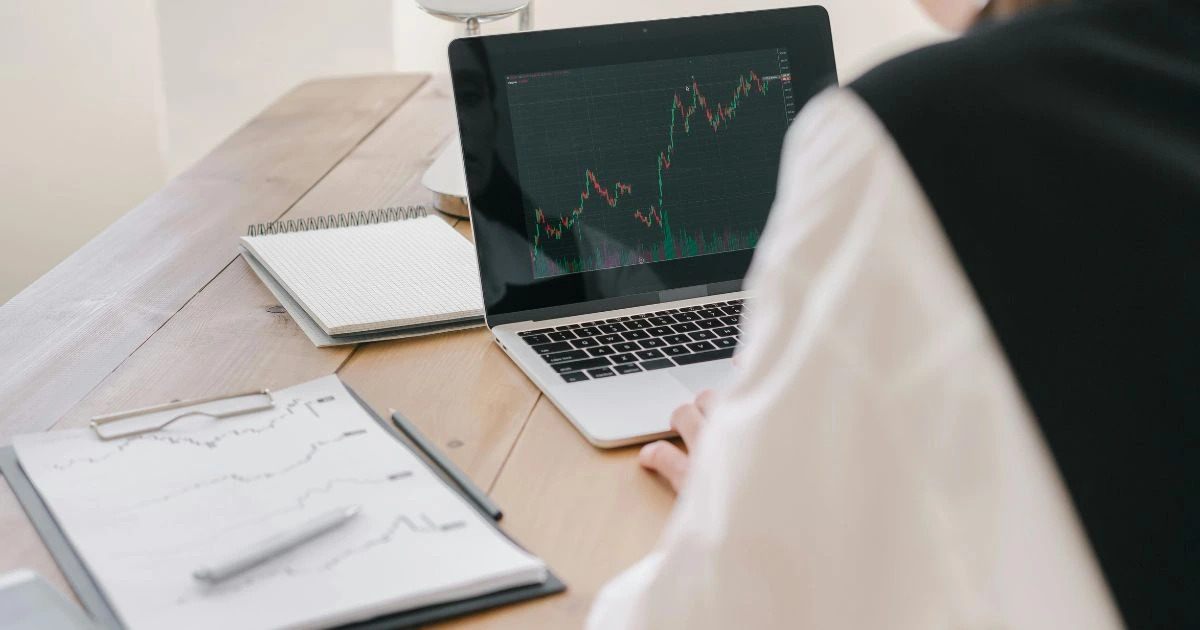
Trading materials like lithium isn’t like trading software or retail. It’s a game of physical reality. You can’t just spin up a new server to meet demand. You have to move mountains of earth. Commodity trading is, at its core, an exercise in humility. It forces you to acknowledge that the world is a physical place with limits and friction. The volatility we’ve seen in lithium futures over the last several months is just a reflection of that friction. Every time a new environmental regulation is passed or a geopolitical tension flares up, the charts react with a violence that can be exhausting to watch.
I’ve often thought about why people find this sector so frustrating. It’s because it refuses to be predictable. Just when you think you’ve mapped out the supply curve, a new extraction technology emerges or a major deposit is found in a place no one was looking. But that uncertainty is where the opportunity lives. If it were easy, the margins would be non-existent. The current rebound isn’t just about a change in price; it’s about a change in sentiment. People are starting to remember that lithium is a finite resource with a massive, unavoidable utility.
The mechanics of the trade today are less about the hype and more about the delivery. We are seeing a move toward more transparent pricing and more sophisticated hedging. This maturity is a good thing. It means the market is growing up. It’s no longer the Wild West of the early 2020s. There’s a certain weight to the trades being made now. They feel more deliberate. Whether you are looking at the direct contracts or the peripheral plays, the focus has shifted from “if” this happens to “when” and “how much.”
There is a certain irony in how we talk about the green revolution. We use clean, clinical terms to describe what is essentially a massive industrial undertaking. But when you are staring at the screens, watching the fluctuations, it feels very human. It’s about people betting on the future of how we move and how we live. The 2026 recovery isn’t some gift from the gods of finance; it is the logical result of two years of underinvestment meeting a world that cannot stop consuming energy.
I don’t think we’ll ever go back to the peak insanity of the past, and frankly, I hope we don’t. That kind of volatility is toxic for everyone involved. What we have now is something better: a market that is finding its pulse again. It’s a recovery built on scars and lessons learned the hard way. There are still plenty of ways to get it wrong, and the path forward is likely to be messy. But for the first time in a long time, the upside doesn’t feel like a fantasy. It feels like a calculation.
Is it too late to get in? Or are we just at the beginning of a much longer, more sustainable climb? Those are the questions that keep you up at night, staring at the ceiling and wondering if you’ve missed a detail. But that’s the nature of the beast. You make your move based on the best information you have, and then you wait to see if the world agrees with you. Right now, the world seems to be nodding its head, albeit slowly and with a healthy dose of skepticism. And in this business, a little bit of skepticism is usually the sign of a healthy trend.
FAQ
A combination of reduced mining output, depleted inventories, and a steady increase in EV production has finally rebalanced the market.
Many analysts believe the current rebound is based on more realistic demand projections than previous speculative peaks.
High oil prices generally accelerate the transition to electric vehicles, indirectly boosting demand for lithium.
Focus on companies with strong balance sheets, diversified supply chains, and established partnerships with major automakers.
Export bans or trade tariffs can suddenly restrict supply, leading to sharp spikes in global futures prices.
This is a common nickname for lithium because of its high value and silvery-white appearance.
Sodium-ion is cheaper and better for low-range vehicles or stationary storage but lacks the energy density for high-performance EVs.
An overestimation of short-term EV demand led to a massive oversupply of raw lithium, causing prices to crater as inventory sat unused.
Safety is relative in this sector. While the market is recovering, volatility remains high due to geopolitical factors and technological shifts.
Commodity trading involves betting on the price of physical raw materials, which are influenced by global supply chains and extraction costs.
No, but it is the primary component in most current high-density batteries, alongside cobalt, nickel, and manganese.
China remains a dominant force in both processing and consumption, making its domestic economic policies a key driver of lithium futures.
Lower interest rates generally make it cheaper for consumers to finance electric vehicles and for companies to fund massive infrastructure projects.
Solid-state technology is promising but still faces significant scaling challenges; lithium-ion remains the industry standard for the near future.
Yes, though it requires a specialized brokerage account and a high tolerance for risk and margin requirements.
Most modern batteries are designed to last between 10 to 20 years, depending on usage and climate conditions.
Significantly. The battery pack is the most expensive part of the car, and raw material costs are a major factor in that price.
Yes, production is expanding in states like Nevada and North Carolina to secure domestic supply chains.
Battery recycling is growing but currently provides only a small fraction of the total lithium needed for global demand.
The long lead times for opening new mines mean supply cannot quickly adjust to sudden shifts in consumer demand.
Extraction can be water-intensive and disruptive to local ecosystems, leading to increased regulatory scrutiny and higher costs.

