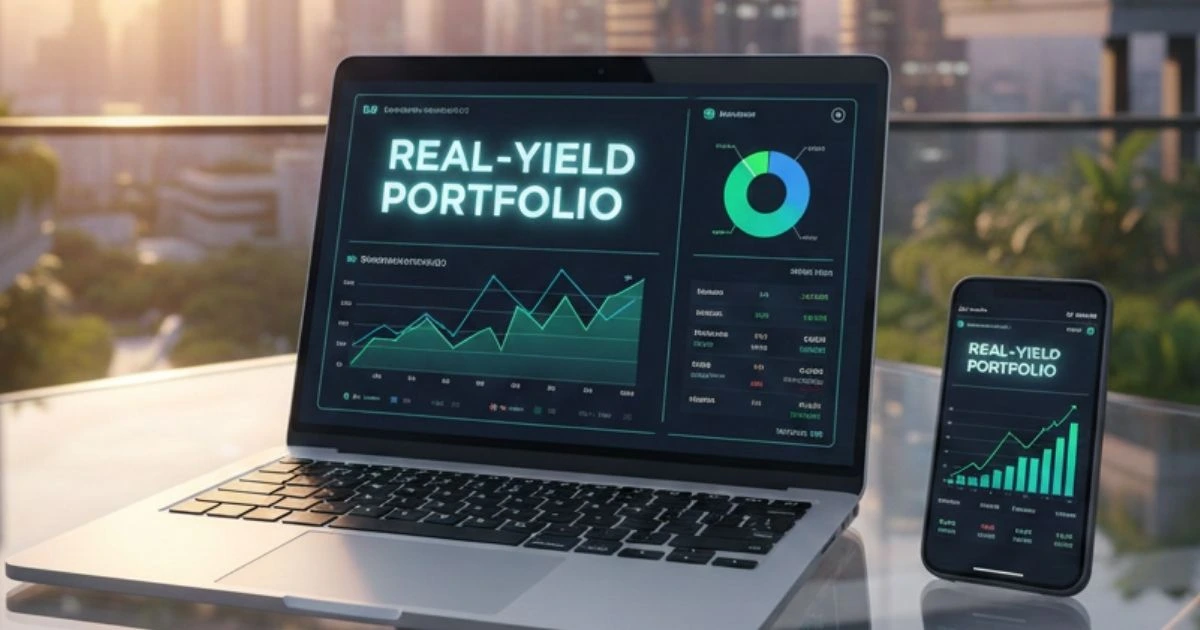
The morning coffee was still steaming when I looked at the dashboard of a decentralized credit protocol I have been tracking since the late 2024 recovery. It was quiet. No flashing sirens of a sudden liquidations cascade, no frantic Discord pings about a failed stablecoin peg, and most importantly, no triple digit annual percentage yields that look more like a typo than a financial product. We have reached a strange, almost boring era of digital finance where the numbers actually make sense. The frantic energy of the 2021 bull run feels like a fever dream now. Back then, we were all chasing ghost tokens, hoping to dump them on someone else before the inevitable crash. Today, the conversation has shifted entirely. It is about Invest for Cash Flow: How “Real-Yield” DeFi is replacing 2026 speculation, a movement that cares less about the next moonshot and more about the steady, predictable drip of revenue.
There was a time when yield in the decentralized world was basically a printing press. You staked a token to earn more of that same token, which only had value because other people were staking it. It was a closed loop, a digital ouroboros eating its own tail. But as we sit here in 2026, the landscape has matured into something that looks suspiciously like a sophisticated bond market or a high end dividend portfolio. The capital entering the space today is no longer looking for a quick exit. It is looking for a home. We are seeing a fundamental transition where the value of a protocol is measured by its ability to generate fees from actual utility, whether that is through cross border payments, institutional lending, or the management of real world assets.
The Architecture of Sustainable Crypto and Revenue Sharing
Walking through the current market feels different because the underlying plumbing has finally caught up with the promises. In the early days, everything was experimental. Now, the winners are those that have built robust revenue models that do not rely on constant token inflation. I remember talking to a fund manager a few months ago who scoffed at the idea of on chain assets. He changed his tune when he realized he could capture a portion of the trading fees from a decentralized exchange that processes billions in volume without the overhead of a traditional brokerage. This is the heart of sustainable crypto, where the yield you receive is paid out in stablecoins or primary assets like Bitcoin and Ethereum, rather than a volatile native governance token that might lose half its value by dinner time.
The shift toward real yield has forced a lot of projects to look in the mirror. If a protocol cannot explain where the money is coming from, the market simply ignores it now. We have moved into a phase of extreme transparency. You can see the cash flow in real time. You can see the fees being collected from borrowers and the programmatic distribution to liquidity providers. It is a level of auditability that makes traditional quarterly earnings reports look like ancient scrolls. Investors are starting to treat these positions as genuine cash flow assets, weighing them against rental properties or dividend stocks. There is a certain satisfaction in watching a balance grow because people are actually using a service, not just because a marketing team managed to trend on social media for forty eight hours.
The narrative has changed from if this will work to how well it works. The volatility that used to define the space has been dampened by the sheer volume of institutional participation. When you have major insurance companies and pension funds using these rails to move liquidity, the price action becomes secondary to the yield. They are not here for the 10x, they are here for the 4% to 7% that beats the adjusted inflation rate while maintaining a high degree of liquidity. It is a sober, calculated approach to wealth preservation and growth that was sorely missing during the Wild West years.
Integrating Cash Flow Assets into a Modern Diversified Strategy
The real challenge for the modern investor is no longer finding opportunities, but filtering them. We are flooded with choices, and the temptation to revert to speculative behavior is always lurking in the back of the mind. However, the discipline of the 2026 market is built on the scars of the past. I often think about the portfolios that survived the last decade. They weren’t the ones that hit the jackpot on a meme coin. They were the ones that slowly accumulated positions in protocols that provide essential infrastructure. This is where the concept of a “real yield” becomes a filter. It allows you to ignore the noise and focus on the signals of actual economic activity.
When we talk about diversifying, we are no longer just talking about stocks and bonds. We are talking about participation in global, permissionless financial systems that operate 24/7. The beauty of this evolution is that it has democratized access to sophisticated financial instruments. You don’t need to be an accredited investor to earn a piece of the fees from a global lending market anymore. But with that freedom comes the responsibility of understanding the risk. Real yield does not mean no risk. It means the risk is tied to the success of the business model rather than the whims of a speculative bubble. It requires a different kind of due diligence, one that focuses on fee generation, user retention, and the legal framework of the underlying assets.
As I look at the current state of the market, I see a convergence. The line between traditional finance and decentralized finance is blurring to the point of being indistinguishable for the end user. We are seeing a massive influx of tokenized real world assets, from treasury bills to private credit, all feeding into the DeFi ecosystem to provide a stable baseline for yield. This integration is the final piece of the puzzle. It provides the “real” in real yield. It grounds the digital economy in physical reality, creating a balanced ecosystem that can withstand the fluctuations of the broader macro environment. It is no longer a circus of speculation, it is a factory of efficiency.
The era of hoping and praying for a green candle is over for the serious participant. We have entered the era of the builder and the long term holder. The tools available to us now are more powerful than anything we had five years ago, and the opportunities for consistent, repeatable income are everywhere if you know where to look. It is about building a machine that works for you, one that doesn’t require constant monitoring or a high tolerance for heart palpitations. The goal has always been financial sovereignty, and for the first time, the path there is paved with actual revenue rather than empty promises.
The question that remains is how we choose to engage with this new reality. Do we continue to look for the shortcuts, or do we embrace the slow, methodical process of building wealth through cash flow? The market has made its choice. The liquidity is flowing toward the protocols that produce value. The noise is fading, and the signal is clearer than ever. In a world of infinite digital assets, the only thing that truly matters is the ability to generate a return that you can actually spend. We are finally treating code like capital, and the results are starting to speak for themselves.