
The Precious Metal’s Shocking Ascent Signals Deepening Global Unease
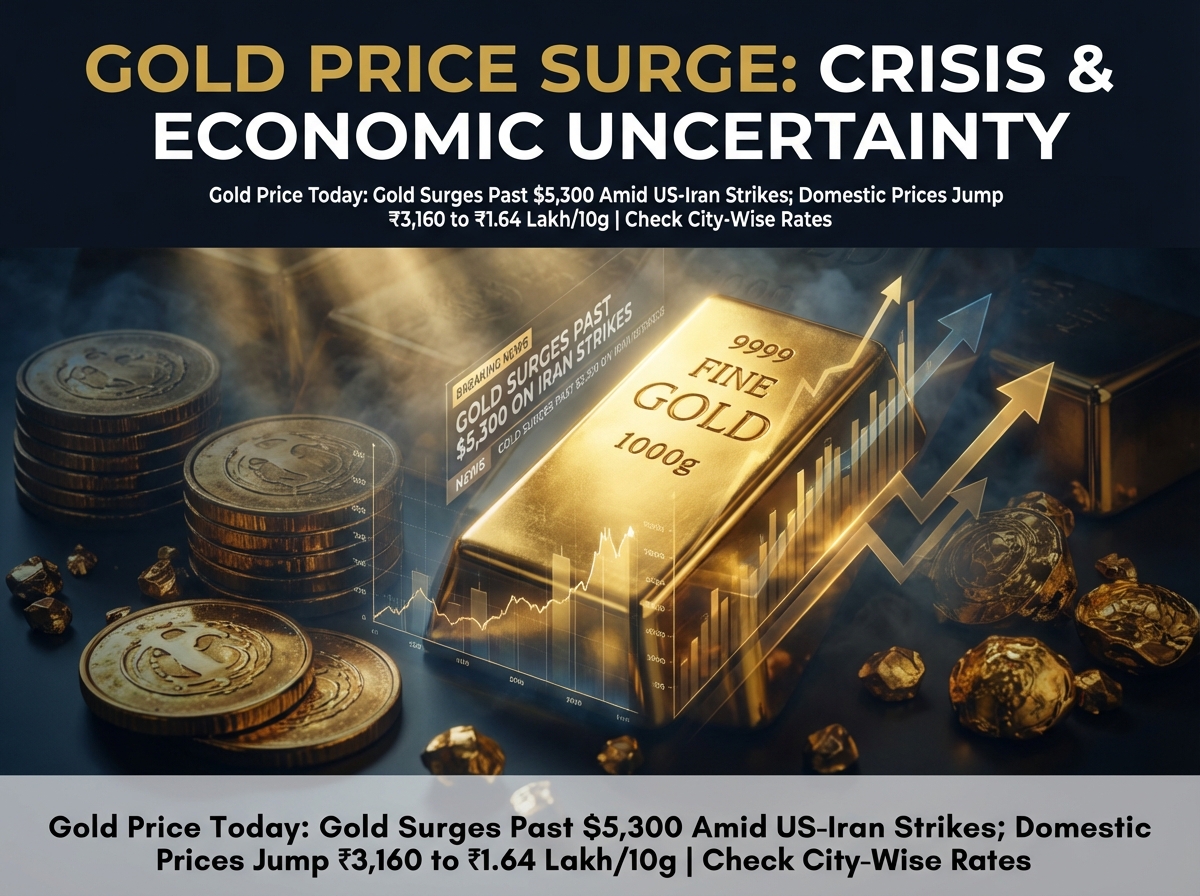
The financial world is witnessing a seismic shift as gold prices don’t just rise—they rocket. On February 28, fueled by a sudden and violent eruption of geopolitical tensions in the Middle East, the precious metal smashed past critical psychological barriers, with international spot prices breaching $5,300 per ounce. For domestic investors in markets like India, this translated into a dizzying leap, pushing prices near ₹1.64 lakh for 10 grams, an immediate one-day appreciation exceeding ₹3,100\. This isn’t a gentle tick upward; this is a full-blown panic buy, a clear indicator that investors are desperately seeking shelter from a storm far larger than mere economic fluctuation.
The trigger was precise and visceral: coordinated US and Israeli strikes targeting Iranian interests. Such actions immediately raise the specter of wider regional conflict, directly threatening the global energy arteries that snake through the Middle East. When the risk premium spikes this suddenly, capital flees assets perceived as risky—equities, crypto, even traditionally robust corporate bonds—and rushes toward the ultimate, time-tested sanctuary: physical gold. What we are seeing is the market pricing in a severe, immediate degradation of global security, forcing even skeptical institutional money back into the yellow metal.
The sheer velocity of this move is what alarms analysts. The source data shows spot gold trading near $5,278 after an aggressive surge, marking one of the largest single-day advances since the January records. This confirms a powerful confluence of factors: a specific geopolitical shock amplifying pre-existing economic anxieties, including persistent inflation fears and widening US trade protectionism. Furthermore, the technical picture had already been set for a major move, with gold breaking above a crucial ₹16,000 threshold just days prior, setting the stage perfectly for this explosive release of upward pressure.
Decoding the $5,300 Barrier: Why This Surge is Different
To understand the magnitude of this breakout, one must look beyond simple supply and demand. The $5,300 mark is not just a nominal price point; it represents a significant shift in market psychology regarding systemic risk. When gold trades this far above its recent averages, it signals that market participants are hedging against scenarios that include major supply chain disruptions, potential naval blockades, or even kinetic military responses that could easily ensnare key shipping lanes. The primary artery in this calculus is the \*\*Strait of Hormuz\*\*, the narrow chokepoint through which a substantial percentage of the world’s seaborne oil supply must pass. Any instability there renders conventional economic models obsolete.
The technical analysis backs up the fear. Analysts noted that gold had already established a new, higher trading range following a breakout on February 24\. This suggests that smart money had been incrementally building positions against lingering global friction, perhaps anticipating an escalation in US trade disputes or simply betting on persistent inflation. The geopolitical strikes acted as the ultimate catalyst, providing the definitive confirmation signal that forces previously hesitant investors to deploy capital en masse. This wasn’t just a few hedge funds taking a flyer; this was a coordinated flight to quality that crushed short sellers.
Compounding the effect was a rotation out of speculative, high-growth, long-duration assets, particularly in the artificial intelligence sector, which had been the darlings of the market earlier in the year. As uncertainty mounts, long-term forecasts become meaningless, and investors prioritize capital preservation over future growth estimates. This flow from speculative tech—the risk-on trade—directly into tangible stores of value like gold and silver provided the necessary fuel for the fire, causing silver, the more volatile sibling, to register even sharper percentage gains, sometimes outperforming gold by several factors during these initial panic phases.
A Look Back: Comparing Today’s Spike to Historical Precedents
Modern financial history is littered with examples of geopolitical events slamming the gold market, but few combine the speed and the existing high-base level as seen here. Consider the 1979 Iranian Revolution or the pivotal 2008 Global Financial Crisis. In those instances, gold steadily climbed as the underlying economic or political rot matured. What is unique about the current surge past $5,300 is its near-instantaneous nature following the news reports. It mirrors the immediate shock seen in the days following the invasion of Kuwait in 1990 or the initial response to the September 11th attacks, where the price discovery mechanism went into overdrive due to the immediate threat assessment.
We must also contrast this with the inflation-driven rallies of the early 1980s. Back then, gold rose largely due to persistently high consumer price indexes and a dismantling of the Bretton Woods system. While inflation is certainly a factor today, underpinning the current move is a direct threat to physical global infrastructure—specifically maritime transit routes vital for energy security. The threat to the \*\*Strait of Hormuz\*\* is a physical risk premium that previous purely monetary inflations did not command to this degree. The market is not just fearing higher prices tomorrow; it is fearing no supply at all next week.
The fact that gold is approaching its January record highs in this sudden fashion suggests a high degree of investor conviction that the current level of tension is not transitory. When gold manages such a feat—maintaining or challenging records set during periods of peak mania—it speaks volumes about the perceived stability of the global fiat system itself. It suggests that even after decades of low inflation, the market retains its primal memory of where true value resides when complex international systems begin to fracture under geopolitical stress.
The Economic Ripples: Impact on Currencies, Commodities, and Debt
The surge in gold has immediate and cascading effects across other asset classes. For governments relying on reserve building, acquiring gold at these elevated prices becomes a strategic and costly endeavor. Emerging market economies, often balancing their currencies against the stability of the US Dollar, face a tougher choice: pay much more for their defensive hedge or accept greater volatility in their national fiat valuations. This dynamic places significant pressure on central banks attempting to manage inflation without weakening their national currencies.
Simultaneously, the higher price of gold often correlates with increased volatility in other hard commodities, notably silver, though not always in direct proportion. The sharp jump in silver reflects its industrial component alongside its monetary role. If major global manufacturing or energy projects are threatened by conflict escalation in the Middle East, the forward-looking prices of copper, oil, and industrial metals will incorporate this new, elevated risk premium, meaning the consumer endures higher costs across the board, irrespective of the direct oil price movement.
Furthermore, the strength of the gold rally acts as a latent critique of sovereign debt markets. Typically, massive safe-haven flows into gold coincide with a decrease in demand for longer-duration treasury bonds, especially if the geopolitical conflict involves the world’s primary reserve currency issuer. If investor confidence wavers in the ability of major powers to secure international trade routes—particularly those bottlenecked through areas like the \*\*Strait of Hormuz\*\*—the perceived risk of even safe government debt rises, potentially pressuring long-term borrowing costs for all nations, regardless of their direct involvement in the conflict.
The Road Ahead: Three Trajectories for the Gold Market
Looking forward, the trajectory of gold prices hinges entirely on de-escalation, or conversely, further escalation, in the Middle East. We can map out three primary scenarios shaping the immediate future of this market now that $5,300 is in play.
The first scenario involves a rapid, diplomatic de-escalation. If the recent strikes are deemed a one-off punitive measure and diplomatic channels quickly reopen, this high premium built on fear will evaporate at speed. Gold would likely see a sharp correction, perhaps testing the immediate support level identified near ₹1.60 lakh domestically. While the underlying inflation anxieties and trade tensions would persist, the immediate flight-to-safety premium would unwind, leading to profit-taking on epic scale. This would represent a market correcting for overestimating the immediate severity of the military encounter.
The second, and arguably most feared, trajectory is protracted regional instability without full-scale war. This outcome means that low-level skirmishes, maritime harassment, and constant threats to energy flow continue for weeks or months. In this environment, gold would consolidate at a significantly elevated range, perhaps bouncing between $5,100 and $5,400\. This scenario keeps the geopolitical risk priced in permanently, reinforces the rotation out of speculative assets, and ensures that investment strategies must operate under the assumption of permanently higher uncertainty concerning energy supply and global logistics. Gold becomes the new operating baseline, not just a temporary hedge.
The third trajectory involves the escalation crossing a perceived red line, making the conflict fundamentally global or severely impacting energy chokepoints like the \*\*Strait of Hormuz\*\* in a lasting way. This would trigger the retest of all-time highs, pushing swiftly toward the January peak of ₹1.84 lakh per 10g, and potentially setting new records above $5,500 internationally. This pathway suggests a market that has lost faith in crisis management, moving into a full-blown pre-war risk pricing structure where capital preservation, rather than yield or growth, becomes the sole mandate for large money managers globally, leading to substantial turbulence everywhere else.
For the disciplined investor watching this volatility, the messaging from the market is clear: uncertainty reigns supreme. The market has shouted its anxiety through the price of bullion. Whether this surge sustains itself depends less on next quarter’s earnings reports and entirely on tomorrow’s diplomatic cables and military posture in the volatile tinderbox of the Middle East.
FAQ
What was the approximate international spot price of gold when it breached critical thresholds, as detailed in the article?
The international spot price of gold reportedly smashed past $5,300 per ounce following the geopolitical surge. This move confirmed a panic buy driven by immediate global unease and risk aversion among investors. This price point signals a significant market psychology shift regarding systemic risk.
How significant was the immediate appreciation rate for domestic investors in markets like India?
For Indian investors, the surge translated into prices nearing ₹1.64 lakh for 10 grams. This represented an immediate one-day appreciation exceeding ₹3,100, indicating rapid price discovery driven by international news.
What specific geopolitical event acted as the primary catalyst for this rapid rise in gold prices?
The trigger was the sudden and violent eruption of geopolitical tensions, specifically coordinated US and Israeli strikes targeting Iranian interests. This action raised the immediate specter of wider regional conflict threatening global energy arteries.
Which critical maritime chokepoint is central to the risk assessment driving gold prices above $5,300?
The **Strait of Hormuz** is the critical chokepoint referenced, as a substantial percentage of the world’s seaborne oil supply must pass through it. Instability here invalidates conventional economic models by threatening physical global infrastructure.
Why are investors fleeing riskier assets like equities and crypto in favor of gold during this specific crisis?
Capital flees assets perceived as risky when the risk premium spikes, rushing toward gold as the ultimate, time-tested sanctuary. Investors prioritize capital preservation over perceived growth estimates when systemic uncertainty mounts.
How does this current spike compare analytically to the inflation-driven rallies of the early 1980s?
The early 1980s rallies were largely driven by persistently high consumer price indexes and monetary policy shifts. This current move is underpinned by a direct physical threat to global infrastructure, specifically maritime energy routes, which commands a higher physical risk premium.
What does it signal when gold trades significantly above its recent averages, as seen near $5,300?
Trading far above recent averages signals that market participants are hedging against high-impact scenarios, such as major supply chain disruptions or potential kinetic military responses. This reflects a deep fear regarding immediate global security degradation.
What was the immediate consequence observed in speculative technology sectors, particularly AI, due to this gold surge?
There was a pronounced rotation out of speculative, high-growth, long-duration assets, such as those in the artificial intelligence sector. When uncertainty rises, investors shift capital from future growth forecasts to tangible stores of value.
According to technical analysis mentioned, what prior threshold had gold broken just before this explosive upward move?
Gold had established a new, higher trading range following a breakout on February 24, suggesting smart money was already building positions. It had also broken above a crucial ₹16,000 threshold domestically days prior, setting the stage for the explosive release of upward pressure.
What is the most significant historical precedent cited that mirrors the *speed* of the current gold price discovery?
The speed mirrors the immediate shocks seen following the invasion of Kuwait in 1990 or the initial response to the September 11th attacks. This indicates an immediate, overdrive response based on acute, immediate threat assessment.
What is the immediate projected support level if a rapid diplomatic de-escalation occurs (Scenario 1)?
If de-escalation happens rapidly, gold would likely see a sharp correction, testing the immediate support level identified near ₹1.60 lakh domestically. This would reflect the unwinding of the immediate flight-to-safety premium built on fear.
In the scenario of protracted regional instability (Scenario 2), what range might gold consolidate within?
In the feared scenario of protracted instability without full-scale war, gold is predicted to consolidate at a significantly elevated range, potentially bouncing between $5,100 and $5,400. This scenario embeds the geopolitical risk into the new operating price baseline.
What condition would need to be met for gold to trigger a retest of its all-time highs and potentially surpass $5,500 (Scenario 3)?
This would occur if the escalation crosses a perceived red line, severely impacting chokepoints like the Strait of Hormuz in a lasting way. This suggests a loss of faith in crisis management and a move into full pre-war risk pricing.
What cascading effect does the higher gold price have on Emerging Market economies holding foreign reserves?
Emerging market economies face a difficult choice: they must pay much more to acquire gold for their defensive hedges or accept greater volatility in their national fiat valuations. This decision pressures central banks attempting to manage inflation without weakening their national currencies.
How is silver’s performance often correlated with gold during these initial panic phases?
Silver, due to its industrial component alongside its monetary role, often registers even sharper percentage gains than gold during initial panic phases. Its volatility means it can outperform gold by several factors when capital flows rapidly into precious metals.
What risk does the gold surge suggest regarding long-duration sovereign debt markets?
Massive safe-haven flows into gold often coincide with wavering confidence in government debt, especially if the conflict involves major reserve currency issuers. This can pressure long-term borrowing costs for nations globally.
Besides geopolitical tension, what pre-existing economic anxieties were already amplifying the factors pushing gold higher?
Pre-existing factors included persistent inflation fears and widening US trade protectionism. The geopolitical shock acted as a catalyst that amplified these existing economic anxieties.
What does the market’s conviction suggest when gold challenges previous record highs in such a sudden manner?
It suggests a high degree of investor conviction that the current level of tension is not transitory, implying deep-seated concern about global fiat system stability. This indicates a return to primal valuation when major international systems fracture.
What specific impact does a threat to maritime shipping lanes have on other hard commodities beyond gold and silver?
If energy projects or manufacturing are threatened, the forward-looking prices of copper and oil will incorporate this new, elevated risk premium. This results in higher consumer costs across the board, irrespective of the immediate change in the direct oil price.
What is the primary message the market is sending to disciplined investors through this bullion price surge?
The primary message is that uncertainty reigns supreme and the market has loudly shouted its anxiety through the price of bullion. The future trend depends entirely on diplomatic cables and military posture, rather than standard economic reports.
Why did the market move decisively away from assets associated with the ‘risk-on trade’ during this event?
As uncertainty mounts, long-term forecasts become meaningless, causing investors to sideline assets whose value depends heavily on stable, predictable future growth. This contrasts sharply with gold’s role in immediate capital preservation.
What does it mean when gold is pricing in a severe, immediate degradation of global security?
It means that institutional capital, even previously skeptical money, perceives the immediate threat to stability—potentially involving energy supply disruption or major conflict—as severe enough to demand immediate portfolio protection. This reflects a high perceived downside risk across traditional investment classes.
