


The Unconfirmed Takeover Sending Shockwaves Through QSR Stocks
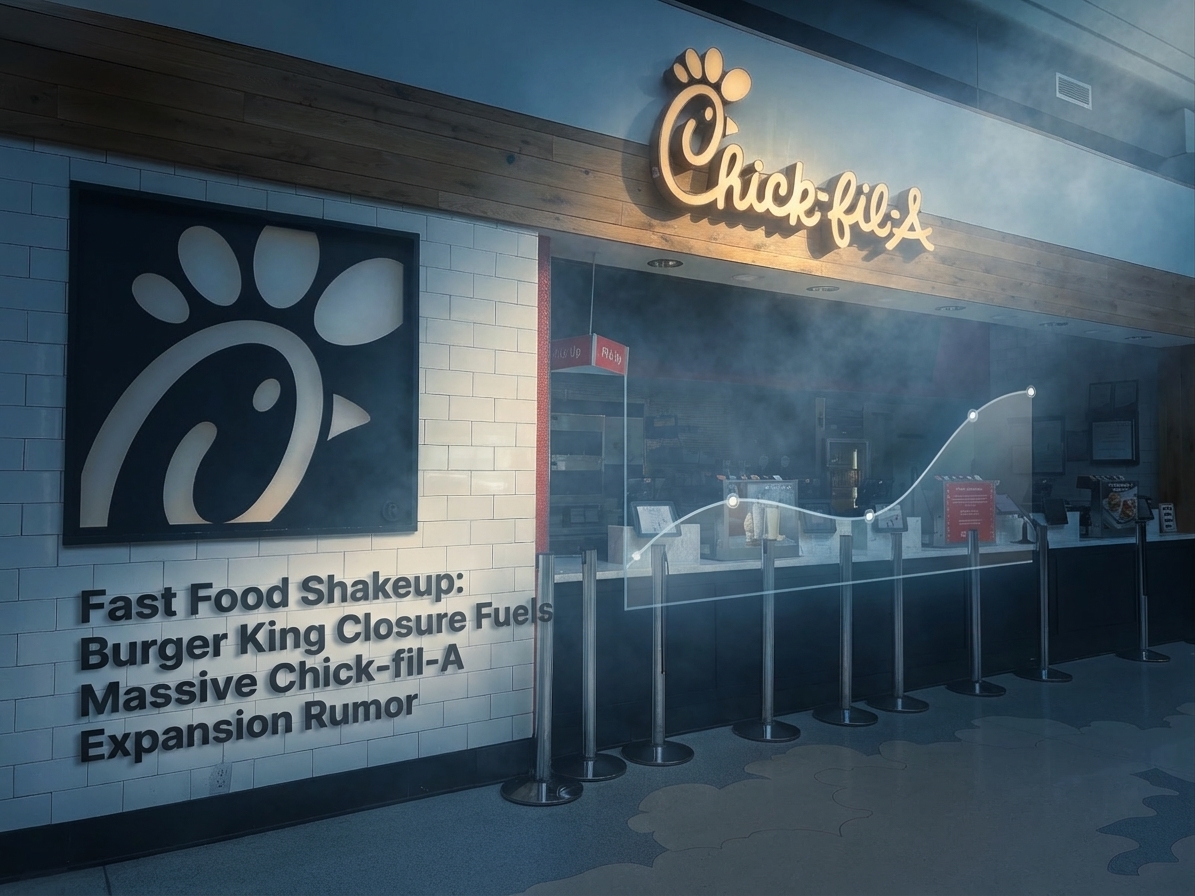
The fast-food landscape is witnessing a seismic shift, not from a corporate merger or a new menu item, but from a surprisingly localized rumor suggesting a routine Burger King closure is actually a stealth takeover by its arch-rival, Chick-fil-A. In Springfield, Illinois, a local Burger King manager has loudly proclaimed that their location at 3200 Northfield Drive will permanently shutter on March 22, only to be immediately reborn as a Chick-fil-A. While Chick-fil-A officially maintains radio silence, refusing to confirm the speculative conversion, the sheer audacity of the rumor, coupled with the documented sales dominance of the poultry purveyor, has put the entire Quick Service Restaurant QSR sector on high alert. This isn’t just about one building; it illuminates the brutal Darwinian economics currently forcing weaker chains toward extinction while industry titans like Chick-fil-A continue an aggressive march toward market saturation.
The immediate impact of this localized gossip is disproportionate to the single location involved, precisely because it perfectly encapsulates the current distribution of power. We have a reported franchise owner, Carrols LLC, pulling the plug on a Burger King operation—a brand struggling nationally—while an employee claims the spoils go directly to the most efficient operator in the industry. The manager’s blunt statement that the entire team would simply transfer to another Burger King confirms that operational disruption is minimal for the outgoing staff, but the symbolic damage to the Burger King brand is significant. It paints a picture of retreat rather than resilience. Even though Chick-fil-A spokesperson Ebony Newman responsibly directed inquiries to their press room, offering no confirmation, the fact that the rumor sprang from an internal source lends it a credibility that mere speculation usually lacks. This entire situation, right down to the alleged closing date, feels engineered to grab headlines during a slow news week involving major corporate filings, diverting Wall Street’s attention to Main Street execution.
Examining the Great Contraction: Where Chains Go to Die
To truly appreciate the gravity of this rumored swap, one must look beyond Springfield and examine the broader industry environment. We are currently living through a highly polarized time in the dining sector. On one end, you have companies like Chick-fil-A, which recorded astonishing systemwide sales reaching $22.7 billion in 2024, up dramatically from $14.1 billion just a few years prior across their 2,730 locations. Then, you have the casualty list. Red Lobster and TGI Fridays have both recently filed for Chapter 11 bankruptcy protection. These failures are not isolated incidents; they are symptoms of unsustainable legacy models, ballooning debt, poor labor practices, and an inability to adapt to digital ordering and shifting consumer preferences. The closure of a single Burger King, especially one owned by a large franchisee like Carrols LLC, often foreshadows broader portfolio adjustments dictated by corporate efficiency mandates, and this rumored conversion suggests one operator is abandoning a failing model for a winning one.
This dramatic divergence highlights the unforgiving nature of modern commerce. While established competitors are jettisoning thousands of locations and restructuring liabilities, Chick-fil-A boasts an expansion strategy that appears almost immune to macroeconomic headwinds. Their growth rate is exponential, fueled by high unit volumes and meticulous operational control. When a prime piece of commercial real estate, like the 1.25-acre spot on Dirksen Parkway, becomes available, it is an instant prize. In a normal market, Burger King might have fought to keep that location running, or they might have sold the property to an unrelated third party. Instead, the narrative suggests a clean hand-off to the market’s dominant force. If true, it implies that even established, recognizable brands are seeing their footprint actively consumed by superior competitors, much like how unexpected \*\*heavy snow\*\* can quickly envelop and hide a landscape.
The Metrics of Dominance: Why Chick-fil-A Keeps Winning
The fundamental question plaguing analysts observing this situation is what proprietary advantage allows Chick-fil-A to absorb market share while others falter. The primary difference centers on operational excellence and unparalleled brand loyalty. Chick-fil-A famously closes on Sundays, a move that baffles traditional retail analysts but reinforces employee work-life balance, drastically reducing turnover relative to competitors who operate seven days a week. Lower turnover translates directly into better customer service, faster order fulfillment, and ultimately, higher sales per square foot—a critical metric for evaluating restaurant profitability.
Furthermore, their investment in technology and drive-thru efficiency is legendary. The logistics involved in handling their peak volume—often far exceeding that of their rivals—represent years of refinement in workflow management. This location in Springfield already has one Chick-fil-A operating since 2016\. Adding a second, potentially taking over an existing structure rather than building from scratch, is a massive strategic win. Real estate is the hidden killer in the QSR business. Acquiring an existing 4,100-square-foot restaurant shell and land, even with the costs associated with conversion, is vastly less risky and time-consuming than initiating new ground-up construction. The manager confirmed the land has been listed since October 2025 on commercial websites advertising the site, indicating the market has been aware of its liquidity for some time, waiting for the right buyer to make the move.
Compare this to Burger King’s situation. Carrols LLC is a major operator, meaning their decision to close this particular venue suggests it was underperforming relative to corporate targets, or that the real estate value was deemed higher than the operational value beneath the struggling banner. This is a clear example of asset optimization dictated by pressure from above. When a banner struggles to maintain relevance—lacking the cultural cachet of a Popeyes or the perceived value of a McDonald’s—single-unit performance dips become terminal. The story of this site potentially becoming a Chick-fil-A is the story of capital flowing to assured returns.
The temporary closure noted in early March due to staff illness adds a layer of complexity. While the manager claimed it was solely for health safety, these brief shutdowns often act as dry runs for permanent closures, allowing management to gauge the customer fallout and operational impact of an absence. It provides a soft landing for the final transition, smoothing the path toward the permanent vacancy date of March 22\. It is a coordinated, if unconfirmed, exit strategy, potentially involving incentives for the existing Burger King staff to migrate rather than face unemployment, thereby maintaining local operational continuity for the franchisee.
The Ripple Effect: What This Means for Competitors and Real Estate
If this rumored acquisition by Chick-fil-A materializes, the signal sent to other struggling chains will be chilling. It implies that prime, existing real estate is essentially unavailable to them. Aggressive expansion demands securing high-visibility, high-traffic spots. If a location deemed excellent enough for Burger King five or ten years ago is now being targeted for conversion to Chick-fil-A, it elevates the entry barrier for every mid-tier QSR brand trying to gain a foothold in developing suburban corridors. This dynamic is exacerbated by the fact that the company closes on Sundays. In commercial real estate terms, that reduced operating window should technically lower the property’s valuation based on weekly revenue potential, yet Chick-fil-A seems unconcerned, suggesting their volume on the six operating days more than compensates for the lost Sunday revenue.
The real estate angle is fascinating. The property was last recorded in tax records as sold in 2013 for $1.13 million. Given the tremendous appreciation in commercial real estate over the last decade, particularly for sites zoned for fast food with high traffic counts along Dirksen Parkway, the turnover value for this property will undoubtedly be exponentially higher. The true economic story here is the capital gain realized by the entity selling the site, whether they are Carrols LLC or the underlying property owner, assuming a sale occurs before the hypothetical conversion. This single transaction could be a ten-million-dollar marker illustrating asset appreciation in a market segment dominated by a single, aggressively expanding buyer.
Scenario One: The Confirmed Conversion and Market Confirmation
Assume the manager’s word proves correct and the conversion happens exactly as described. The immediate fallout would be a minor spike in Chick-fil-A stock futures, driven purely by sentiment and momentum trading, as investors interpret confirmed infiltration into a perceived Burger King stronghold. For Burger King, this means another public acknowledgment that they cannot maintain their footprint against direct competition in key areas. Analysts would immediately scour their franchise agreements to see how many other Carrols LLC locations are at risk. This scenario confirms the widening performance gap, demonstrating that even location quality cannot save a struggling brand when face-to-face with superior operational efficiency. The unseasonal \*\*heavy snow\*\* forecasts for the following month would also, perhaps ironically, highlight the importance of reliable, year-round operations, something Chick-fil-A excels at managing.
Scenario Two: Chick-fil-A Issues a Veiled Denial and Plans Emerge Elsewhere
The second likely outcome is that the Springfield manager misinterpreted internal chatter or was speaking prematurely. Chick-fil-A, maintaining its characteristic operational security, might issue a vague statement confirming their interest in the Springfield market but offering no specifics on the Northfield Drive address. Following this, within weeks, they announce a brand new, ground-up facility ten miles away, perhaps signaling their preference for new, purpose-built infrastructure over retrofitting existing structures. This would demonstrate that while they are expanding, they are not desperate enough to take over a potentially problematic existing building, preferring to control the build specification from day one. This scenario shows restraint, suggesting that while market dominance is the goal, brand standards will not be compromised by hasty real estate deals.
Scenario Three: The Landlord Steps In and Diversifies Post-Burger King
A third, more complex possibility involves the landlord of the property at 3200 Northfield Drive—who listed the site in 2025—deciding that neither Burger King nor Chick-fil-A represents the ideal long-term tenant, perhaps due to restrictive operational covenants or Sunday closure policies. In this scenario, the franchisee, Carrols LLC, relinquishes their lease or sells the asset back to the landlord. The landlord then markets the prime corner lot to a different, non-competing sector—perhaps a high-end coffee chain or a specialized quick-service concept that operates seven days a week, maximizing the site’s income potential. This would be the most disappointing outcome for Chick-fil-A enthusiasts, as it removes a viable growth opportunity from the market entirely, forcing the poultry chain to look elsewhere for its rumored expansion.
Regardless of which path Springfield takes, the national QSR narrative remains unchanged. The competitive pressure cooker is boiling over, separating the infrastructure giants from the legacy operators. The lingering question hanging over the 3200 Northfield Drive site is a microcosm of the broader industry anxiety: who is gaining ground, and who is quietly preparing to surrender their valuable real estate to the inevitable market winner.
FAQ
What is the specific location embroiled in the Burger King closure and Chick-fil-A expansion rumor?
The rumored conversion concerns the Burger King located at 3200 Northfield Drive in Springfield, Illinois. The manager allegedly indicated a permanent closure date of March 22 for the site.
What is the alleged significance of this localized Burger King closure beyond a routine shuttering?
The rumor suggests this routine closure is actually a ‘stealth takeover’ where the site will immediately be relaunched as a Chick-fil-A. This scenario highlights the aggressive market saturation strategy of Chick-fil-A consuming competitor assets.
Which franchisee is reportedly pulling the plug on the Springfield Burger King location?
The failing Burger King operation is reported to be owned by Carrols LLC, a large, established franchisee within the Burger King system. This decision signals an optimization strategy often dictated by corporate efficiency mandates.
How has Chick-fil-A officially responded to the unconfirmed takeover rumors?
Chick-fil-A has maintained official radio silence, refusing to confirm or deny the speculative conversion. A spokesperson directed inquiries to their press room, adhering to their characteristic operational security.
What specific financial data in the article demonstrates Chick-fil-A’s market dominance?
Chick-fil-A recorded astonishing systemwide sales reaching $22.7 billion in 2024, up significantly from past figures across their 2,730 locations. This contrasts sharply with legacy chains like Red Lobster and TGI Fridays filing for bankruptcy protection.
What is the concept of ‘Darwinian economics’ as it relates to the current QSR sector?
Darwinian economics in QSR refers to the brutal reality where weaker brands are forced toward extinction due to unsustainable models. Industry titans like Chick-fil-A continue aggressive expansion by absorbing market share from these faltering chains.
What operational metric drives Chick-fil-A’s superior profitability compared to rivals?
Chick-fil-A focuses intensely on operational excellence, especially through their drive-thru efficiency and logistics refinement. Lower employee turnover, resulting from beneficial policies like closing on Sundays, translates directly into better customer service and higher sales per square foot.
Why is acquiring an existing fast-food structure considered a massive strategic win for Chick-fil-A in this scenario?
Acquiring an existing restaurant shell, like the 4,100-square-foot Springfield site, is vastly less risky and time-consuming than initiating new ground-up construction. This speeds up expansion and minimizes the risk associated with securing prime commercial real estate like the Dirksen Parkway spot.
How did the manager suggest the existing Burger King staff would be handled during the transition?
The manager indicated that the entire Burger King team would simply transfer to another Burger King location. This suggests a strategy to minimize operational disruption for the franchisee while executing the brand change.
What are the chief reasons cited for the recent failures of legacy chains like TGI Fridays?
The failures are attributed to unsustainable legacy models, ballooning debt, poor labor practices, and an inability to adapt quickly to crucial changes like digital ordering. These symptoms illustrate a lack of resilience against modern market demands.
What unusual operational policy of Chick-fil-A paradoxically contributes to stronger brand loyalty and unit volume?
Chick-fil-A famously closes all locations on Sundays, baffling some analysts. This reinforces employee work-life balance, drastically reducing turnover which, in turn, improves customer service and operational consistency.
What does the rumored conversion imply about the real estate valuation of Chick-fil-A properties despite their Sunday closures?
It implies that their volume on the six operating days more than compensates for any lost potential Sunday revenue. This increased efficiency means the reduced operating window does not significantly lower the property’s overall commercial valuation.
What key piece of information suggests the Springfield property has been readily available for market absorption?
The manager confirmed the land had been listed on commercial websites advertising the site since October 2025. This indicates the market has been aware of the site’s liquidity, awaiting the right expanding buyer.
What is the implication of Scenario Two if Chick-fil-A opts for a ground-up facility instead of converting the Burger King?
Scenario Two suggests that Chick-fil-A prioritizes new, purpose-built infrastructure over retrofitting existing structures. This would signal that brand standards will not be compromised by hasty real estate deals, showing market restraint.
In Scenario One, what immediate reaction would analysts likely have concerning Burger King’s stock and franchise agreements?
Analysts would likely scrutinize Burger King stock based on sentiment and momentum trading, interpreting the move as a public defeat. They would immediately investigate how many other Carrols LLC locations are vulnerable to similar competition.
What is Scenario Three involving the property at 3200 Northfield Drive?
Scenario Three suggests the landlord rejects both QSR brands, potentially due to restrictive covenants like Sunday closures. The landlord might then market the prime corner lot to a different, non-competing sector for maximized income potential.
How does this rumor elevate the entry barrier for mid-tier QSR brands trying to expand?
If prime, high-visibility real estate is being absorbed by Chick-fil-A, it signals that existing locations are unavailable to competitors trying to gain a foothold in developing suburban corridors. This forces mid-tier brands into riskier, ground-up construction.
What historical transaction data is mentioned regarding the property’s acquisition price?
The property was last recorded in tax records as being sold in 2013 for $1.13 million. Given commercial real estate appreciation, the current turnover value is expected to be exponentially higher.
What event involving staff illness in early March might have acted as a prelude to the permanent closure?
A brief shutdown in early March due to staff illness may have served as a ‘dry run’ for permanent closure. This allows management to gauge customer fallout and operational impact before the final transition.
What is the primary internal advantage Chick-fil-A has over struggling competitors in terms of workforce stability?
Their primary advantage is drastically reduced staff turnover compared to competitors operating seven days a week. This stability ensures better consistency in training, customer service, and order fulfillment.
Why is the Springfield location considered ‘prime’ in the context of commercial real estate?
The site is considered prime because it is a 1.25-acre spot on Dirksen Parkway, zoning for fast food with high traffic counts. Such locations are instantly coveted during aggressive retailer expansion phases.
What would be the primary indicator that Carrols LLC chose asset optimization over operational value for this specific Burger King?
The decision to close a location, especially one owned by a large operator, suggests it was underperforming relative to corporate targets. Selling the asset or allowing conversion implies the real estate value exceeds the struggling banner’s operational worth.

