
The Silent Financial Weapon: How Crypto Kiosks Became the Scammer’s Favorite Tool
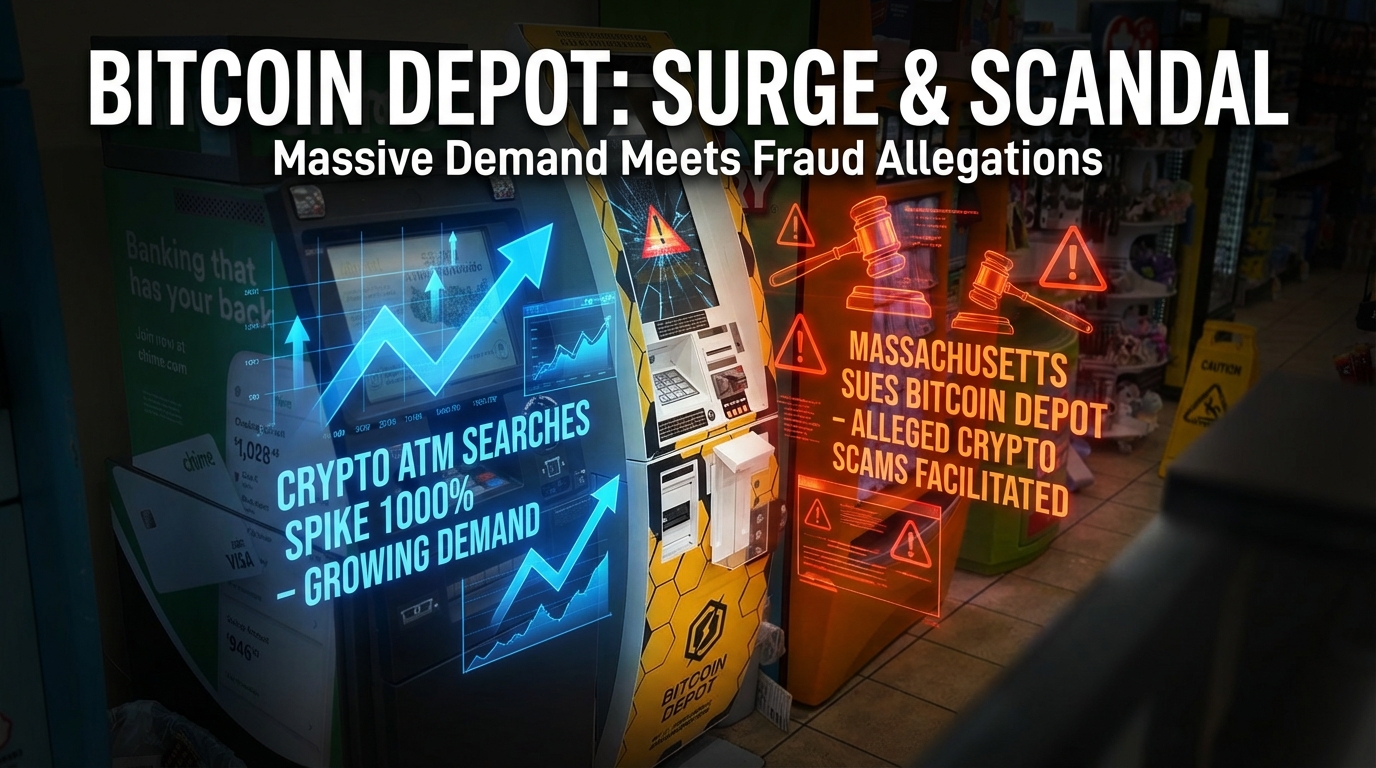
The digital gold rush has a very physical, often overlooked, vulnerability: the cryptocurrency ATM. While millions search for these machines demanding easy access to Bitcoin and other digital assets, a quiet but ferocious legal battle is erupting across the United States, fundamentally challenging the legitimacy and safety of this rapidly expanding industry. We are seeing a seismic shift where perceived convenience is colliding head-on with alleged criminal facilitation. The latest salvo comes from Massachusetts, where the Attorney General’s office has launched a lawsuit against Bitcoin Depot, one of the world’s largest operators of these kiosks. This action isn’t just about a few bad transactions; it chronicles an alleged systematic failure to protect consumers, painting a picture of an industry where a staggering portion of its volume might be directly tied to rampant digital fraud.
The allegations laid out are explosive. Massachusetts claims that Bitcoin Depot not only overcharged customers through misleading sales tactics but, far more damningly, _knowingly facilitated_ crypto scams that robbed state residents of over $10 million. This isn’t an abstract compliance issue; it’s a direct assault on consumer trust, particularly aimed at those most vulnerable, such as the elderly population who may not understand the labyrinthine steps between stuffing cash into a machine and sending irrecoverable digital currency across the globe. When state regulators start using words like “knowingly facilitated,” the conversation moves swiftly beyond mere negligence into the realm of potential complicity, forcing regulators everywhere to scrutinize the foundational model of the crypto ATM business.
Data emerging from the various state investigations makes the scope terrifyingly clear. According to the Massachusetts complaint, over half the money flowing through Bitcoin Depot kiosks in the state between August 2023 and January 2025 was allegedly linked to scams. This isn’t background noise; it is the core business activity, according to prosecutors. The ripple effect is tangible: nationwide, the FBI saw nearly 11,000 fraud complaints involving crypto ATMs in 2024 alone, a near doubling from the prior year, representing approximately $247 million in alleged losses. As we enter 2025, those figures are accelerating, hovering near $333 million lost between January and November. This crisis of faith is happening concurrently with a massive increase in public curiosity, evidenced by the reported 1000% spike in searches for crypto ATMs, creating a dangerous juxtaposition where demand for access meets sophisticated criminal exploitation.
The Anatomy of a Scam: How Convenience Fuels a $300 Million Eviction Notice
The modern scam relies on speed, finality, and distance. Traditional wire transfers can sometimes be clawed back; bank fraud often involves layers of institutional liability. Cryptocurrency, especially when moved via peer-to-peer cash conversion, offers ultimate finality. This is precisely why the crypto ATM has become the preferred conduit for fraudsters. A scammer calls a victim, perhaps posing as the IRS or a panicked relative, and demands immediate payment, often threatening jail time or disaster. The victim, coerced and frantic, rushes to the nearest readily available access point—usually a local gas station or convenience store hosting a crypto ATM.
Bitcoin Depot’s alleged model, as highlighted by investigations from ICIJ and CNN regarding their partnership with major chains like Circle K, reveals an ecosystem optimized for profit, perhaps at the expense of security. These machines often charge exorbitant transaction fees, sometimes extracting between 15% and a shocking 50% of the deposited funds. The convenience store chains themselves allegedly reaped millions in rental fees while management was reportedly aware of the high incidence of fraudulent activity. To understand the crisis, one must understand the economics: for the operator, every transaction, legitimate or not, generates revenue. For the fraudster, the ATM provides instant, untraceable conversion from US dollars into decentralized, borderless currency.
The internal warnings cited in the lawsuits are the most damning evidence of systemic failure. Allegedly, internal due diligence teams flagged that 90% of customers they interacted with were victims back in 2021\. Furthermore, one executive was purportedly warned that kiosks were “facilitating money laundering at an ‘extreme volume.’” Instead of hardening security, the complaint suggests operational changes were made to make compliance measures “less effective.” This contrasts sharply with the company’s public stance of strong compliance. When internal metrics allegedly showed 13% to 16% of funds being scam-related during 2023, yet transactions using aliases like “John Wick” or “The Chosen One” were approved, the regulatory alarm bells stop being whispers and become sirens. This situation forces a critical examination of the incentives within the physical crypto access ecosystem, especially outside major financial hubs, affecting communities everywhere from rural Ohio to metropolitan Massachusetts.
Historical Echoes: Comparing Crypto ATM Scrutiny to the Dot-Com Fiasco
This current regulatory crackdown on decentralized cash access mirrors earlier technological upheavals where innovation outpaced regulation. Think back to the early days of the internet, where companies promised a technological utopia but often skirted basic consumer protection standards, leading to spectacular collapses and massive shareholder losses. While the crypto ATM crisis isn’t about stock market valuation collapse—though regulatory uncertainty certainly hurts underlying crypto prices—it is about the failure to establish foundational trust mechanisms for a new form of value exchange. In the late 1990s, brokerages promised revolutionary online trading, only to later face scrutiny for market manipulation and questionable account practices.
The analogy extends to money transmitters generally. Before comprehensive federal oversight, many small, localized money transfer services operated with minimal transparency, often leading to local lending issues or outright predatory practices. When states realized the sheer volume of funds being moved outside traditional banking rails, they stepped in decisively. We saw this play out in various forms across states like Florida, where complex jurisdictional issues complicated enforcement against money services businesses. The current wave against crypto ATMs feels like a technological iteration of that classic regulatory story: a service thrives in the gray area until the dollar volume of fraud becomes too politically and economically significant to ignore.
Furthermore, the alleged sophistication of the fraud itself—the impersonation, the instruction to act immediately, the use of digital assets—recalls historical scams that utilized new technologies. From chain letters relying on postal speed to Nigerian prince emails exploiting early internet trust, the medium changes, but the psychological manipulation remains the same. The difference now is the speed and the cost. The transition from depositing money into a fraudulent account to having it converted into untraceable Bitcoin can take less than five minutes, a timeframe that makes modern law enforcement intervention nearly impossible. This disparity in speed is what regulators are now targeting by forcing enhanced identity verification requirements on operators, regardless of how much public outcry that causes among everyday users trying to access their investments legitimately.
The Regulatory Gauntlet: Identity Verification and the Future of Cash-to-Crypto Rails
The industry’s response, often prompted by legal duress, is to implement stricter Know Your Customer or KYC protocols. Bitcoin Depot recently announced mandatory identity verification for every transaction. While this is a necessary step to choke off the immediate supply chain for scammers, it fundamentally alters the value proposition of the crypto ATM. Part of the appeal, especially for individuals wary of centralized exchanges or traditional banking due to privacy concerns or status, was the relative anonymity of a quick cash swap. Forcing ID verification on every $100 deposit makes the kiosk functionally indistinguishable from an online exchange sign-up process, eroding its unique market niche.
State attorneys general in Iowa, D.C., and Missouri are not waiting for federal intervention. They are using existing consumer protection statutes—laws designed to prevent deceptive pricing and unfair business practices—to target the operators directly. This patchwork state-by-state enforcement creates massive compliance headaches for national operators. A kiosk operating legally under minimal state guidelines in one area might find itself subject to intense auditing and potential bans in another, creating market uncertainty that stifles mainstream adoption. The key battleground here will be proving the level of intent or criminal negligence. Did the operator simply fail to install effective software, or did they actively degrade their own security measures because it boosted transaction volume, as the Massachusetts suit alleges?
The economic implications reach beyond the kiosk operators. Convenience stores and gas stations that host these machines are now co-defendants in the court of public and regulatory opinion. Their partnership with Bitcoin Depot, which allegedly involved substantial rental fees even while internal reports flagged massive scam activity, exposes them to reputational damage and potential financial liability. If major national chains begin severing ties with all major crypto ATM providers en masse, the industry faces a significant infrastructure collapse. We could see a rapid move toward centralized digital exchanges dominating even small-dollar crypto purchases, effectively pushing physical access to the margins unless operators can prove they have rebuilt trust from the ground up, potentially needing federal certification similar to traditional banks.
Three Scenarios: Where Does the Crypto ATM Market Head Next?
The current environment suggests three distinct paths forward for the crypto ATM industry, each carrying significant implications for retail investors navigating markets from Florida to the Pacific Northwest. The most immediate path is The Regulatory Squeeze. In this scenario, state-level lawsuits escalate, leading to nationwide regulatory settlement frameworks requiring stringent, real-time monitoring of outgoing funds, KYC/AML compliance that matches traditional banking standards, and harsh penalties for failure to adequately patrol suspicious activity. This path leads to higher fees for legitimate users, fewer kiosks overall, and the effective elimination of any remaining anonymity, forcing operators to only serve established, verified customers.
The second scenario is The Industry Self-Correction and Consolidation. Faced with existential legal threats, smaller, less compliant operators will fold quickly. The remaining large players, perhaps just one or two giants, will aggressively acquire assets and publicly overhaul their entire compliance infrastructure, often using AI to flag accounts exhibiting known scammer behaviors like rapid deposits followed by immediate transfers to foreign exchanges. They will market themselves heavily as the “safe, compliant” way to access crypto, perhaps even partnering with regulated financial institutions to process transactions, thereby moving the cash conversion step off-site and into more controlled environments.
The final, less likely but still possible scenario, is The Decentralized Underground. If regulations become so onerous that operating a kiosk becomes unprofitable or legally prohibitive, the market may simply revert to purely peer-to-peer cash transactions, bypassing kiosks entirely. This would push the market deeper into unregulated shadows, mirroring the early unregulated days of cryptocurrency. While this preserves the desire for decentralized access, it eliminates any recourse for everyday consumers who are defrauded, exacerbating the exact problem state regulators are fighting to solve. For the average person looking to buy a small amount of Bitcoin with cash, the convenience they crave today may soon be replaced by either rigorous bureaucracy or hidden, dangerous shortcuts. The coming year will determine whether these machines become legitimate financial infrastructure or are relegated to the history books as technological tools too easily weaponized by bad actors.
FAQ
What specific legal action has triggered the surge in attention surrounding Crypto ATMs in Massachusetts?
The Massachusetts Attorney General’s office has launched a major lawsuit against Bitcoin Depot, one of the world’s largest crypto ATM operators. This action alleges systematic failure to protect consumers and knowingly facilitating large-scale crypto scams.
How significantly did the alleged fraudulent activity impact Bitcoin Depot’s transactions in Massachusetts?
According to the state’s complaint, more than half the money flowing through Bitcoin Depot kiosks in Massachusetts between August 2023 and January 2025 was allegedly linked to scams. This suggests criminal facilitation was a core component of their business volume during that period.
What nationwide trend in crypto ATM fraud did the FBI report for 2024?
The FBI reported nearly 11,000 fraud complaints involving crypto ATMs in 2024, which was nearly double the number reported the previous year. This represented approximately $247 million in alleged losses, showcasing the rapid acceleration of this crime type.
Why have crypto ATMs become the preferred tool for scammers like those impersonating the IRS?
Crypto ATMs offer scammers speed and finality, allowing victims to convert cash into irreversible, decentralized digital currency almost instantly. Unlike traditional bank wires, these transactions are nearly impossible for law enforcement to claw back once confirmed.
What were some of the alleged overcharging and deceptive tactics used by Bitcoin Depot mentioned in the lawsuit?
The lawsuit claims Bitcoin Depot overcharged customers through misleading sales tactics and charged exorbitant transaction fees, allegedly ranging from 15% up to 50% of the deposited funds. This high cost structure benefited the operator significantly through sheer volume.
What evidence suggests that convenience store chains hosting these ATMs were aware of the risks?
The complaints suggest that convenience store chains allegedly reaped millions in rental fees while management was reportedly aware of the high incidence of fraudulent activity occurring on the hosted machines. This awareness potentially implicates them in any subsequent regulatory scrutiny.
What internal warning did Bitcoin Depot allegedly receive regarding the nature of their customers?
Internal due diligence teams allegedly flagged back in 2021 that 90% of the customers they interacted with were victims of scams. Furthermore, one executive was purportedly warned that the kiosks were facilitating money laundering at an ‘extreme volume.’
What specific operational changes did the company allegedly make in response to internal scam warnings?
Instead of enhancing security, the complaint suggests that operational changes were made specifically to make existing compliance measures ‘less effective.’ This action prioritized transaction throughput over fraud prevention.
How does the scrutiny of crypto ATMs compare to earlier technological regulatory crackdowns, like the Dot-Com era?
The current situation mirrors the Dot-Com bubble where rapid innovation outpaced the necessary consumer protection standards, leading to failures in establishing foundational trust mechanisms. In both cases, regulatory bodies stepped in when the volume of financial fallout became too significant.
What analogy is used to describe the crypto ATM situation within the broader history of money transmitters?
The crisis is described as a technological iteration of the classic regulatory story concerning money transmitters that operated in a gray area before federal oversight became comprehensive. This typically happens when the dollar volume of fraud proves too politically significant to ignore.
What is the primary reason regulators are now forcing stricter identity verification (KYC) on ATM operators?
Stricter KYC protocols are being demanded as a necessary step to choke off the immediate supply chain utilized by scammers providing cash access to criminals. This regulation aims to introduce hurdles that slow down the speed of illicit cash conversion.
How might mandatory identity verification impact the core value proposition of crypto ATMs for legitimate users?
For users seeking privacy or anonymity outside of traditional banking, mandatory ID verification makes the kiosk feel functionally identical to signing up for an online exchange, thereby eroding the kiosk’s unique market niche.
Which states, besides Massachusetts, are actively pursuing legal action against crypto ATM operators?
State attorneys general in Iowa, D.C., and Missouri are actively using existing consumer protection statutes to target the operators directly. This patchwork state-by-state enforcement creates significant compliance complexity for national firms.
What will be the key legal battleground in these new state-level enforcement actions?
The crucial factor in these cases will be proving the level of intent or criminal negligence by the operator. Regulators need to determine if operators simply failed to install effective software or actively degraded security for higher volume.
What financial risk are convenience stores and gas stations facing due to their hosting agreements?
Hosting convenience stores face reputational damage and potential financial liability stemming from their partnership agreements, especially if they collected substantial rental fees while allegedly knowing about massive scam activity. This exposure could lead major chains to sever ties.
What is the first of the three predicted scenarios for the future of the Crypto ATM market?
The first scenario is ‘The Regulatory Squeeze,’ where escalating state lawsuits result in nationwide settlement frameworks requiring stringent, real-time monitoring and banking-level KYC/AML compliance. This will lead to higher fees and fewer kiosks overall.
What characterizes the ‘Industry Self-Correction and Consolidation’ scenario?
In this path, smaller, non-compliant operators will exit the market, leaving one or two large surviving entities to aggressively overhaul compliance, likely using AI to flag suspicious activity. These giants will then market themselves as the only ‘safe, compliant’ option.
What does the ‘Decentralized Underground’ scenario entail for the market?
This scenario occurs if regulations become overwhelmingly burdensome, causing the market to revert to purely peer-to-peer cash transactions that bypass kiosks entirely. This path pushes activity deeper into unregulated shadows with zero recourse for consumers.
What specific, unusual customer aliases were cited in the lawsuit as being approved by the operators?
The complaint alleges that transactions using aliases such as ‘John Wick’ or ‘The Chosen One’ were approved, despite internal metrics showing high percentages of scam-related funds flowing through the machines.
What was the alleged percentage of scam-related funds flowing through some kiosks during 2023?
Internal metrics, as cited in the complaint for 2023, allegedly showed that between 13% and 16% of funds processed were related to scams. This figure was noted even as high-volume suspicious accounts were approved.
What external reporting bodies, besides state regulators, have heavily scrutinized the crypto ATM ecosystem?
Investigations by the International Consortium of Investigative Journalists (ICIJ) and CNN have been instrumental in exposing the operational details of Bitcoin Depot’s partnerships with major retailers, corroborating the severity of the compliance issues.
