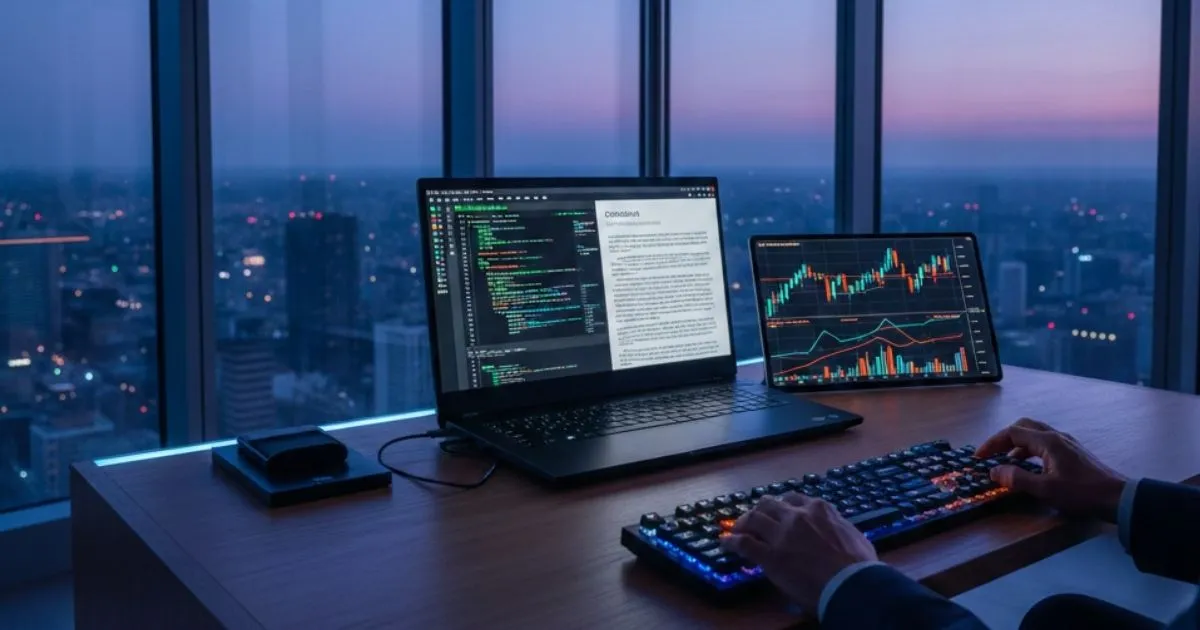
I spent the better part of last Tuesday watching a cursor blink on a screen that seemed far too bright for ten in the morning. It is a familiar rhythm for anyone in the digital publishing space, the slow, agonizing wait for the “big idea” to strike. But the game changed somewhere between the late nights of 2024 and the hyper-accelerated reality of early 2026. We are no longer just writers, we are architects of intelligence. The shift from using generic chatbots to co-writing with custom LLMs has turned the solitary act of creation into a high-stakes partnership.
If you are still copy-pasting prompts into a public web interface, you are essentially trying to win a Formula 1 race with a commuter sedan. It works, sure, but the engine wasn’t built for the track. A custom LLM author is different. It is a model that has lived in your archives, breathed your specific brand of skepticism or optimism, and understands that “liquidity” means something very different to a hedge fund manager than it does to a high-school science teacher. This isn’t just about efficiency, it is about maintaining a soul in a sea of synthetic noise.
The beauty of a digital writing partner is that it doesn’t just suggest the next word. It remembers the argument you made three months ago and gently points out when you are about to contradict yourself. It is a mirror for your own intellect, refined by the specific data you feed it. When I talk to peers in the finance niche, the concern is always the same: how do we scale without becoming a commodity? The answer lies in the architecture of the tools we choose to build.
Mastering the Workflow with Advanced AI Writing Tools
Building this partnership isn’t a weekend project, but it isn’t the insurmountable technical mountain it used to be either. The landscape of co-authoring tech has matured. We have moved past the “magic wand” phase where we expected the AI to do everything, entering a period of disciplined, iterative collaboration. The most successful creators I know are utilizing small, specialized models—what many call agentic workflows—to handle the heavy lifting of research and structure while they provide the final, human “vibe check.”
The process usually starts with context. An LLM is a literalist, it follows the breadcrumbs you leave. If you provide a thin prompt, you get thin prose. But if you feed it style guides, historical performance data, and your specific editorial philosophy, the output begins to harmonize with your own voice. In 2026, the real skill isn’t “prompt engineering” in the old sense, it is “context orchestration.” You are less a writer and more a conductor, ensuring that the research agent, the drafting agent, and the SEO agent are all playing from the same sheet music.
This collaborative approach requires a willingness to let go of the “lone genius” myth. I used to think that every sentence had to be pulled from my own marrow. Now, I realize that my value lies in the strategy, the unique angle, and the final emotional resonance that a machine can mimic but never truly feel. By using specialized AI writing tools to map out complex financial narratives or deconstruct market trends, I free up the mental bandwidth to focus on the nuance that actually converts readers into loyalists. It is a trade-off that has made the work more sustainable and, surprisingly, more creative.
We see this most clearly in the way niche content is being produced today. A general-purpose model might give you a decent overview of real-time market shifts, but a custom-tuned partner understands the specific risk appetite of your audience. It knows which metaphors land and which ones feel like tired clichés. This level of granularity is what separates a high-authority publication from a farm of discarded algorithm bait.
Navigating the Future of Co-Authoring Tech and Digital Assets
There is a certain weight to the digital assets we build now. A content site or an agency service isn’t just a collection of links and text, it is an ecosystem of intellectual property that has been refined through this human-AI loop. When you look at the most valuable listings on platforms where digital businesses change hands, the ones commanding the highest multiples are those with a “moat.” In 2026, that moat is often the proprietary data and the custom LLM authoring system that allows the business to produce top-tier content at a fraction of the traditional cost.
The tech itself—the co-authoring tech—is becoming invisible. We are reaching a point where the “AI” part of the writing is as mundane as the “spellcheck” part was a decade ago. But the competitive advantage has shifted to those who know how to build and maintain these systems. It isn’t enough to just have the tool, you have to have the taste to guide it. I’ve seen brilliantly engineered systems produce garbage because the human at the helm didn’t understand the nuance of the niche. Conversely, I’ve seen simple setups produce gold because the editorial vision was razor-sharp.
As we look toward the latter half of the decade, the fragmentation of the internet will only increase. Readers are retreating into trusted enclaves and high-signal newsletters. To thrive in this environment, your digital presence must feel personal and authoritative. This is why the investment in a custom writing partner is so vital. It allows you to maintain that high-touch feel even as your operations grow. It is about leverage. The same way a lever allows a single person to move a massive stone, a well-tuned LLM allows a single writer to command a massive audience without losing their mind or their voice in the process.
I often wonder if we will eventually reach a point where the AI becomes so good that the “co” in co-writing becomes redundant. But then I remember that Tuesday morning cursor. The machine can fill the page, but it doesn’t feel the pressure of the blank space. It doesn’t know why a specific story about a market crash in the nineties still resonates with a millennial investor today. That connection, that weird, intangible human spark, is the one thing we can’t automate. And perhaps that is the most comforting thought of all as we keep building, refining, and writing alongside our digital ghosts.
The question isn’t whether the technology will replace the writer, but which writers will have the foresight to build the systems that make them indispensable. The landscape is shifting, and the tools are ready. The only thing left is to decide what kind of partner you want by your side when the cursor starts to blink again.