
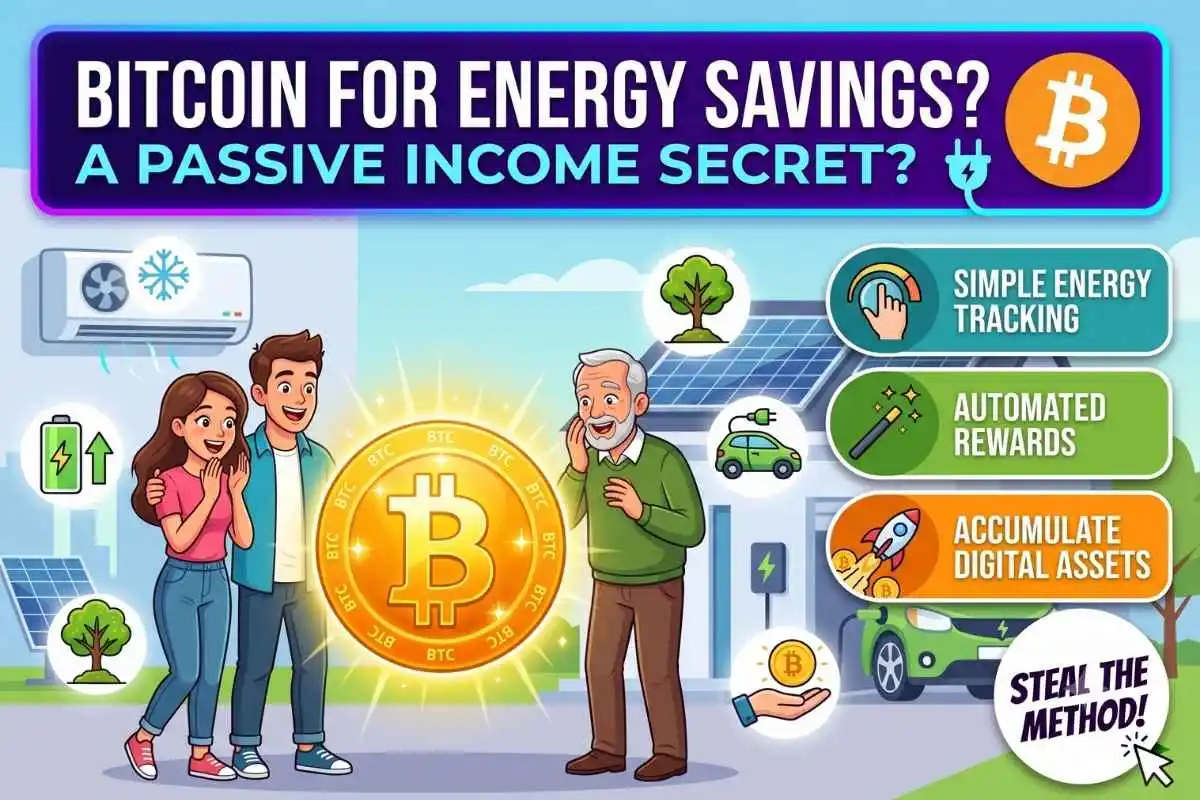
As the summer heat inevitably rises, millions of households brace for the familiar shock of skyrocketing electricity bills, driven largely by the relentless hum of air conditioning units. For decades, the relationship between consumers and their energy consumption has been entirely one-directional: you consume the power, the grid supplies it, and you pay the premium. However, a fascinating convergence of green energy initiatives and decentralized finance is rapidly flipping this script, transforming everyday energy savings into a verifiable digital asset. Welcome to the emerging world of carbon offset micro-trading, a system where your conscious decision to optimize your summer energy footprint can actually generate a passive income stream. By bridging the gap between smart home technology and blockchain networks, individuals are participating in global carbon markets previously reserved for massive corporations, earning Bitcoin simply by adjusting their daily routines.
The Evolution of the Hidden Carbon Market
The concept of trading carbon emissions is not inherently new, having its roots in international climate agreements designed to cap industrial pollution. Historically, these carbon markets operated as an exclusive walled garden where heavy industries, airlines, and multinational corporations purchased massive blocks of carbon credits to offset their environmental impact. According to the U.S. Environmental Protection Agency (EPA), a single standard carbon offset represents the reduction or removal of one metric ton of carbon dioxide equivalent from the atmosphere. Because these transactions required extensive manual auditing, complex verification, and immense capital, retail consumers were completely locked out of the process. If a homeowner managed to significantly reduce their energy consumption, the environmental benefit was real, but the financial reward was limited strictly to a slightly lower utility bill. There was simply no viable mechanism to package, verify, and sell those individual household savings to the corporations that were desperate to buy them.
Bridging the Gap Through Tokenization
The breakthrough that finally allowed everyday individuals to enter this lucrative market was the advent of advanced blockchain technology and the process of tokenizing real-world assets. Tokenization involves taking a physical reality—in this case, the verified reduction of energy usage—and representing it as a secure digital token on a decentralized ledger. You can explore the underlying mechanics of this digital transformation on Wikipedia’s Tokenization page. By fractionally dividing a standard, massive carbon credit into thousands of micro-credits, blockchain networks have effectively democratized the entire market. Now, instead of needing to save a full metric ton of carbon to participate, a household can generate a digital token for saving just a few kilowatt-hours during a high-demand afternoon. These tokens are minted automatically through secure smart contracts, creating a verifiable, immutable record of environmental action that cannot be double-counted or manipulated by centralized energy providers.
Privacy, Peak Hours, and the Grid
One of the most valid concerns surrounding the tracking of household energy data is the preservation of personal privacy, as consumers are rightfully hesitant to share their exact daily routines with third-party trading platforms. This is where advanced cryptographic solutions, specifically Zero-Knowledge (ZK) rollups, have become essential to the micro-trading ecosystem. ZK-rollups allow a smart meter to prove to the blockchain that a specific amount of energy was saved without ever revealing the underlying behavioral data that led to the savings. Your personal habits remain completely encrypted and localized. The summer months present the perfect opportunity to capitalize on these private networks because of the immense strain that cooling systems place on the electrical grid. During peak afternoon hours, utility companies are often forced to fire up highly polluting “peaker” power plants. By voluntarily allowing a smart system to slightly optimize your thermostat during these critical windows, you provide a massive service to the grid, minting premium carbon tokens that directly prevent the most carbon-intensive forms of energy generation from being activated.
Converting Green Actions into Bitcoin
So, how do these fractional, tokenized carbon credits actually translate into a universally recognized asset like Bitcoin? The true beauty of the system lies in its entirely automated, passive nature. Once your smart meter or connected thermostat verifies your energy reduction, the system mints your micro-credits and instantly routes them to decentralized liquidity pools. On the other side of these pools are institutional buyers—massive companies striving to meet their Environmental, Social, and Governance (ESG) targets by purchasing verified offsets. The smart contract automatically executes a trade, selling your carbon tokens to the highest institutional bidder and instantly swapping the proceeds into Bitcoin, which is then deposited directly into your non-custodial digital wallet. There is absolutely no need for you to actively watch order books, negotiate prices, or manually execute complex trades; the entire process happens seamlessly in the background while you go about your summer day.
Comparing the Markets
| Feature | Traditional Carbon Markets | Micro-Trading Networks |
| Target Participant | Multinational Corporations | Retail Consumers |
| Asset Scale | Metric Tons (Bulk) | Kilowatt-hours (Fractional) |
| Verification Process | Manual Corporate Audits | Automated Smart Contracts |
| Payout Currency | Standard Fiat Currency | Bitcoin / Digital Assets |
Frequently Asked Questions
How much Bitcoin can I actually earn by doing this?
The exact amount of Bitcoin you can earn passively depends heavily on three primary factors: the current market price of Bitcoin, the localized demand for carbon offsets in your specific region, and the aggressiveness of your energy-saving settings. While micro-trading is not designed to replace a full-time salary, a heavily optimized household participating consistently throughout the peak summer months can typically accumulate enough fractional Bitcoin to offset a noticeable portion of their utility bill. It is best viewed as a continuous, passive drip of digital assets rather than a massive windfall, rewarding you financially for sustainable habits you might already be practicing.
Do I need to buy expensive smart home equipment to start?
In most cases, you do not need to invest in a massive array of new, expensive hardware to begin participating in carbon micro-trading. Many modern utility companies have already installed smart meters on residential properties, which can often be linked directly to these decentralized platforms with a simple software authorization. Additionally, if you already own a standard Wi-Fi-enabled smart thermostat, you likely have all the hardware necessary to begin securely tracking and tokenizing your summer energy footprint. The primary goal of these networks is absolute accessibility, ensuring that the barrier to entry remains as low as possible for the average consumer.
Are there tax implications for earning Bitcoin this way?
Yes, depending on your jurisdiction, earning Bitcoin through passive micro-trading is generally treated as a form of taxable income by most major financial authorities. Just like mining cryptocurrency or earning interest on a decentralized finance protocol, the fair market value of the Bitcoin at the exact moment it is deposited into your wallet is usually considered taxable. It is highly recommended that participants utilize automated crypto tax software to strictly track these micro-deposits throughout the summer, ensuring complete and accurate compliance when tax season arrives. Always consult with a certified tax professional who understands the nuances of digital assets in your specific country.
The Gamification of Global Sustainability
As a final thought, the rapid rise of carbon offset micro-trading introduces a fascinating psychological phenomenon: the complete gamification of global sustainability. For decades, environmentalists have struggled to consistently motivate the general public to reduce their carbon footprint using purely moral, existential, or collective arguments. Human psychology is simply wired to prioritize immediate, tangible rewards over abstract, long-term global benefits. By attaching a real-time, financial incentive—specifically a highly liquid and culturally relevant asset like Bitcoin—to the simple act of turning down the air conditioning, these platforms have successfully hacked human nature. Suddenly, saving the planet is no longer viewed as a selfless sacrifice; it is a highly profitable, engaging game of digital optimization. When ecological responsibility directly correlates with the automated accumulation of hard digital assets, the path to a greener future becomes not just a global necessity, but an incredibly lucrative endeavor for the everyday consumer.
