
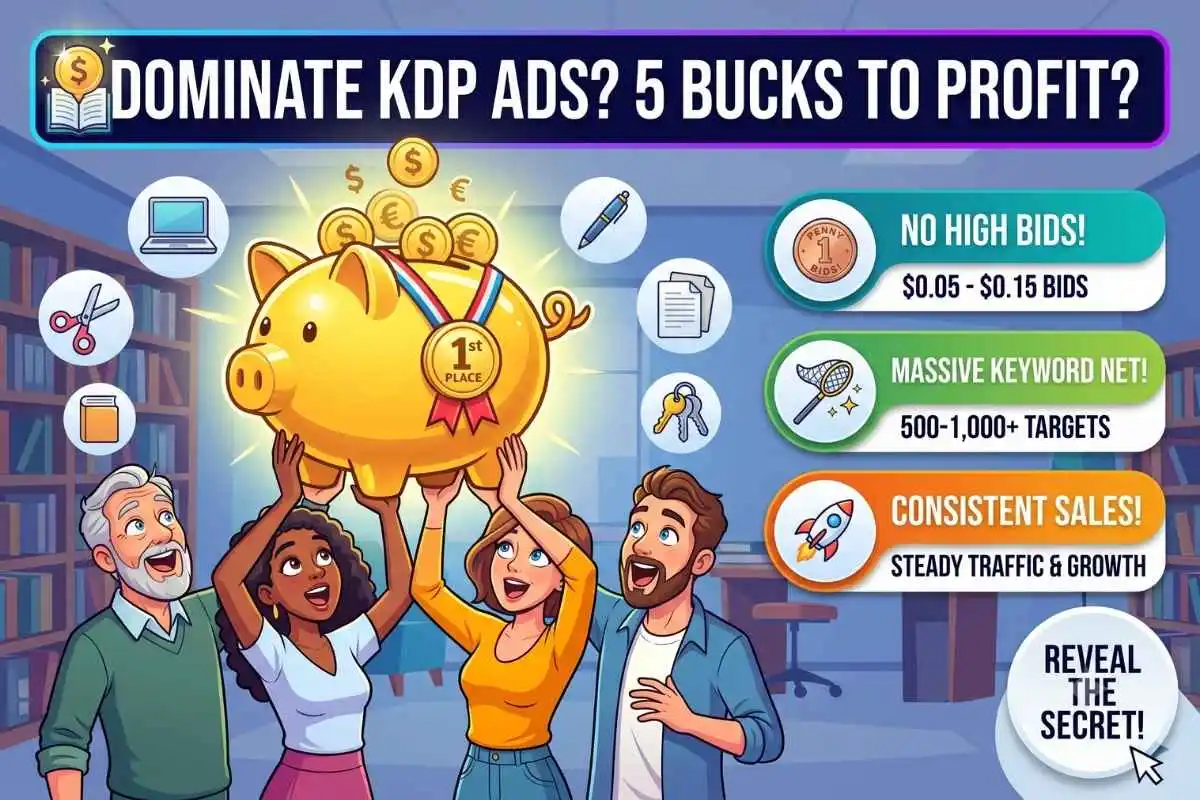
For many aspiring authors, the dream of publishing a book often culminates in hitting the “publish” button on Amazon Kindle Direct Publishing (KDP). However, the harsh reality of the literary world quickly sets in when you realize that writing the book was only half the battle; the true challenge lies in getting your masterpiece into the hands of eager readers. Marketing can feel like a daunting, expensive mountain to climb, especially when competing against established publishing houses with massive promotional budgets. Fortunately, you do not need to empty your savings account to see your sales rank climb. Enter the KDP Penny Ad Strategy, a low-risk, high-reward advertising technique designed specifically for independent authors. By leveraging this methodical approach, you can effectively navigate the complex landscape of Amazon book marketing, driving consistent traffic to your author page without spending more than a mere five dollars a day.
The Core Concept of Penny Ads
The fundamental principle behind the KDP Penny Ad Strategy is firmly rooted in volume and low-cost bidding, essentially turning traditional advertising models completely upside down. In a standard Pay-per-click (PPC) campaign, advertisers often engage in fierce bidding wars over highly competitive, popular keywords, driving costs to exorbitant levels that quickly drain small marketing budgets. The penny ad strategy deliberately avoids this high-stakes battlefield. Instead of bidding a dollar or more on a broad search term, you cast an incredibly wide net by targeting hundreds of highly specific, long-tail keywords and competitor book titles. For each targeted term, you place a microscopic bid—often ranging between just five and fifteen cents. This clever approach allows you to quietly scoop up extremely cheap, highly relevant clicks when larger competitors inevitably exhaust their daily budgets, ensuring your five dollars stretches as far as possible.
Finding the Right Campaign Keywords
Executing a successful penny ad campaign demands an exhaustive approach to keyword research, as the sheer volume of targets is what makes this low-cost strategy truly viable. You absolutely cannot rely on just twenty or thirty generic terms; you need a massive list of at least five hundred to a thousand relevant keywords to generate sufficient cheap clicks. Start by brainstorming every conceivable phrase a reader might type into the Amazon search bar, including specific character tropes, story archetypes, and niche genre mashups. Next, turn your undivided attention to your direct competitors. Compile a comprehensive list of authors who write in your exact niche, alongside the specific titles of their books and series names. This massive, hyper-targeted list creates a robust, data-backed foundation for your low-bid advertising strategy to thrive, placing your book in front of highly motivated readers who are already browsing similar content.
Setting Up Your $5/Day Parameters
Once you have meticulously gathered your extensive list of targeted keywords, the next critical step is to configure your campaign correctly within the Amazon Advertising console. Begin by selecting a “Sponsored Products” campaign, which remains the most effective and accessible format for independent authors looking to drive direct book sales. When prompted to set your daily budget, input exactly five dollars; this strict financial hard cap guarantees you will never wake up to an unexpected, massive advertising bill. It is absolutely crucial to select “Manual Targeting” rather than automatic, allowing you to input your massive keyword list and assign your custom low bids to each individual item. Furthermore, you must explicitly choose the “Dynamic bids – down only” option. This vital safety net permits Amazon’s algorithm to lower your bid in real-time if a click is unlikely to convert, protecting your small budget from unnecessary financial waste.
Patience and Continuous Optimization
One of the most significant hurdles independent authors face when implementing the penny ad strategy is managing their own expectations and resisting the overwhelming urge to make premature campaign adjustments. Because you are deliberately bidding mere pennies, your advertisements will not immediately flood your KDP dashboard with thousands of daily impressions and instant sales. This strategy is intrinsically a slow burn; it requires a considerable amount of patience and a long-term marketing perspective to bear fruit. You must allow the campaign to run entirely uninterrupted for at least two to three weeks to gather meaningful, actionable data. Once this initial observation period concludes, you can dive deep into your advertising reports to identify which specific keywords actually generate profitable sales. This relentless, data-driven optimization process ultimately transforms a slow-moving, low-budget campaign into a highly efficient, automated book sales engine that works for you around the clock.
The Unspoken Prerequisite for Success
While the mechanical execution of a low-budget advertising strategy is incredibly important, it is entirely futile if the book you are promoting is not optimized to convert browsing shoppers into paying readers. No amount of clever keyword targeting or meticulous bid adjustments can compensate for a product that fails to meet professional publishing industry standards. Before investing a single cent of your daily five-dollar budget, you must critically evaluate the fundamental elements of your Amazon product page. Your book cover must be visually arresting, professionally designed, and instantly convey the correct genre to a passing reader. Similarly, your description needs to be a compelling, tightly written sales pitch that hooks the reader’s interest immediately. The landscape of Self-publishing has become fiercely competitive, and readers expect high quality. By ensuring a flawless visual presentation, you maximize the conversion rate of every single cheap click your advertisements manage to generate.
Comparing Ad Strategies
To better understand how the KDP Penny Ad Strategy directly compares to more traditional advertising methods, it is incredibly helpful to evaluate the expected metrics and financial commitments side-by-side. The following data table clearly illustrates the stark differences in approach, highlighting precisely why the low-bid strategy is particularly suited for independent authors operating with severely limited marketing resources. Rather than relying on expensive guesswork and high upfront expenditures that can quickly drain a bank account, the penny strategy prioritizes broad market reach and strict cost containment. This methodical shift in philosophy makes it an ideal, low-stress entry point for beginners testing the waters of Amazon book promotion.
| Feature | Traditional KDP Ads | Penny Ad Strategy |
| Average Bid Cost | $0.50 – $1.50+ | $0.05 – $0.15 |
| Number of Targets | 20 – 50 Keywords | 500 – 1,000+ Keywords |
| Required Daily Budget | $20.00 – $50.00+ | $5.00 Maximum |
| Campaign Traffic Speed | Fast, immediate results | Slow burn, gradual growth |
| Financial Risk Level | High (Easy to overspend) | Low (Strict budget limits) |
Frequently Asked Questions
How long does it take to see results with a $5 daily budget?
Because you are intentionally bidding extremely low amounts, the penny ad strategy takes significant time to gain any real traction in the competitive Amazon marketplace. It is incredibly common to see very few impressions and almost zero clicks during the first full week of your active campaign. You should generally expect to wait at least two to four solid weeks before you begin to accumulate enough meaningful data to spot consistent sales patterns. Only after this crucial waiting period should you begin actively optimizing your keywords to improve conversion rates and increase your profitability.
Do I need a massive catalog of books for this to work?
While having a large backlist or a fully completed book series can significantly improve your overall profitability through increased read-through rates, the penny ad strategy can still be highly effective for a single new release. The exceptionally low cost per click inherently ensures that even with only one standalone title in your dashboard, you can carefully maintain a profitable return on your advertising investment. This unique mathematical advantage allows debut authors to slowly and steadily grow their initial readership without suffering the massive financial losses typically associated with high-bid book launches.
Should I use Automatic or Manual targeting for penny ads?
Manual targeting is absolutely essential and completely non-negotiable for the successful execution of the KDP penny ad strategy. Automatic targeting relies heavily on Amazon’s internal algorithms, which prioritize high visibility and frequently result in significantly higher bids that can easily exhaust a five-dollar daily budget before noon. By exclusively utilizing manual targeting, you maintain absolute, unyielding control over your entire promotional campaign. This crucial setting allows you to meticulously input your extensive keyword list and strictly enforce custom low-bid limits across the board, ensuring maximum financial efficiency at all times.
The Final Chapter: Rethinking the Advertising Game
The absolute beauty of the KDP Penny Ad Strategy lies not just in its obvious financial affordability, but in its profound shift of perspective regarding modern book marketing as a whole. It powerfully teaches independent authors that you absolutely do not need to drastically outspend the major traditional publishing houses to successfully find your loyal target audience. You simply need to outsmart them by actively seeking the hidden, less competitive corners of the digital marketplace that they routinely ignore. This highly methodical, data-driven approach fundamentally transforms the often terrifying prospect of book promotion into a highly accessible, educational, and remarkably low-risk experiment. Ultimately, the most curious and inspiring aspect of this specific strategy is exactly how it effectively levels the competitive playing field, proving definitively that a carefully optimized five-dollar daily budget can quietly build a sustainable writing career, one remarkably cheap click at a time.
